

Texas Classrooms Become Religious Battleground
Public schools in Texas find themselves at the centre of a national controversy as state and federal courts issue conflicting orders regarding the display of the Ten Commandments in classrooms. The situation has left many educational institutions in an impossible position, forced to choose between complying with state law or federal court rulings.
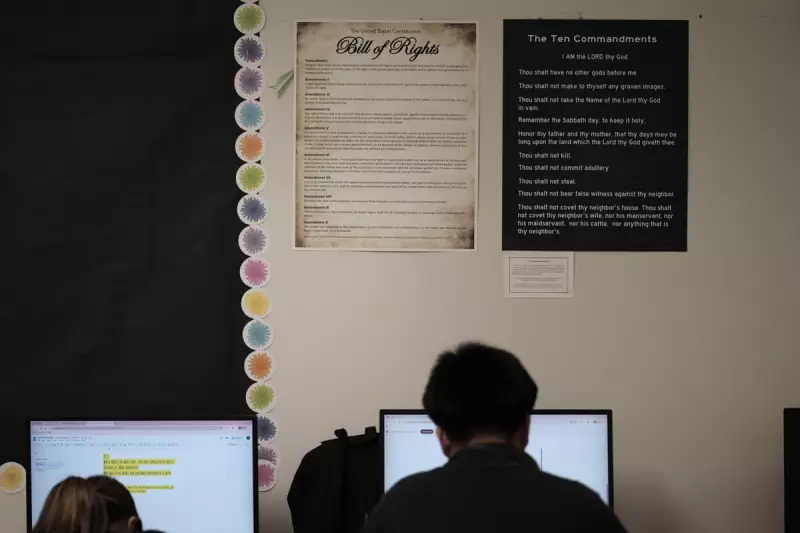
On 16 October 2025, students at Lehman High School in Kyle, Texas worked under posters displaying both the Bill of Rights and the Ten Commandments, visually representing the constitutional conflict unfolding across the state. This scene captures the essence of what educators are calling an unprecedented challenge to religious liberty in American public education.
Conflicting Court Orders Create Impossible Choices
Federal courts have ordered more than two dozen of Texas's nearly 1,200 school districts not to hang posters with the religious commandments. In a significant ruling on Tuesday, a judge declared that the state mandate violates constitutional First Amendment protections guaranteeing religious liberty and forbidding government establishment of religion.

Meanwhile, the Republican-led state legislation requires schools to display the Ten Commandments in a conspicuous place if donated posters are provided. The law specifies that the text must be visible from anywhere in a classroom to a person with average vision, creating detailed implementation requirements for schools.
Similar laws have faced judicial rejection in Arkansas and Louisiana, with legal experts predicting the issue will ultimately reach the US Supreme Court for a definitive ruling.
Educators Face Personal and Professional Dilemmas
The mandate has created deeply personal conflicts for teachers across Texas. Eighth-grade US history teacher Dustin Parsons, who displays the Ten Commandments in his Whitesboro classroom, insists he's not evangelising. "I'm doing it more from a history source perspective in how they were building the constitution," he explained, viewing the display as demonstrating Christianity's influence on America's founding principles.
In stark contrast, high school theatre teacher Gigi Cervantes felt she had no choice but to resign from her position. "I just was not going to be a part of forcing or imposing religious doctrine on to my students," she stated, highlighting the moral conflict the law has created for some educators.
The legal uncertainty has prompted practical concerns from teachers, according to Julie Leahy, director of legal services for the Texas Classroom Teachers Association. Teachers have been asking about consequences for refusing to display the commandments and whether they can display tenets of other religions. Leahy noted that when students ask questions, teachers are generally advised to direct them back to their families.
Creative Compliance and Legal Consequences
Some districts have attempted compromise solutions. South of Austin, the Hays Consolidated Independent School District posted copies of the US Constitution's Bill of Rights alongside the state-required Ten Commandments, creating a visual representation of the constitutional debate.
Elsewhere, implementation varies widely. In suburban Dallas, Frisco school officials spent approximately $1,800 to print nearly 5,000 posters, despite the law only requiring display if posters are donated. Meanwhile, some schools have no posters to hang at all.
The Galveston Independent School District voted not to post the commandments until the law's constitutionality is decided, only to find itself targeted by a state lawsuit. This week, Texas Attorney General Ken Paxton announced lawsuits against two additional districts he accused of violating the law, though one district, Leander Independent School District, claims it is displaying donated posters.
Elizabeth Beeton, a member of the Galveston school board, perfectly captured the situation: "Districts are in between a rock and a hard place."

Community Reactions Reflect Deep Divisions
Supporters like Lorne Liechty, an attorney and Rockwall county commissioner who rallied his family to raise money for Ten Commandments posters, see the displays as fundamental. "These are just really good guides for human behaviour," Liechty argued. "For the life of me, I don't know why people would object to any of these principles."
Parent Adriana Bonilla, whose son attends kindergarten near San Antonio, supports the measure for its moral teachings. "It assists with moral foundations and it teaches respect and responsibility," she noted.
However, educators like Rachel Preston express concern about the impact on non-Christian students. Even though her Austin high school has been barred by a court order from displaying the Ten Commandments, she and her colleagues remain anxious. "We're worried specifically about students who don't identify as Christian feeling unease at the very least at the presence of this in our classrooms," Preston explained.
As the legal battles continue, Texas classrooms have become living laboratories for America's enduring debate about the proper relationship between religion and public education.





