

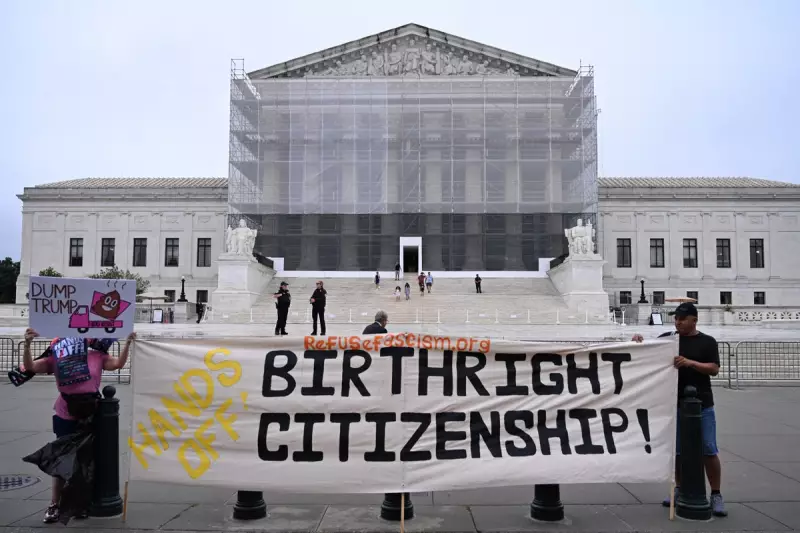
The United States Supreme Court has stepped into a monumental constitutional debate, agreeing to review the legality of former President Donald Trump's executive order targeting birthright citizenship.
A Challenge to a Century-Old Principle
The core of the case revolves around an order issued by Trump which asserts that children born on American soil to parents who are in the country illegally or are temporary residents are not automatically American citizens. This directive directly confronts a legal interpretation that has stood for over 125 years, rooted in the 14th Amendment to the US Constitution.
That amendment, ratified in 1868, states that "all persons born or naturalized in the United States, and subject to the jurisdiction thereof, are citizens of the United States." For generations, this has been understood to grant citizenship to nearly everyone born within the nation's borders, regardless of their parents' immigration status.

The Legal Battle So Far
Trump's policy has faced fierce opposition in the lower courts. The American Civil Liberties Union (ACLU) has spearheaded the legal challenge, arguing the order is a clear violation of the Constitution's text and intent. Thus far, the judiciary has agreed, with multiple courts striking down the executive order as unconstitutional.
However, the policy has significant backing from Republican-led states and lawmakers, who have urged the Supreme Court to take up the case and uphold the President's authority. The nation's highest court has now answered that call, setting the stage for a historic ruling.
What Happens Next?
The Supreme Court has scheduled oral arguments in the case for the spring. Following those proceedings, the nine justices will deliberate, with a definitive ruling anticipated by early summer. Their decision will either cement the long-standing interpretation of the 14th Amendment or radically reshape the American understanding of citizenship.
The outcome carries profound implications for immigration policy and constitutional law, potentially affecting the status of thousands of individuals born in the US each year. The case, closely watched on both sides of the Atlantic, represents one of the most significant tests of presidential power and constitutional originalism in recent history.






