
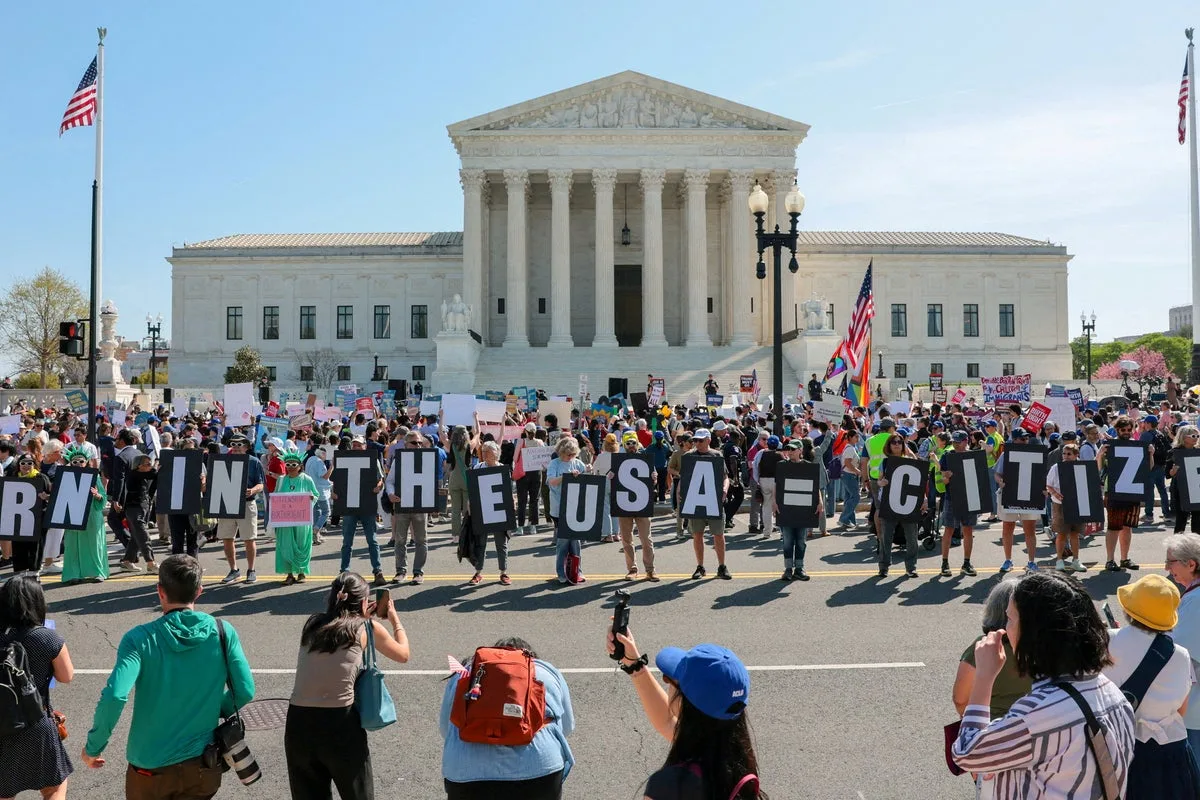
The Supreme Court has struck down Donald Trump's executive order seeking to end automatic birthright citizenship for children born in the United States to parents who are unlawfully or temporarily present. The 6-3 ruling, authored by Chief Justice John Roberts, rejected the administration's attempt to reinterpret the 14th Amendment's citizenship clause, which grants citizenship to all persons born in the US and subject to its jurisdiction.
In the majority opinion, Roberts wrote that there was 'scant evidence' for the administration's 'dramatically revisionist view' of the amendment. He noted that the words used in Trump's order—such as 'mother', 'father', 'lawful', and 'temporary'—are absent from the 14th Amendment, and that post-enactment history cannot override the constitutional text. The decision affirmed that children born in the US to parents with unlawful or temporary status are indeed subject to US jurisdiction and are citizens at birth.
The ruling was joined by liberal Justices Sonia Sotomayor, Elena Kagan, and Ketanji Brown Jackson, as well as conservative Justices Amy Coney Barrett and Brett Kavanaugh. Justices Clarence Thomas, Samuel Alito, and Neil Gorsuch dissented. However, the court split 5-4 on whether the Constitution itself enshrines birthright citizenship for all immigrant children; Kavanaugh wrote separately that Trump's order violated federal law but suggested Congress could change it.
The decision marks a significant defeat for Trump's anti-immigration agenda and his use of executive orders to bypass Congress. The American Civil Liberties Union, which argued the case, hailed the ruling as reaffirming a fundamental American promise that anyone born in the US is a citizen. Trump has previously criticised the judiciary, including his own appointees, for rulings against his policies.




