

In an unprecedented legal move, South Korean prosecutors have called for the death penalty to be imposed on former President Yoon Suk Yeol. The demand comes at the conclusion of his historic trial on charges of insurrection, stemming from his failed attempt to declare martial law in December 2024.
The Charges and Prosecution's Case
Prosecutors characterised the case to the Seoul Central District Court as the "serious destruction of constitutional order by anti-state forces". They argued that Yoon, a former prosecutor general, had knowingly and directly violated the constitution in a bid to "monopolise power through long-term rule". According to their closing arguments, planning for the operation began as early as October 2023, involving the strategic placement of loyal military personnel.
The dramatic events unfolded on the night of 3 December 2024, when Yoon deployed troops to the National Assembly. His alleged order was to prevent lawmakers from voting to lift his martial law declaration. The crisis lasted six hours, ending only when 190 MPs broke through military cordons to pass an emergency resolution, forcing Yoon to back down.

Prosecutors cited chilling details from notebooks and phone memos, alleging plans included preparing to torture election officials into confessing to fabricated fraud and cutting utilities to critical media outlets. They condemned senior officials who "chose loyalty to Yoon and greed for power-sharing", and highlighted Yoon's complete lack of remorse as a key aggravating factor.
Wider Legal Onslaught and Historical Context
This insurrection case is just one part of a vast legal campaign against the former leader. Yoon faces eight separate criminal trials on charges ranging from abuse of power to election law violations. Beyond the insurrection, he is accused of ordering drone infiltrations into North Korean airspace to create a pretext for martial law.
His wife, Kim Keon Hee, faces her own verdict on 28 January on stock manipulation and bribery charges, with prosecutors seeking a 15-year sentence. Yoon's first verdict arrives on 16 January in a separate arrest obstruction case, where a 10-year prison term has been demanded.
This trial marks the first insurrection-related charges against a former South Korean president since the 1996 trials of military dictators Chun Doo-hwan and Roh Tae-woo. Prosecutors then also demanded the death penalty for Chun. While both were convicted, their sentences were later reduced and they were pardoned. Notably, South Korea has not carried out an execution since 1997 and is considered a de facto abolitionist state.
Political Fallout and Public Reaction
The political consequences of the crisis were immediate and severe. Parliament impeached Yoon on 14 December 2024, and the Constitutional Court formally removed him from office in April 2025. A snap election then brought his political rival, Lee Jae Myung, to power.
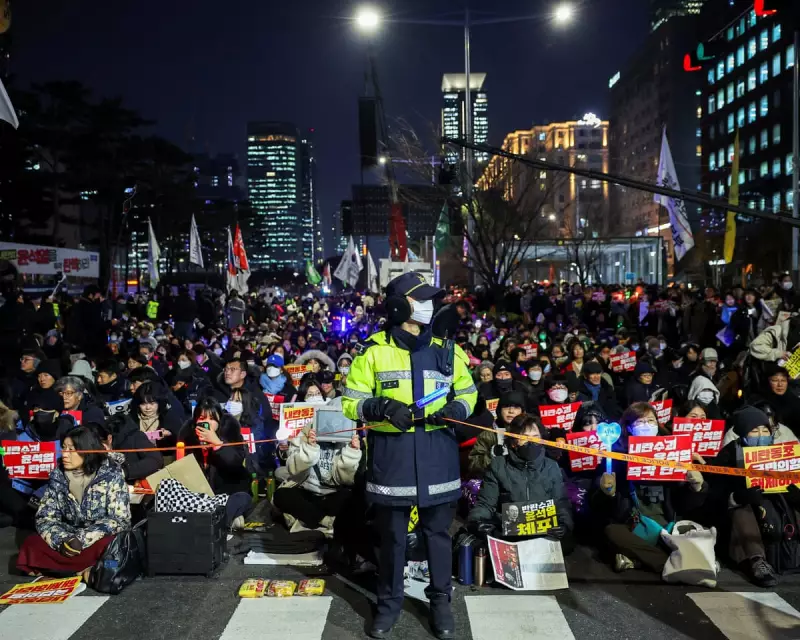
Public sentiment has been deeply divided. The trial has been met with protests from both sides; thousands demonstrated against Yoon in late 2024, while his supporters have staged violent protests, including storming a courthouse following his arrest. Yoon was first arrested in January 2025, making him the first sitting South Korean president to be taken into custody. After a brief release in March, he was re-arrested in July and has remained in detention since.
A verdict in the landmark insurrection trial is expected in mid-February. Under South Korean law, the charges carry only three possible sentences: death, life imprisonment with labour, or life imprisonment without labour. The court's decision will write a definitive and dramatic chapter in the nation's turbulent political history.






