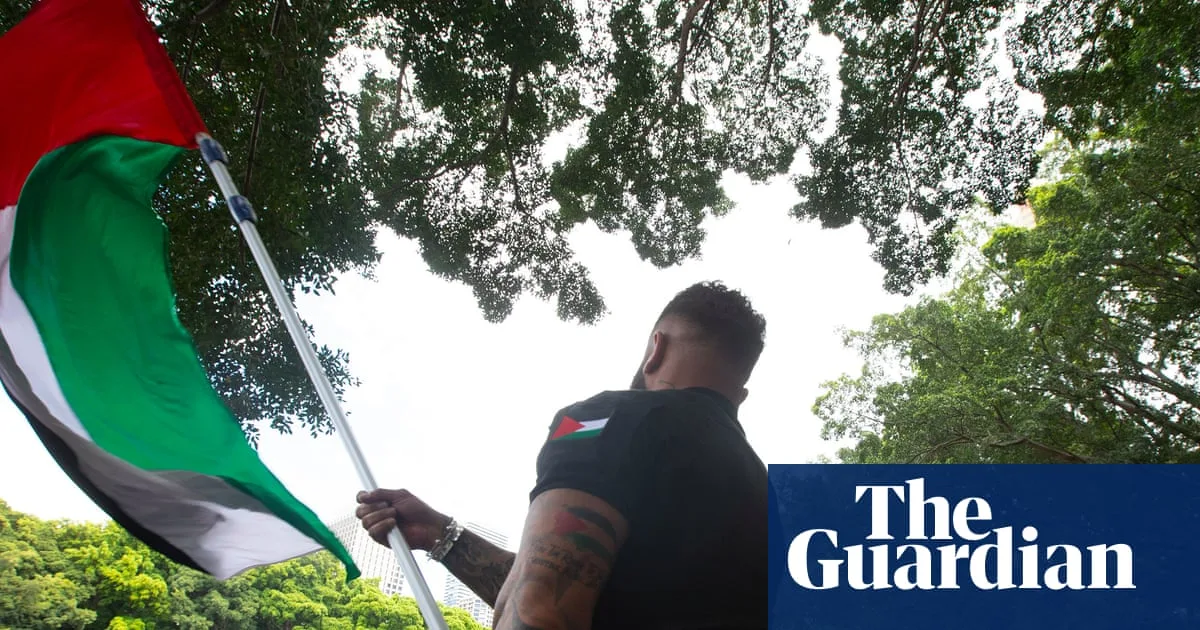
A New South Wales parliamentary inquiry is examining whether to follow the United Kingdom's lead and ban the controversial protest slogan 'globalise the intifada'. The inquiry, which closed to public submissions this week, is specifically tasked with considering a prohibition on the phrase, mirroring actions taken by British police forces.
UK Precedent: Arrests for Chanting 'Intifada'
In December, two major UK police forces—the Metropolitan Police and Greater Manchester Police—announced they would arrest anyone chanting 'globalise the intifada' or displaying it on a placard. This decision marked a significant shift. Police chiefs stated that while the Crown Prosecution Service had previously advised such phrases didn't meet prosecution thresholds, the context had changed following attacks on a Manchester synagogue and in Bondi, Sydney.
Protesters in the UK are not arrested under a specific new law banning the phrase. Instead, they face charges under existing public order offences. Last month, five individuals were arrested at a pro-Palestine protest in London for 'racially aggravated public order offences' related to the slogan.
A Broader Crackdown on Palestine Action
The UK's approach extends beyond this single chant. In July, the new Labour government made it a criminal offence to be a member of or show support for the group Palestine Action, after it was proscribed as a terrorist organisation. This move has led to over 2,100 arrests, with many detained simply for carrying placards stating 'I oppose genocide, I support Palestine Action'.
Human rights organisations, including Amnesty International, have condemned this expansion, arguing it breaches obligations to uphold freedom of expression and criticising UK terrorism laws as 'excessively broad and vaguely worded'.
Constitutional Hurdles for an Australian Ban
Legal experts warn that importing the UK model to NSW faces significant constitutional challenges. Professor Anne Twomey of the University of Sydney notes that unlike the UK, Australia has an implied constitutional freedom of political communication, making outright bans more vulnerable to legal challenge.
Professor Luke McNamara from UNSW Law School suggests a more feasible approach for NSW would be to use existing public order offences, such as the newly created offence of inciting racial hatred (93ZAA), rather than an outright statutory ban on a specific phrase. 'Leaving it to the discretion of the police in a particular context... is preferable,' he stated, acknowledging the phrase 'means different things to different people'.
The use of existing laws has found support from the NSW opposition. Shadow Attorney General Damien Tudehope called the inquiry 'very rushed' and expressed 'grave doubts' about the government's ability to outlaw phrases without a constitutional challenge.
Community and Expert Warnings
Submissions to the inquiry have strongly cautioned against adopting the UK's methods. The Jewish Council of Australia (JCA) argued the UK approach has not enhanced community safety and instead demonstrates how 'the broad application of counter-terrorism frameworks to civil advocacy can lead to systemic legal overreach'.
The Sydney Palestine Action Group condemned the UK's proscription of its namesake as a terrorist group, warning of a 'trajectory of civil liberties repression'. Meanwhile, other Jewish community organisations support a ban, associating the word 'intifada' with historical violence.
Dr Vince Hurley, a former NSW police officer and criminology lecturer, warned that banning specific slogans could escalate tensions and lead to the kind of mass arrests seen in the UK. 'It's a nightmare, I wouldn't want to be policing it,' he said.
The inquiry, chaired by Labor MP Edmond Atalla, who personally supports a ban, will deliver its report to the Minns government by the end of January. The government has indicated it intends to act on the findings when parliament reconvenes in early February.




