

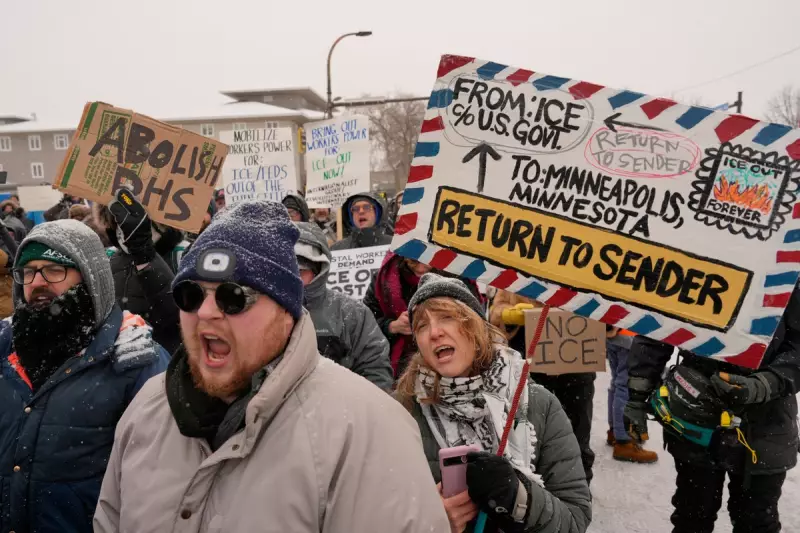
The Mayor of Minneapolis has launched a fierce constitutional challenge against the potential deployment of US army soldiers to his city, branding the idea "ridiculous" and a violation of fundamental rights. Mayor Jacob Frey's comments on Sunday, 18 January 2026, came amid escalating tensions over a federal immigration crackdown in Minnesota.
Troops on Standby as Protests Continue
According to two unnamed defence officials, the Pentagon has issued prepare-to-deploy orders to approximately 1,500 active-duty soldiers from the Army’s 11th Airborne Division in Alaska. These troops, specialised in arctic conditions, are on standby for a possible deployment to Minnesota should President Donald Trump invoke the rarely used Insurrection Act from the 19th century.
This military preparation follows weeks of daily protests in the Twin Cities of Minneapolis and St. Paul. The demonstrations began after the Department of Homeland Security intensified immigration enforcement by bringing in more than 2,000 federal officers. Mayor Frey, speaking on CNN’s State of the Union, urged protesters to remain peaceful to negate any perceived need for a military intervention.

Mayor Frey's Constitutional Standoff
Mayor Jacob Frey was unequivocal in his condemnation of the federal government's approach. "It’s ridiculous, but we will not be intimidated," he stated. "It is not fair, it’s not just, and it’s completely unconstitutional."
Frey emphasised that thousands of citizens were peacefully exercising their First Amendment rights and argued that local authorities would not respond to chaos with more chaos. Governor Tim Walz has mobilised the Minnesota National Guard as a precaution, though no units have yet been deployed to the streets.
Community Backlash and Hotel Closures
The local backlash to the federal operation has been significant. On Sunday, at least three hotels in the Minneapolis-St. Paul area, which protesters associated with housing Immigration and Customs Enforcement (ICE) officers, stopped taking reservations. The Hilton DoubleTree and IHG InterContinental in St. Paul, and the Hilton Canopy in Minneapolis, showed no available rooms online until early February.
An employee at the InterContinental cited closure for staff safety, while the lobbies of the DoubleTree and InterContinental stood empty with signs announcing a temporary closure. These sites have been focal points for demonstrators opposing the federal crackdown.
Postal Workers March and a Republican Rebuttal
In a show of community solidarity, dozens of U.S. Postal Service workers used their day off to march against the immigration operations. The route passed the location where an ICE officer shot and killed Renee Good, a U.S. citizen and mother of three, during a confrontation on 7 January.
Letter carriers like Peter Noble and Susan Becker reported seeing ICE officers driving recklessly and conducting aggressive operations in residential areas. "These people are by and large citizens and immigrants. But they're citizens, and they deserve to be here," Becker said.
However, Republican U.S. House Majority Whip Tom Emmer called for Governor Walz to tone down his rhetoric and support law enforcement. Emmer argued that the federal officers were "not mean spirited people" but felt under attack, and that calming rhetoric should start "at the top."
Legal and Social Media Scrutiny
The federal operation faces increasing legal and public scrutiny. Videos circulating on social media appear to show federal officers spraying protesters with pepper spray, knocking down doors, and making forcible arrests. In a significant ruling on Friday, a federal judge ordered that immigration officers cannot detain or tear gas peaceful protesters who are not obstructing authorities, including those merely observing the enforcement actions.
The situation remains tense, with Mayor Frey's constitutional warning marking a pivotal moment in the standoff between local authorities and the federal government over immigration enforcement tactics.






