

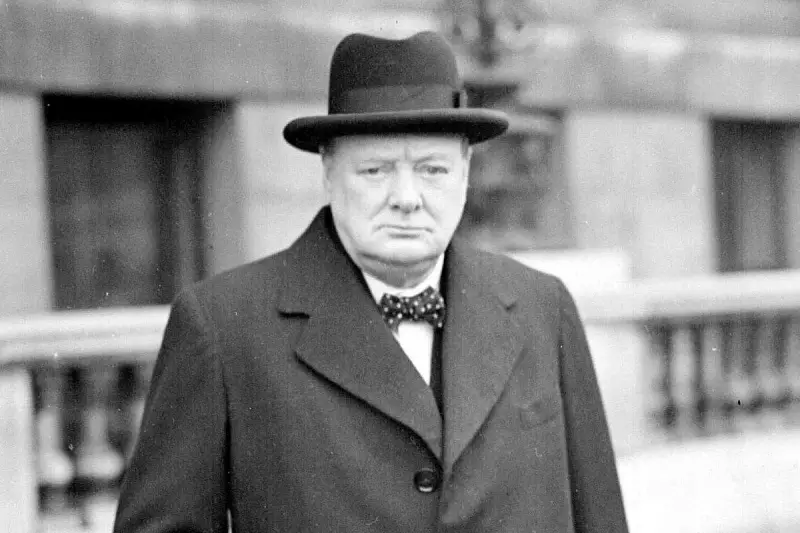
Newly released historical documents from Ireland's National Archives have revealed the stark views held by Irish officials towards Winston Churchill during the 1936 constitutional crisis over King Edward VIII's proposed marriage to American divorcee Wallis Simpson.
Irish Free State Sought Strategic Advantage
Confidential files, released as part of the annual publication of the National Archives in Dublin, show Irish civil servants actively discussing how the turmoil in Britain could be leveraged to benefit the Irish Free State. The documents, labelled 2025/115/994, detail internal briefings exchanged between senior figures.
The abdication crisis unfolded when King Edward VIII, months into his reign, insisted on marrying Wallis Simpson against the fierce opposition of Prime Minister Stanley Baldwin and his cabinet. The monarch ultimately abdicated on December 10, 1936, and married Mrs Simpson the following June. His younger brother then ascended the throne as King George VI.

A detailed briefing from the time argued Ireland was entitled to turn Britain's difficulty to its own account. "Just as the British have used political divisions here for their political advantage, we are entitled and are bound to turn their present difficulty into our own account," the note stated.
Churchill Branded 'Venal and Unscrupulous'
The Irish analysis focused sharply on Winston Churchill's potential role. Officials concluded that if the King remained steadfast, his survival would depend on finding a politician to form an alternative government. Their assessment of Churchill was brutally critical.
The document described him as "the deadly enemy of Baldwin, venal and unscrupulous". It went further, making a scathing historical allusion: "whose house was founded by a man who betrayed his first patron, James, Duke of York, and who allowed his wife to pander to an erotic Queen".
Despite this character judgement, the officials acknowledged Churchill's political potency. They noted he was "a figure of great potentialities and of overweening ambition" who had already shown signs of challenging the cabinet's stance on the King's marriage.
The briefing suggested Churchill might gamble on supporting the King, tempted by the prospect of wielding unprecedented personal power as his prime minister. "His new prime minister would exercise a personal domination that has not been known in Britain since the days of Walpole," the note claimed.
Lasting Repercussions and a Royal Request
The Irish officials predicted the crisis would cause deep and lasting division in Britain, regardless of its outcome. "However the crisis may be resolved, it will occasion a serious cleavage in Great Britain which will persist for a very long time," the note concluded.
A hand-written addition indicates the briefing was exchanged between Eamon de Valera, then head of the Irish government as President of the Executive Council, and his Finance Minister, Sean McEntee.
The archive files also contain a later note from 1967, in which the British ambassador asked Irish authorities to indefinitely withhold documents concerning Britain's royal family, a request that was evidently not fully honoured in this instance.
Ireland formally removed the British monarch as its head of state when it became a Republic in 1949, over a decade after the abdication crisis that its officials had watched with such calculating interest.






