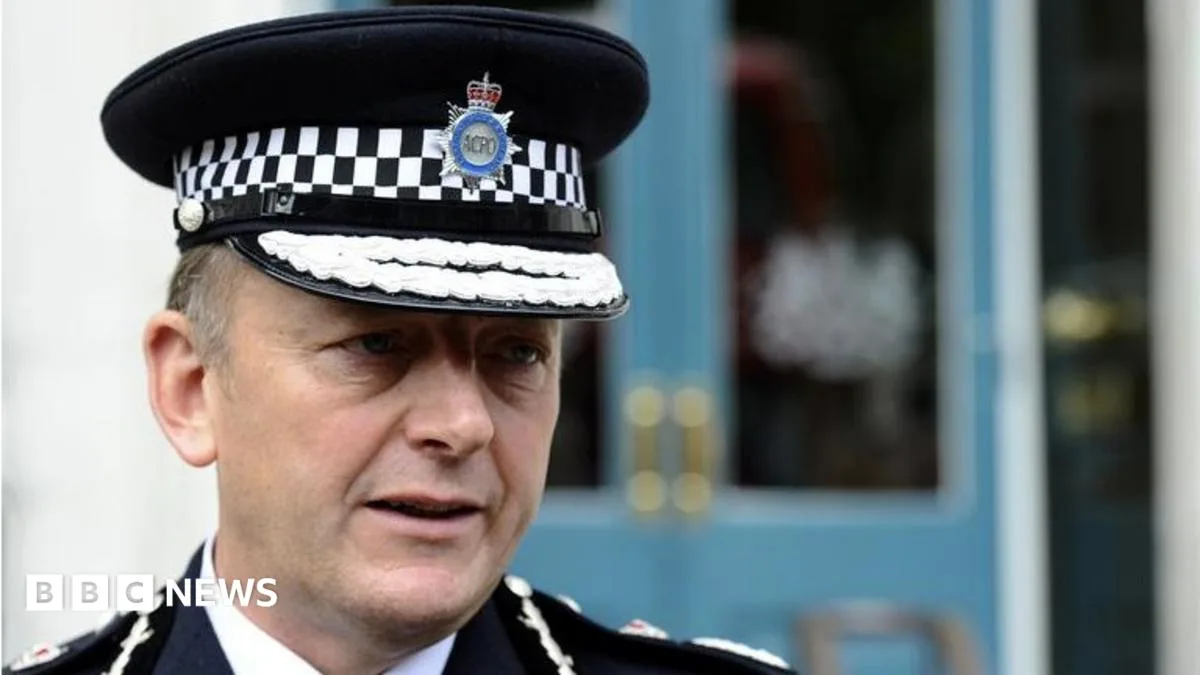
The recent announcement by the Home Secretary that she has lost confidence in West Midlands Chief Constable Craig Guildford has thrown a spotlight on a fundamental tension in British policing. The case, involving a senior officer's admission of using AI in an official report, raises urgent questions about accountability, political independence, and who ultimately holds the power to hire and fire the nation's top cops.
The Constitutional Safeguard: Why Sacking is Not Simple
At first glance, the public might wonder why a Home Secretary cannot simply dismiss a police chief who has lost their confidence. The answer lies in a core principle of a pluralist democracy: the operational independence of the criminal justice system. Police officers, like judges, must be free from direct political pressure. If a government minister could summarily fire senior officers, it would create a clear risk of abuse, potentially allowing a government to influence arrests for political ends.
This does not mean chief constables are untouchable. They can be removed, but the process is deliberately complex and designed to ensure fairness and due process. The current framework is largely governed by the Police Reform and Social Responsibility Act of 2011.
Who Actually Holds the Power to Dismiss?
In England and Wales, the authority to fire a chief constable typically rests with the locally elected Police and Crime Commissioner (PCC) for that force area. However, the system has notable variations:
- In the mayoral combined authorities of Greater London, Greater Manchester, York and North Yorkshire, and West Yorkshire, the PCC functions are carried out by deputy mayors.
- In South Yorkshire, the mayor performs this role.
- The West Midlands presents an anomaly. An attempt to transfer PCC powers to the region's mayor was legally challenged and failed, leaving the powers with the West Midlands PCC.
- In London, uniquely, the Home Secretary holds a reserve power to require the dismissal of the Metropolitan Police Commissioner.
When a chief constable faces dismissal, they are entitled to present their case. The local Police and Crime Panel, which includes strong representation from local authorities, is also involved. For the West Midlands, this means councillors from Birmingham, Coventry, Dudley, Wolverhampton, and Sandwell, among others.
Beyond this formal process, a chief can face usual misconduct procedures or, in extreme cases, criminal prosecution. Often, as seen with former Met Commissioner Cressida Dick in 2022 and PSNI Chief Constable Simon Byrne in 2023, they resign once key figures declare a loss of confidence.
Labour's Reforms and the Future of Police Accountability
Change is on the horizon. The Labour government is committed to abolishing the PCC system, which forces a fundamental rethink of how senior police officers are held to account. Decisions must soon be made about who will wield the power of dismissal in future, and under what circumstances.
One logical path is for oversight to revert to local authorities via committees, ensuring a degree of democratic accountability. Yet, the Guildford case illustrates a potential flaw: local councillors can become compromised if they are involved in overseeing policing of politically sensitive events, like demonstrations.
Home Secretary Shabana Mahmood has declared her intention to restore a direct power for her office. She stated: "When a chief constable is responsible for a damaging failure of leadership, the public rightly expect the home secretary to act. And I intend to restore their ability to do so. This government will soon reintroduce the home secretary’s power to dismiss chief constables."
This move, aimed at overcoming local weaknesses, carries its own significant risk: the politicisation and centralisation of policing, eroding local responsibility. Designing a new, durable system that balances effective accountability with operational independence, ideally with cross-party consensus, will be a major challenge for Mahmood. She is unlikely to find much assistance from her Conservative shadow, Chris Philp.
The outcome of this debate will shape the future of British policing. The long-standing tradition of keeping the police out of party politics is now in a state of flux, with the case of Chief Constable Craig Guildford acting as the catalyst for a potentially historic shift.




