

Groundbreaking historical research has uncovered the extensive involvement of the British crown in expanding and protecting the transatlantic slave trade over hundreds of years. The revelations come from a new book that examines the monarchy's deep historical ties to slavery, following the Guardian's 2023 Cost of the Crown report.
The Crown's Dominant Role in Slave Trading
The Crown's Silence, authored by historian Brooke Newman, presents unprecedented findings about the monarchy's central role in slavery. The book reveals that by 1807, when Britain officially abolished the slave trade within its empire, the British crown had become the world's largest purchaser of enslaved people. Specifically, the monarchy bought 13,000 men for army service at a cost of £900,000.
Newman, an associate professor at Virginia Commonwealth University in the United States, spent a decade researching royal archives and manuscripts. Her investigation covered documents relating to the Royal Navy, colonial officers, government officials, the Royal African Company, and the South Sea Company.

Monarchs Profiting from Enslavement
"The crown used to trumpet their connections to the transatlantic slave trade," Newman stated. "They put the royal brand on this practice and literally on people's bodies." Her research shows that the crown owned thousands of enslaved people in the Caribbean until 1831.
Remarkably, even while George IV oversaw the Royal Navy's suppression of the transatlantic slave trade, he continued to profit technically from the labour and sale of enslaved people. "This is something the government were aware of and they were concerned about how it looked," Newman explained.
Coercion After Abolition
The book details how after abolition, Africans liberated from slavers' ships by Royal Navy patrols faced continued exploitation. Rather than gaining true freedom, they were coerced into apprenticeships or forcibly conscripted into British military service.
Newman described how enslaved people "owned" by the crown included workers on plantations that had been forfeited following revolts or after planters died without heirs. Additionally, people were "purchased in the king's name" to work at royal dockyards and naval installations, a practice that began in Jamaica under George II.
Strategic Use of Enslaved Labour
"White people sent to work on the island were succumbing to tropical fevers," Newman noted, "and they decided we need to purchase enslaved men and boys we can train as skilled labourers who will be owned by the king – as shipwrights, as carpenters, as caulkers, servicing Royal Navy ships."
Once authorities determined this approach represented a cost-saving measure for the monarchy, they began replicating it elsewhere. Enslaved men became strategic assets in imperial conflicts, with George II and George III viewing them as "pawns in this imperial chess game."
Royal Navy's Critical Involvement
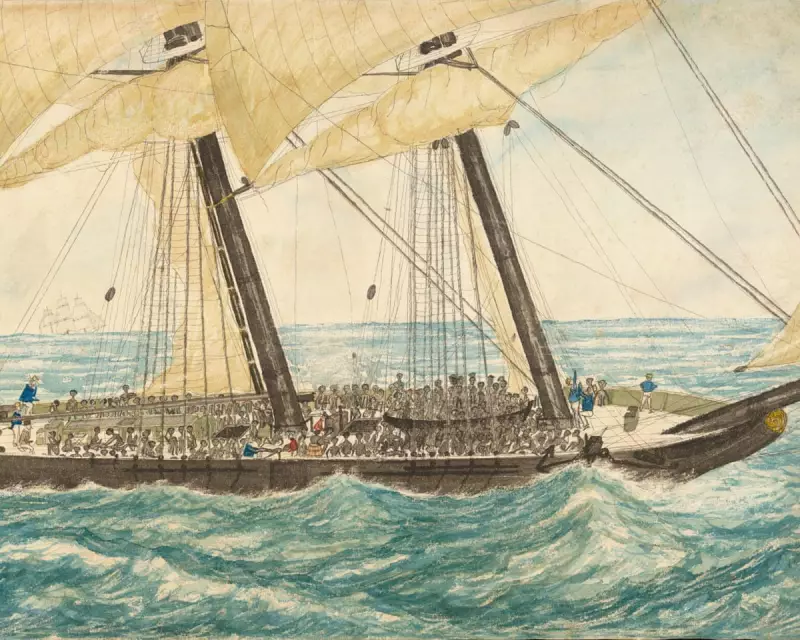
The Royal Navy played a crucial role in expanding the slave trade from the reign of Elizabeth I through the 18th century. According to Newman's findings, the navy protected slaving vessels, loaned Royal Navy ships to slave trading companies, and stocked them with men and supplies, with profits flowing back to the crown.
Slavery exploded as an industry in the 18th century after the Royal African Company, founded by the Stuart monarchy, lost its monopoly. This development fuelled the expansion of English cities like Liverpool and Bristol, Britain's insurance and finance sectors, and contributed to the growth of the United States.
Monarchs' Fear of Rebellion
Newman began working on the book after discovering "secret correspondence" detailing George IV's fears of an uprising similar to the Haitian Revolution occurring in Jamaica. She made this discovery while researching an earlier work about the Caribbean island, which remained a British colony for more than three centuries.
In the 18th and early 19th centuries, formerly enslaved individuals including Olaudah Equiano, Mary Prince, and Ottobah Cugoano directly appealed to the monarchy, sending books they had written, letters, and petitions published in newspapers. "And the monarchy is doing nothing," Newman observed.

Changing Attitudes Through Activism
"It's only as you have activism on the part of people like the Sons of Africa that things really start changing in the 19th century and the monarchy begins to dramatically pivot away from their previous stance," Newman explained.
Even after the abolition of the slave trade, liberated Africans faced continued exploitation through forced conscription into West India regiments and Royal forces stationed in West Africa. "Things are not really better regardless of whether you're owned by the monarchy or not," Newman concluded. "They wanted it to be better because it should be if you're going to have the king as your nominal master, but that's not the way things played out on the ground."
Contemporary Royal Response
Buckingham Palace does not typically comment on books, but a source indicated that King Charles, who has previously expressed "personal sorrow" regarding the suffering caused by slavery, takes the matter "profoundly seriously." The Crown's Silence: The Hidden History of Slavery and the British Monarchy is published by HarperCollins.





