
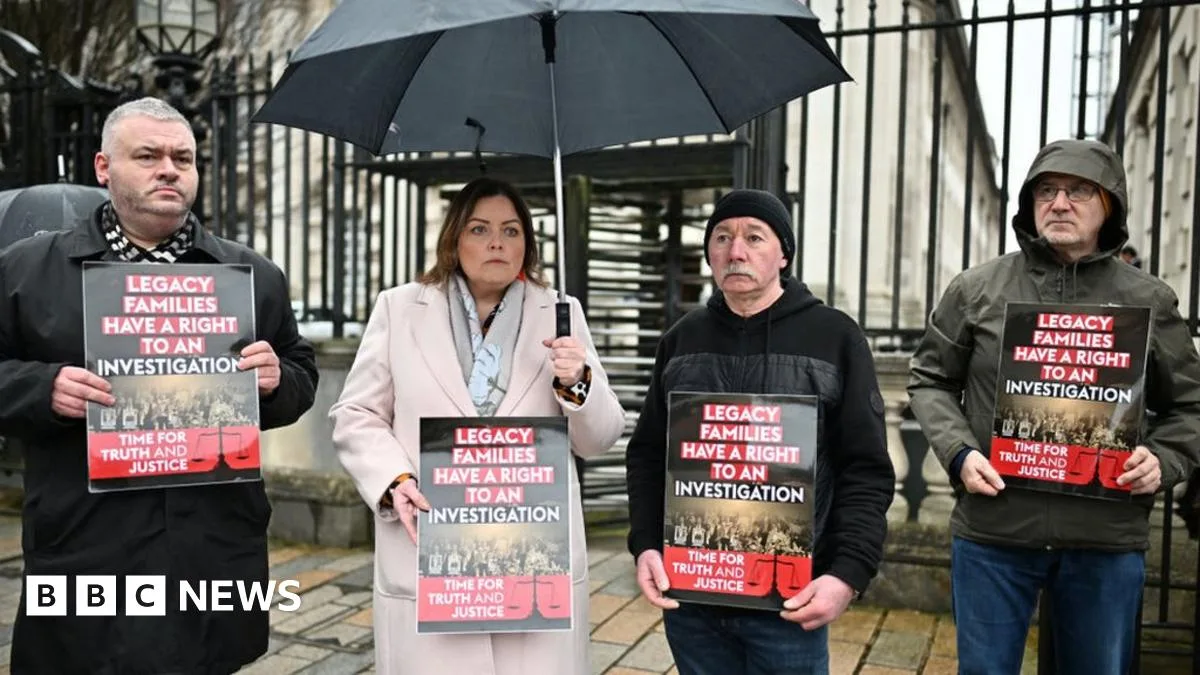
The High Court in Belfast has ruled that the conditional immunity from prosecution for Troubles-era crimes, a key part of the UK government's Legacy Act, breaches the European Convention on Human Rights (ECHR). The case was brought by relatives of victims and a survivor of a shooting.
Mr Justice Colton stated that there is no evidence that granting immunity under the act will contribute to reconciliation in Northern Ireland, and indeed the evidence suggests the contrary. The act includes a conditional amnesty for suspected offenders and bans inquests and future civil actions related to the Troubles.
Northern Ireland Secretary Chris Heaton-Harris said the government would take time to consider the ruling, acknowledging it is a complex case likely to lead to further action in higher courts. Legal experts predict the challenge could take years, potentially reaching the Supreme Court.
Shadow Northern Ireland Secretary Hilary Benn questioned how the Independent Commission for Reconciliation and Information (ICRIR) could proceed after the ruling, given that immunity was presented as the central foundation of the Legacy Act. He also urged Heaton-Harris to extend the May deadline for Troubles-related inquests.
The Irish government is separately challenging the UK at the European Court of Human Rights in Strasbourg. Tánaiste Micheál Martin expressed no surprise at the Belfast ruling, stating it reflects the Irish government's course of action.
PSNI Chief Constable Jon Boutcher said victims' voices were not being sufficiently heard in the debate, and he committed to providing information to families affected by Operation Kenova. The ICRIR said it would study the ruling in detail.




