
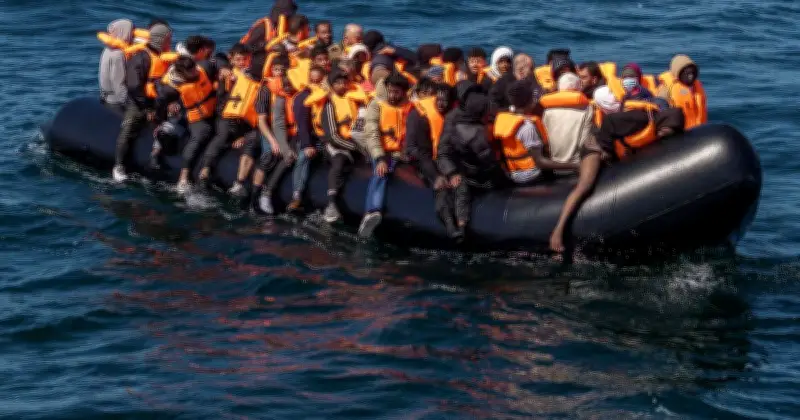
Successive British governments have utterly failed to stop the small boats crossing the Channel, argues Paul Baldwin in a stark opinion piece. He contends that the next crisis is already being created, and the UK is doing nothing to address the root causes driving migrants to make the perilous journey.
Two Approaches to the Crisis
Baldwin outlines two ways of tackling the small boats crisis. The first is the current approach: unloading criminally trafficked migrants at Dover, housing them in hotels, enriching appointed lawyers, and watching migrants disappear into the system. The second, he argues, is to address the other end of the equation—helping fix the awfulness many are fleeing.
While many boat arrivals are strapping men of military age who may be economic migrants, Baldwin notes that genuine asylum cases exist among them, often bullied by the same men. Every small boat crossing likely carries a family that ran out of options—a home bombed or burned, a journey starting thousands of miles away.
Sudan: The Overlooked Crisis
Baldwin highlights Sudan as a prime example of a conflict creating the next wave of migration. The war broke out in April 2023 between the Sudanese Armed Forces (SAF) and the Rapid Support Forces, driving nearly 12 million Sudanese from their homes. The SAF, an Islamist military with ties to the Muslim Brotherhood, has been striking hospitals, blockading food supplies, and using chemical weapons on its own population. Children are starving.
Over 30 million people—two-thirds of Sudan's population—need help just to eat. This displacement is bigger than Ukraine or Syria at its peak. When Syria collapsed, Europe received two million refugees in a single year, nearly breaking the EU apart. Sudan has already displaced 12 million, and the war continues.
The Path to Britain
Families flee first to Egypt, Chad, or other bordering countries. They wait, save, and plan the next move. From Egypt, the path goes west to Libya, and from Libya, boats. Channel crossings are already climbing, Baldwin warns.
The SAF leadership is not a shadowy militia but known generals with documented arms suppliers and foreign bank accounts. The United States has acted: in June 2026, Washington imposed a second round of sanctions under the Chemical and Biological Weapons Act, targeting procurement networks supplying weapons to the SAF. Britain has not joined in and has sanctioned nobody.
A Call for Action
Baldwin criticizes the UK for sending aid money to feed people displaced by the SAF while saying nothing to the Islamist generals. British taxpayers keep alive the people a foreign military is deliberately starving. He argues that the problem cannot be fixed at the border—it must be fixed by dealing with the root causes before they become a crisis.
According to Baldwin, unless Britain and the world help restore safety to the world's horror zones, the boats will keep coming. He calls on the government to pay attention to conflicts like Sudan's, which are creating the next wave of migration.




