

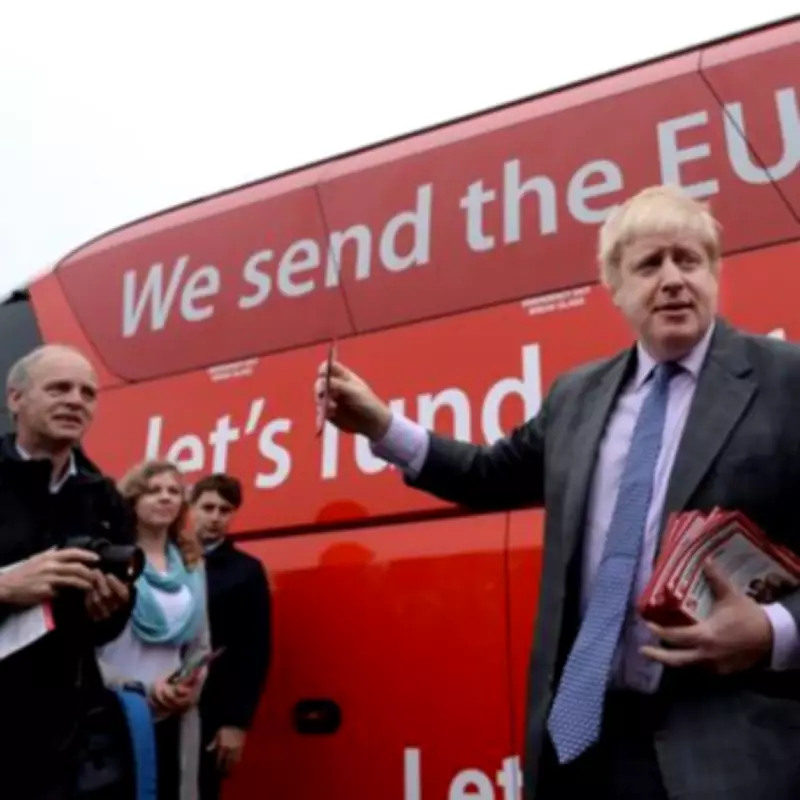
This Saturday marks a significant milestone in British political history: ten years since the United Kingdom voted to leave the European Union. The 2016 referendum, which saw 52% of voters opt for Brexit, unleashed a period of profound political turmoil that reshaped the nation's trajectory.
A Decade of Political Upheaval
The aftermath of the Brexit vote was immediate and chaotic. Conservative Prime Minister David Cameron resigned in the wake of the result, setting the stage for a turbulent period in British governance. His successors, Theresa May and Boris Johnson, both grappled with the immense challenge of negotiating a withdrawal agreement that could pass through a deeply divided Parliament.
The political landscape was further transformed by the rise of Nigel Farage. Initially leading UKIP, then the Brexit Party, and now Reform UK, Farage has remained a persistent and influential voice on European matters. His latest calls focus on renegotiating the Brexit deal to restrict benefits for EU citizens in the UK, a move some analysts warn could provoke a damaging trade war.

Current Political Stances on EU Relations
In contrast, Labour leader Keir Starmer has actively worked to mend fences with Brussels. In a speech late last year, he argued that the way Brexit was "sold and delivered was simply wrong," emphasising the need for a functional relationship that benefits the British people.
The Liberal Democrats advocate for even closer ties, proposing a new customs union with the EU. This position found unexpected support before Christmas when Labour's Wes Streeting broke ranks to endorse the idea. Adding to the chorus for stronger European links, TUC General Secretary Paul Nowak highlighted the importance of closer Brussels ties, especially given concerns over the reliability of other international partners like Donald Trump.
A Glimmer of Reconnection: Erasmus+ Returns
In a tangible step towards renewed cooperation, the Government announced in December that the UK will rejoin the Erasmus+ programme. This decision will allow British students to study at European universities once more, a opportunity lost since Brexit. Officials estimate that over 100,000 people in the UK could benefit from the scheme in 2027 alone, its first full year of operation.
Public Opinion: A Nation Still Divided
Despite the passage of a decade, Brexit remains a deeply polarising issue. An exclusive Deltapoll survey for The Mirror, conducted earlier this month, reveals a nation still split on its future with Europe.
The poll found that if a second Brexit referendum were held today, nearly six in ten (58%) of those who would vote would cast their ballot to rejoin the European Union. This desire to reverse Brexit is not uniform across the population, however, revealing stark generational and political divides.
- Generational Split: Support for rejoining is highest among the young, with more than eight in ten (86%) of 18 to 24-year-olds backing a return to the bloc. This enthusiasm wanes with age. Among 55 to 64-year-olds, opinion is almost evenly split (51% to 49% in favour of remaining outside), while the over-65s predominantly support the status quo (58% to 42%).
- Political Loyalties: The poll also highlights clear partisan lines. Conservative and Reform UK voters strongly back maintaining the current post-Brexit arrangement, by 66% and 82% respectively. Conversely, Labour and Liberal Democrat supporters overwhelmingly favour rejoining the EU, by 71% and 78%.
As the UK reflects on a decade outside the European Union, the debate over its relationship with the continent is far from settled. The political arguments continue to evolve, and public opinion remains fractured, ensuring that Brexit will remain a defining and contentious issue in British politics for years to come.






