
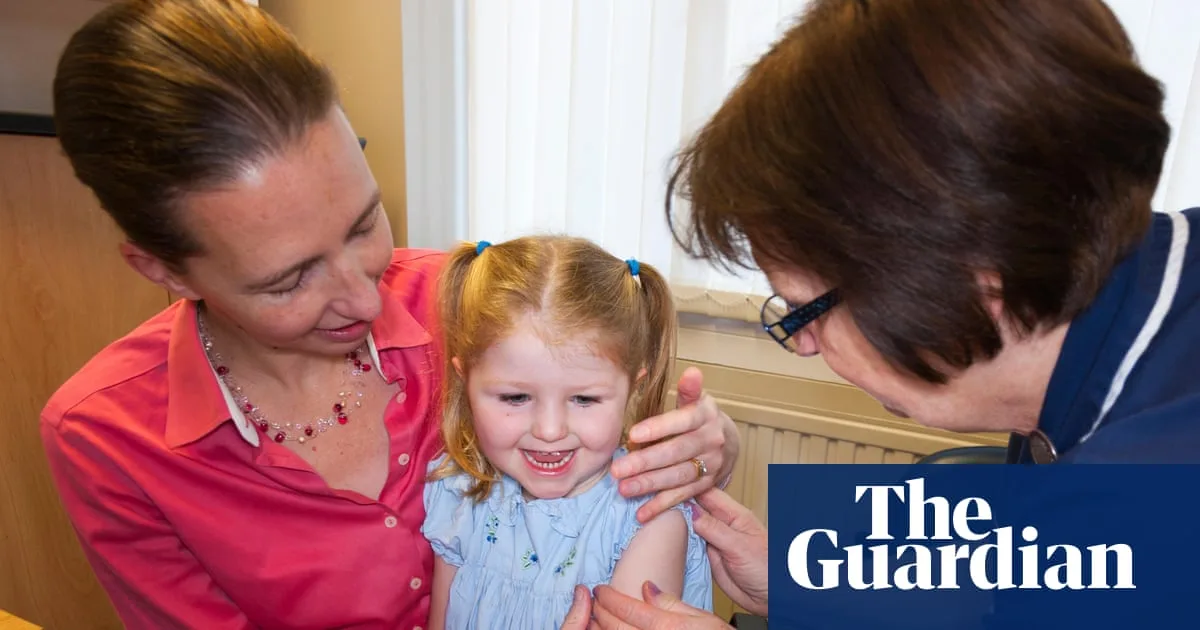
Health visitors are to deliver vaccines door-to-door to children in England under a £2m pilot scheme, amid concern that one in five start primary school with no protection against deadly diseases.
The initiative, beginning in January, targets families not registered with a GP or facing barriers such as travel costs, childcare or language difficulties. Twelve pilot areas across five regions will take part: London, the Midlands, the north-east and Yorkshire, the north-west and the south-west. If successful, the scheme will be extended nationwide in 2027.
Official data shows no childhood vaccine in England met the World Health Organization's 95% target in 2024-25. Only 91.9% of five-year-olds received one MMR dose, the lowest since 2010-11, while 83.7% had both doses. Coverage for the Hib/MenC vaccine fell to 88.9%, and the four-in-one preschool booster was at 81.4%.
Health Secretary Wes Streeting said: "Every parent deserves the chance to protect their child from preventable diseases, but some families have a lot going on and that can mean they miss out." He added that health visitors are trusted faces and that the scheme aims to tackle health inequalities.
The announcement comes as the NHS faces pressure from winter viruses. Meanwhile, a chickenpox vaccine will be rolled out across England from Friday. The move follows the death of a child from measles in Liverpool in July and the UK being ranked worst in the G7 for MMR uptake.




