
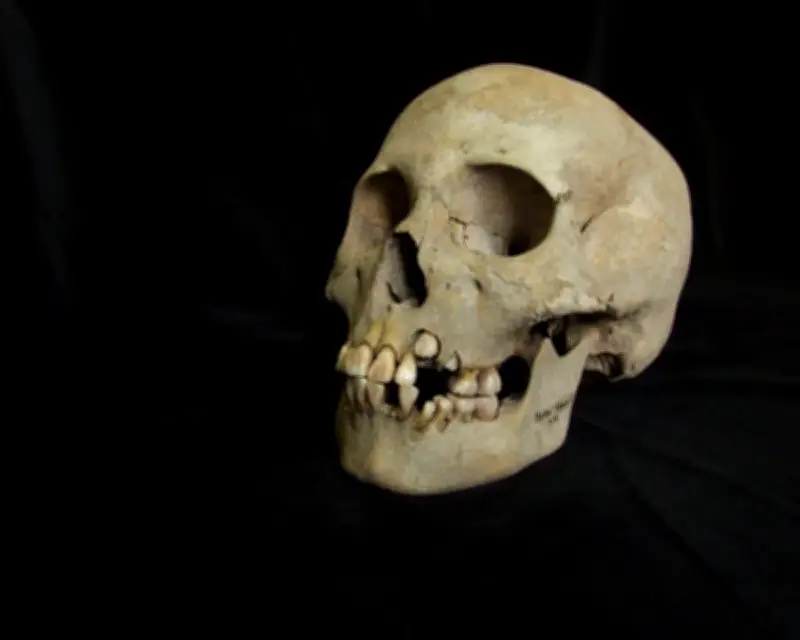
The earliest evidence for an outbreak of plague has been uncovered at late stone age cemeteries in south-eastern Siberia where dozens of hunter-gatherers and their children were buried. Ancient DNA collected from the remains suggests the disease tore through the sparse communities in devastating waves that began about 5,500 years ago, at least two centuries after the bacterium responsible, Yersinia pestis, first emerged.
Discovery at Ust-Ida Burial Ground
The skull of an approximately 10-year-old girl discovered at the Ust-Ida burial ground provided key insights. The hunter-gatherers probably became infected after butchering or eating raw marmots, a risky practice that still causes plague deaths today. After spilling over from the chunky ground squirrels, the primary animal reservoir in the area, the disease spread from person to person, decimating families and others in close contact.
Why So Many Children?
The work resolves a longstanding mystery of why so many children were among the dead at one cemetery in particular, named Ust-Ida, on the bank of the Angara River north-west of Lake Baikal, the oldest and deepest lake in the world. The shared graves uncovered at Ust-Ida predominantly contained the remains of children. While older hunter-gatherers might have survived past brushes with the disease and gained some immunity, young children were exceptionally vulnerable. At least two-thirds of the dead at two of the cemeteries were under 15 years old. Many who died shared graves with siblings or other family members.
Ruairidh Macleod, a research fellow who studies ancient DNA at the University of Oxford, said: “The archaeologists were keen to see whether ancient DNA analysis could shed any light on what happened and it absolutely did. Getting the result that all these people were dying of plague was extraordinary but super exciting. We really didn’t expect to find this in prehistoric hunter-gatherers.”
DNA Analysis on Skeletons
The international team, including researchers in Copenhagen, Alberta, Cambridge and London, analysed dental pulp in the teeth of skeletons excavated from the cemeteries. The graves typically run parallel to the river, with bodies laid so the heads point downstream. Tests on 42 hunter-gatherers buried at four cemeteries on the Angara river found that 18 of them (39%) contained Y. pestis DNA, a higher proportion than is seen in some medieval plague pits. Given the high chance of false negatives, where infections are missed because the DNA is too degraded, the scientists suspect all those buried may have died from plague.
Two Distinct Outbreaks
Writing in Nature, the researchers describe how the ancient DNA points to two distinct outbreaks, with the first starting about 5,500 years ago and the second 400 to 600 years later. Further analysis showed that Y. pestis emerged at least 5,700 years ago, after splitting from its ancestor, a bug called Yersinia pseudotuberculosis, which can cause abdominal pain, fever, diarrhoea and vomiting. The earliest evidence of plague in Britain is 4,000 years old, with traces of Y. pestis found in the teeth of men and women excavated at bronze age burial sites in Cumbria and Somerset.
Forms of Plague
The hunter-gatherers most likely contracted pneumonic plague, which affects the lungs. The same bacterium causes other forms of the disease, namely septicemic plague, a blood infection, and bubonic plague, which leads to swollen lymph nodes, or buboes, in the armpits, neck and groin. Bubonic plague typically spreads through infected fleas and triggered devastating pandemics such as the Black Death, which killed half of the European population in the 14th century.
Lethal for Children
Scientists have questioned whether the very earliest forms of plague were deadly, because they lacked virulence genes that allowed bubonic plague to spread through fleas and rodents. The Y. pestis found at the Lake Baikal cemeteries carried a superantigen, or toxic protein, that could trigger severe immune reactions, raising the risk of the disease being particularly lethal for children, the researchers found.
Samuel Cohn, a professor of medieval history at the University of Glasgow, said the work reached “groundbreaking conclusions” by identifying such early outbreaks in hunter gatherers, rather than in populations that arose at agricultural settlements. Isolated communities suffered in later outbreaks, however. During the Black Death, mountainous villages were hit in Snowdonia and across Tuscany, he said.
Implications
Plague outbreaks conjure up images of densely populated, rat-infested cities in the middle ages, but the latest work shows that small communities of ancient hunter-gatherers were far from safe. “To me that makes a lot of sense,” said Macleod. “If you’re a prehistoric hunter-gatherer, you’re going to be in contact with a lot more wild species than an early farmer, and it’s the wild species that are primarily the reservoirs of the disease, not the domesticated animals.”




