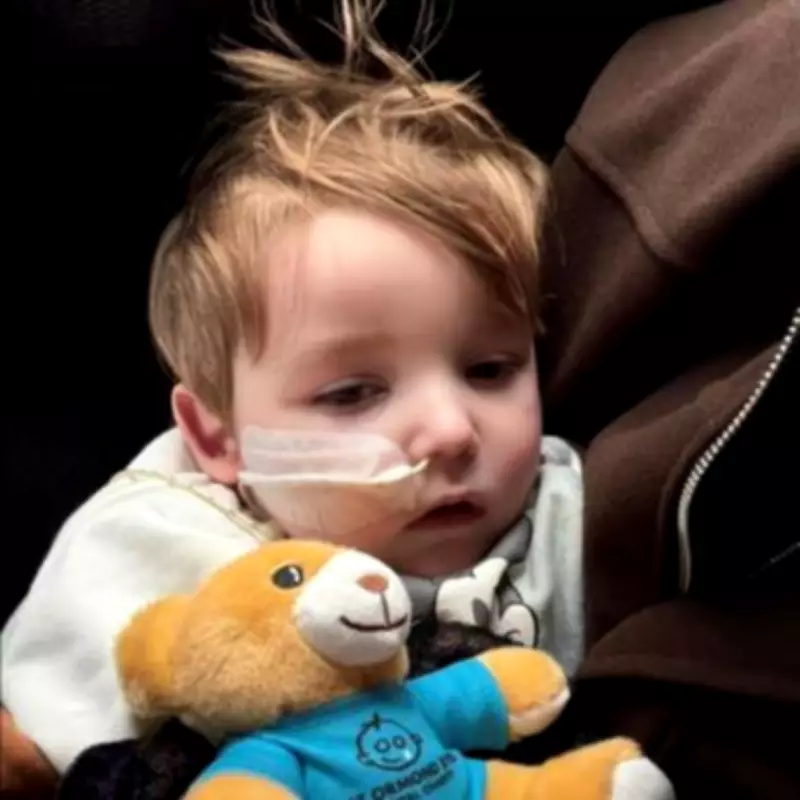
A Medical First: Toddler's Unique Gene Mutation Diagnosis
In a heartbreaking medical case, a two-year-old boy from Suffolk has been diagnosed with a condition so exceptionally rare that it represents a world first. Oli-Jay Morris suffers from mitochondrial disease DNM1L-EMPF, a genetic disorder that has never been documented in any other patient before.
The Devastating Impact of Mitochondrial Disease
This devastating condition means Oli-Jay's cells cannot produce the essential energy required for basic bodily functions. The simplest activities that healthy children take for granted—eating, speaking, crying, or even breathing—present monumental challenges for this critically ill toddler.
The DNM1L gene mutation typically causes severe neurological and metabolic illness, but Oli-Jay's case includes the EMPF variant, making his condition completely unique in medical history. For the last four weeks, he has been receiving care at Addenbrooke's Hospital in Cambridge after developing serious respiratory problems.

New Hope Through International Collaboration
Despite the grim prognosis, Oli-Jay's family has discovered a glimmer of hope through international medical collaboration. After receiving the diagnosis, his father Rob contacted the DNM1L Foundation in the United States, which facilitated a crucial meeting with Unravel Biosciences.
The biotechnology company conducted an intensive genetic analysis of Oli-Jay's condition, identifying several potential medications that could improve his quality of life—treatments currently unavailable through the NHS. The family raised £14,000 to cover the analysis costs and received the comprehensive report just last week.
Significant Medication Discoveries
"They've come up with very significant medications that can help Oli, not as a cure, but as a treatment," explained his mother Melanie Morris. The analysis revealed startling information about current treatments, showing that midazolam—which Oli-Jay currently receives—has only a 3% effectiveness rating, compared to diazepam's 87% rating.
Melanie has convened meetings with her son's clinical team, the DNM1L Foundation, Addenbrooke's Hospital staff, nurses, and other medical professionals to discuss these findings. "At the moment they are not saying yes or no to anything," she noted. "Great Ormond Street has got it and they are looking at the whole thing and they are going to look at a plan for Oli."
A Family's Determined Fight for Treatment
The Morris family, including Oli-Jay's older siblings Jordon (18), Codi (16), and Tommy-Jay (11), remain determined in their search for effective treatment. They have established a GoFundMe page to raise funds for ongoing care and research into potential cures for this unprecedented condition.
"The US team have said, this is what we've got," Melanie explained. "Obviously some things probably can't be used but it's just an insight into what things can be used. I don't know how the clinical team feel about it, but it gives me hope and it's given all my family hope because we get a better understanding of what my baby needs."
The DNM1L Foundation represents the family's primary hope for Oli-Jay's survival. "They are literally my only hope," Melanie emphasized. "They are the only ones that can save him." This extraordinary case highlights both the challenges of ultra-rare genetic disorders and the potential of international medical collaboration to provide hope where previously there was none.