

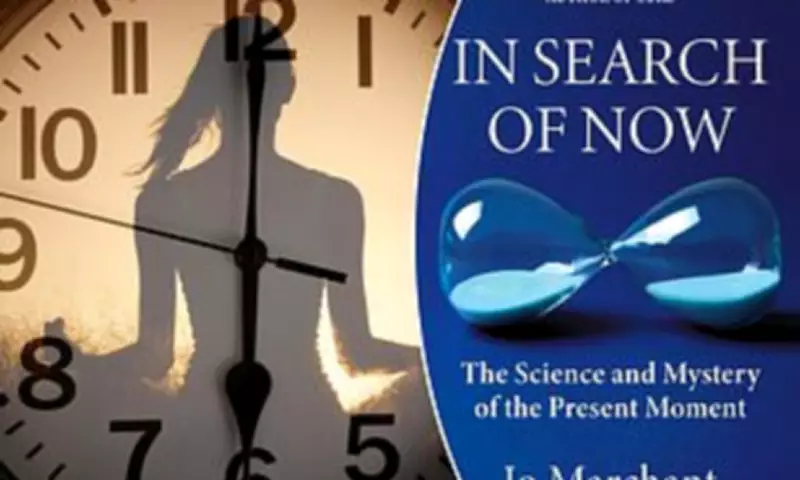
Deep within the vast expanse of the Amazonian rainforest, the Amondawa indigenous people inhabit a world entirely divorced from the temporal constructs that govern modern society. This remarkable community possesses no clocks or calendars, measures no seconds, minutes, or hours, and intriguingly, lacks any linguistic term for the concept of 'time' itself. As science writer Jo Marchant elucidates in her compelling and often astonishing new book, the Amondawa exist in a state of being 'immersed in the present moment,' a reality that stands in profound contrast to nearly all other inhabitants of the contemporary world.
A World Without Temporal Measurement
Our global civilisation is fundamentally obsessed with the relentless passage of time, structuring our lives around schedules, deadlines, and historical records. Yet, in a philosophical sense, we, much like the Amondawa, are necessarily anchored in the immediate present. Marchant poetically describes this present moment as something that 'bathes us like air, or gravity,' an ever-present backdrop to our consciousness. However, the Amondawa's experience of 'Now' is not merely philosophical but a lived, cultural reality, unburdened by numerical counting beyond the number four.
The Illusory Nature of 'Now' in Physics
This indigenous perspective becomes even more fascinating when examined through the lens of contemporary physics. According to some of the most widely accepted scientific theories, the 'Now' we perceive may not objectively exist at all. It is potentially an elaborate illusion constructed by our brains. In the fundamental equations scientists use to describe the universe, 'each and every point in time is ever-present and mathematically equal.' This suggests time does not flow like a river from past to future but simply is, a static block where all moments coexist.

As renowned American physicist Brian Greene posits, 'Our past may not be gone. Our future may already exist.' This renders the common-sense concept of a fleeting 'Now' profoundly elusive. Marchant dedicates her work to exploring this very paradox, questioning the nature of temporal experience. She asks, 'What is the smallest possible piece of now?' The answer lies in an almost incomprehensibly brief interval: 247 zeptoseconds, a unit representing a trillionth of a billionth of a second, the shortest span scientists have ever measured.
How the Brain Constructs Our Temporal Reality
In everyday human experience, our perception has limits. The average person cannot distinguish between two events occurring less than 20 milliseconds apart, perceiving them as a single, unified moment of 'Now.' Marchant delves deeply into the neuroscience behind how our brains fabricate this continuous sense of time passing. This construction is not fixed; it can be dramatically altered by neurological conditions and psychoactive substances.
The book recounts the case of a woman suffering from akinetopsia, a rare neurological disorder that left her 'marooned in a world of frozen moments.' For her, objects and people did not move fluidly but appeared in a disconcerting series of sudden, jarring jumps. Historical experiments with hallucinogenic drugs reveal similarly distorted time perceptions. In 1913, Slovenian physician Alfred Serko, after injecting himself with mescaline, reported 'swimming in a limitless river of time.' Decades later, a volunteer given psilocybin felt convinced a simple bowl of soup had been 'in front of me for hundreds of years.'
The Centrality of 'Now' to Human Identity
Through twenty concise and illuminating chapters, Marchant guides readers through a 'dizzying range of possibilities for Now.' She moves from the block universe theory of physics, where all time exists simultaneously, to cutting-edge developments in both cosmology and neuroscience. The evidence she presents is overwhelming: 'We each construct our own Now,' and this personal, subjective present is utterly central to our core sense of self and identity.

Marchant quotes the insightful Italian physicist Carlo Rovelli, who reflects, 'Precisely because of its impermanence… the Now has meaning and is precious.' This sentiment captures the essence of the exploration: while physics may question the objective reality of the present moment, our subjective, brain-generated experience of 'Now' is what binds our consciousness together. As Marchant powerfully concludes, 'We are literally held together by a stable, continuous Now,' a fragile yet vital construct that defines the human experience, whether in the heart of the Amazon or the midst of a modern metropolis.





