

Infant Vision Breakthrough: 2-Month-Olds See World More Complexly Than Believed
A groundbreaking neuroscience study has revealed that babies as young as two months old possess a more sophisticated understanding of their visual world than scientists previously believed. The research demonstrates that infants at this early age can already distinguish between different object categories, a cognitive ability that was thought to emerge much later in development.
Advanced Brain Imaging Reveals Early Capabilities
The study, published in the prestigious journal Nature Neuroscience, utilised functional magnetic resonance imaging (fMRI) to examine brain activity in 130 awake two-month-old infants. Researchers presented the babies with images from twelve categories commonly encountered during the first year of life, including trees, animals, and various inanimate objects.
Lead researcher Cliona O'Doherty explained that when infants viewed different types of images, their brains responded with distinct patterns of activity that researchers could clearly record. "Looking at a cat versus an inanimate object produced different neural firing patterns," O'Doherty noted, indicating that even at this tender age, babies' brains are already categorising their visual experiences.

Challenging Previous Developmental Timelines
This discovery fundamentally challenges established scientific understanding about infant cognitive development. Previous research, which often relied on measuring how long infants looked at objects, suggested that category distinction abilities emerged between three to four months of age.
"What we're showing is that they really already have this ability to group together categories at two months," O'Doherty emphasised. "So it's something much more complex than we would've thought before. Infants are interacting with the world in a lot more complex of a way than we might imagine."
Methodological Innovation and Challenges
The study represents a significant methodological achievement in developmental neuroscience. Conducting fMRI scans with awake two-month-old infants presents substantial practical challenges, as neuroscientist Liuba Papeo from France's National Center for Scientific Research acknowledged.
"The infant needs to lie comfortably in the fMRI scanner while awake without moving," Papeo noted in an email, describing this as perhaps the most obvious challenge. The research team's success in collecting data from so many young infants makes the work "impressive and unique" according to Papeo.
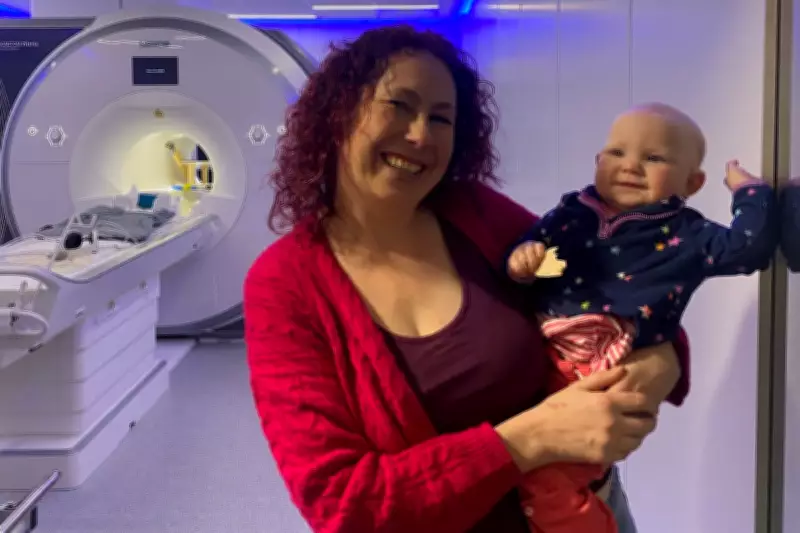
O'Doherty, who conducted the research at Trinity College Dublin, revealed their solution: creating a comfortable scanning environment where babies reclined on bean bags while large images were projected above them. "It's like IMAX for babies," she described.
Developmental Progression and Future Implications
The longitudinal aspect of the study provided further insights into developmental progression. Many participants returned at nine months old, with researchers successfully collecting follow-up data from 66 infants. At nine months, the brain's ability to distinguish between living things and inanimate objects had strengthened significantly compared to the two-month measurements.
Researchers believe these findings could have important implications for understanding cognitive development trajectories. The study opens possibilities for connecting early brain imaging patterns with cognitive outcomes later in life, potentially helping doctors and researchers better understand developmental pathways.
This research not only advances our understanding of infant cognition but also demonstrates how technological innovations in brain imaging are revealing previously hidden aspects of human development from the earliest stages of life.






