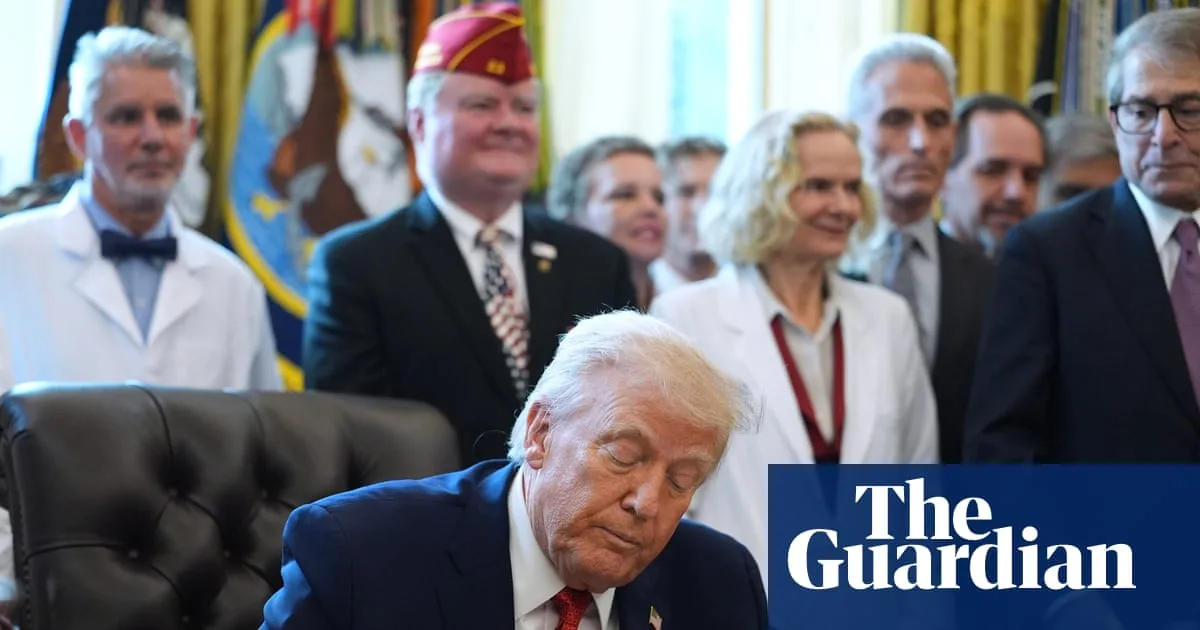
President Donald Trump has moved to reclassify cannabis following a months-long federal review of the drug and its current restrictions. Acting Attorney General Todd Blanche signed an order reclassifying state-licensed medical marijuana on Thursday, stating the effort was 'delivering on President Trump’s promise' to expand medical options for Americans.
Details of the Reclassification
'This rescheduling action allows for research on the safety and efficacy of this substance, ultimately providing patients with better care and doctors with more reliable information,' Blanche’s statement said. The shift marks a significant step toward loosening federal barriers on marijuana. The order establishes a system for marijuana producers to register with the Drug Enforcement Administration (DEA) and helps legitimize the 40 medical cannabis programs within states that have adopted such laws.
Trump ordered the review in December, targeting cannabis's Schedule I designation—a category reserved for drugs like heroin, LSD, and ecstasy. The reclassification is expected to ease limits on research and expand legal use. 'The Administration continues to expeditiously implement President Trump's December executive order to increase medical marijuana research to close the gap between current medical marijuana use and medical knowledge,' a White House official told the Daily Mail. Steps to reschedule cannabis could come as soon as this week, Axios reported.
Political and Industry Reactions
The administration's plan would classify cannabis as a Schedule III substance, the same category as prescription painkillers, ketamine, and anabolic steroids. However, rescheduling cannabis is broadly unpopular among congressional Republicans. Shortly after Trump’s December announcement, 22 GOP senators and 26 Republican House members sent letters urging the president against the effort. 'We don't need rescheduling to do medical research on marijuana—all we are doing is exposing more of our youth to an addictive drug,' said Congressman Andy Harris, chairman of the House Freedom Caucus.
Trump fought back against claims that the reclassification would lead to additional drug use. 'It doesn't legalize marijuana in any way, shape or form,' he said during his December announcement. 'And in no way sanctions its use for a recreational drug.' The president pointedly repeated his opposition to illegal drugs, adding, 'I always told my kids don't take drugs,' and urging America's youth to 'just don't do it.'
Kim Rivers, CEO of cannabis dispensary Trulieve, lobbied Trump for months to secure the regulatory rollback. Her organization donated to Trump, attended fundraisers, and raised the rescheduling issue with White House aides repeatedly before the president sided with her. 'It was a little surreal,' she told the Wall Street Journal.
Market and Legal Implications
Cannabis stock prices jumped on Wednesday after Axios first reported the impending change. Canopy Growth Corp stock spiked over 20 percent, while Tilray’s stock price jumped 15 percent. The change would reshape the cannabis industry by enabling companies to more easily secure loans and funding, which have been stifled by strict federal regulations. It would also lower tax burdens on cannabis companies.
Senior administration officials described the December order as the president keeping his 2024 campaign promise. Trump announced support for rescheduling in 2024 to allow 'research to unlock the medical uses of marijuana,' even as he expressed a desire to ban its use in public spaces to prevent the smell from affecting cities.