

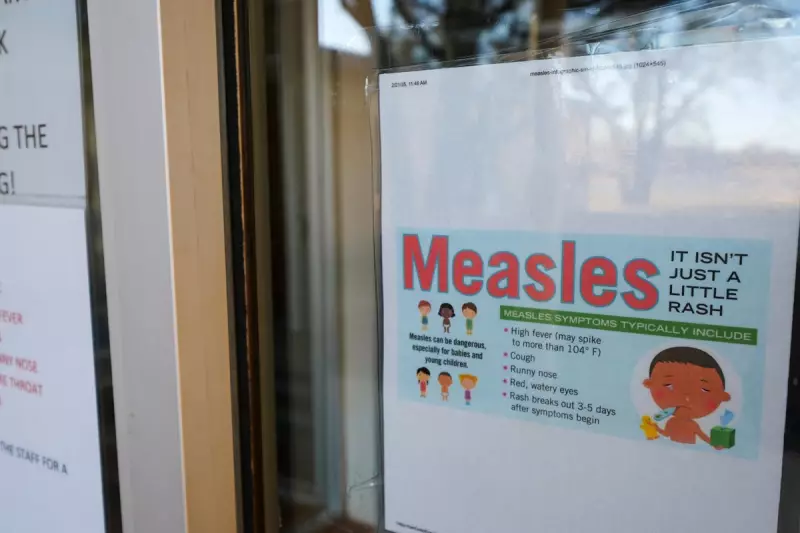
Groundbreaking research from the US Centers for Disease Control and Prevention (CDC) has demonstrated the immense value of nationwide wastewater disease surveillance, revealing it can provide an early warning for measles spread days to weeks in advance. This vital public health tool, however, faces a severe threat from a proposed budget cut that would slash its federal funding by 80%.
Early Warnings from the Sewers
Two new studies published by the CDC on Thursday, 15 January 2026, provide compelling evidence for sewage monitoring. In Colorado, health officials detected measles in wastewater roughly a week before doctors confirmed the first two cases in an outbreak. Critically, neither initial patient knew they had been exposed, allowing the virus to spread silently.
Meanwhile, researchers in Oregon analysed preserved sewage samples from late 2024. They discovered that wastewater testing could have signalled a burgeoning measles outbreak a staggering 10 weeks before the first person tested positive. The subsequent outbreak involved 30 cases across two counties within a close-knit community that rarely seeks formal healthcare.

A National System Under Financial Threat
Despite this proven success, the national wastewater surveillance system is in jeopardy. Established in 2020 and run by the CDC, the network monitors over 1,300 wastewater treatment sites serving 147 million Americans. A budget proposal from the Trump administration would reduce its funding from approximately $125 million annually to just $25 million.
Peggy Honein, director of the CDC's division of infectious disease readiness and innovation, stated the lower funding would only "sustain some of the most critical activities" and force difficult prioritisation. Most state programmes are entirely reliant on this federal support.
Allison Wheeler, manager of Colorado's wastewater surveillance unit, confirmed her state's programme is 100% federally funded. While Colorado's work is secured through 2029, Wheeler expressed concern for other states: "They need this funding in order to sustain their programme for the next year."
Proven Value in Curbing Outbreaks
The studies underscore how wastewater data acts as a force multiplier for public health teams. In Colorado, after the early wastewater alert, officials traced 225 contacts from the first cases, uncovering five more infections. In New Mexico, which suffered a major outbreak last year resulting in 100 cases and one death, the system flagged virus activity in a northwestern county while health teams were focused on a large outbreak 300 miles away in the southeast.
This early intelligence allowed for rapid alerts to doctors and the public, lowered testing thresholds, and a strategic refocus of resources, helping to end the outbreak by September. States like Utah have even integrated real-time wastewater data into public-facing dashboards.
Dr. Melissa Sutton of the Oregon Health Authority praised the system's adaptability, affordability, and reach, calling its widespread use "one of the greatest advancements in communicable disease surveillance in a generation." She remains hopeful federal leaders will recognise its power before funding decisions are finalised.






