
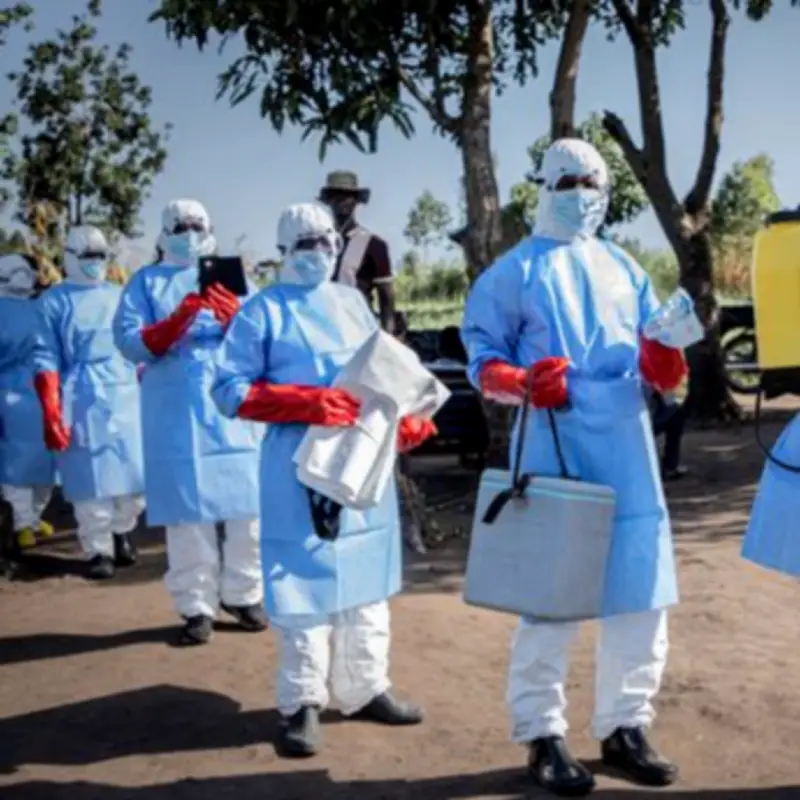
An outbreak of a rare Ebola strain in the Democratic Republic of Congo (DRC) could become the largest ever recorded for that variant, as contact-tracing teams admit they are only managing to track down around half of suspected cases.
Rising Cases and Deaths
The DRC's Ministry of Health reported its biggest daily jump in infections on Sunday, June 14, with 72 new cases detected in 24 hours. This brings the official total to 782 confirmed infections and 181 confirmed deaths. However, health authorities say the true number is likely far higher because many cases are not being detected or reported.
Bundibugyo Strain Challenges
The World Health Organization (WHO) has confirmed the outbreak is being driven by the Bundibugyo ebolavirus strain, which is far rarer than the better-known Zaire strain. WHO has previously said the Bundibugyo strain had only been linked to a handful of outbreaks, including in Uganda in 2007 and in the DRC in 2012.
Health officials warn the strain poses added challenges because there are no approved vaccines or targeted treatments specifically for Bundibugyo, meaning medics are largely relying on supportive care such as aggressive rehydration and isolation measures to curb transmission, according to UN News.
Detection Delays
Authorities also reportedly say the outbreak was harder to detect in its early stages because initial testing focused on the Zaire strain. As a result, local labs did not immediately have the tools to identify Bundibugyo, allowing it to spread undetected in communities. The epidemic is centred in the country's north-east, where insecurity and displacement are hampering efforts to contain it.
Response Efforts Overwhelmed
Aid agencies have warned that conflict and population movement make it difficult for health teams to reach patients quickly, identify contacts, and keep people under monitoring for the full incubation period. Public health experts say effective Ebola control typically requires tracing and monitoring the vast majority of contacts, but officials have warned current tracing levels are falling well short, leaving gaps where the virus can continue to spread.
Kate White, emergency medical coordinator for Doctors Without Borders in Congo, said nobody knows the true scale of the outbreak or exactly where the disease is spreading, as reported by the Sun. A month after the outbreak was first reported, she warned the spread of cases was now outpacing the response effort.
Doctors Without Borders said treatment centres in the epicentre are overwhelmed, with many patients arriving in advanced stages of illness. White added that most patients had not been confirmed as known contacts of earlier Ebola cases before developing symptoms, a sign the virus is moving beyond the reach of tracing teams.
Water and Sanitation Crisis
Manel Rebordosa, Oxfam's field response coordinator in Ituri, told Sky News that contaminated water, a lack of handwashing facilities, and the difficulty of disposing of infectious waste are all fuelling transmission. He said: "Water, the absolute first line of defence in any public health emergency, is simply not available. Miners working in the surrounding areas have no toilets and handwashing stations. Then they return home to communities already battling the virus. Clean water costs $2 (£1.50) for 20 litres. For most families here, that is far beyond what they can afford."




