
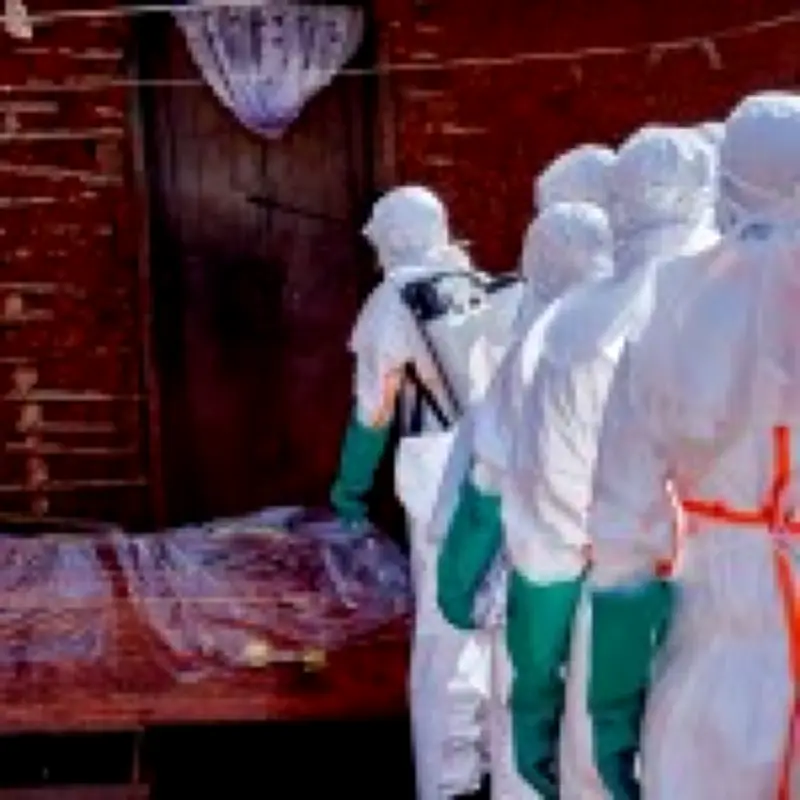
Oxfam has declared that the 'first line of defence' against a deadly strain of Ebola has collapsed. The Democratic Republic of Congo (DRC) is facing its largest-ever outbreak of the virus, with nearly 781 infected and 181 dead. However, Oxfam warns that the true toll is likely far higher as the country's contact tracing programme and water infrastructure are at breaking point.
Water Crisis in Ituri Province
Only one in five health centres in the northeastern province of Ituri, the worst-affected region, has access to enough clean water. In Mongbwalo, a town of 140,000 people, only two in ten have access to clean water, and a quarter have access to working hygiene facilities. Manel Rebordosa, Oxfam's field response coordinator, said this forces families to use water contaminated with chemicals from local mines.
'Water – the absolute first line of defence in any public health emergency is simply not available,' she said. 'Miners working in the surrounding areas have no toilets and handwashing stations. Then they return home to communities already battling the virus. Clean water costs $2 (£1.50) for 20 litres. For most families here, that is far beyond what they can afford.'
Community Impact
Tibakanya Mireille, a mother of five in Ituri, said she is 'worried' her child has become infected with Ebola. 'Here, two houses have been quarantined, and one family lost several relatives after caring for a sick relative, which caused others to be sick,' she said. 'The disease has already killed several people in our community of Shari, in Bunia.'
Why This Outbreak Is Unprecedented
The strain of Ebola virus behind this outbreak, known as Bundibugyo, is rare and has no vaccine or treatment. The US Centers for Disease Control and Prevention (CDC) has confirmed this is the largest Bundibugyo outbreak on record. North Kivu province is even seeing Ebola cases being identified after the patient has died, unaware they had the illness. Contact tracing coverage stands at just 43%.
Oxford fieldwork found that there are only 0.2 doctors per 1,000 people, and some 70 health facilities have been destroyed by conflict. The years-long violence that has torn the DRC has displaced millions, including people in Ituri, complicating contact tracing efforts.
Global Response and Challenges
The World Health Organisation has officially declared the Ebola outbreak in Congo as an 'emergency of international concern'. Officials stress that while this is not a global pandemic like Covid, there is concern about regional spread after cases have crossed into Uganda. Ebola is spread through bodily fluids, and this strain currently has no approved vaccine or treatment.
Aid workers have erected isolation tents and disinfection stations near hospitals, only for locals to burn down the facilities when officials refused to hand over the bodies of the dead over fears of infection spread. People can become infected with Ebola through contact with the bodily fluids of an infected, sick, or dead person. Locals see hospitals as 'death traps', so they are turning to traditional health methods, which Rebordosa says is hampering containment.
Rebordosa also noted the US role in the outbreak: 'One month into the 2018 outbreak, healthcare workers achieved contact tracing rates where nearly eight in ten known contacts were successfully monitored. Today, following the withdrawal of the US funding for disease surveillance and severe funding shortfalls, contact tracing is reaching fewer than half of the contacts. That gap is not just a statistic; it is a painful reality that allows the virus to spread undetected through communities.'
Understanding Ebola
Ebola is an illness caused by a group of related viruses, known as orthoebolaviruses. Infections come in two parts – dry and wet. Dry symptoms, which include fever, aches, pains, and fatigue, can progress to 'wet' ones such as diarrhoea, vomiting, and bleeding. As the first round of symptoms, which show within 21 days, resemble the common cold or flu, many Ebola cases go undiagnosed.
The US withdrew from the World Health Organization in January after closing the US Agency for International Development.
Glimmer of Hope
There is some hope: About 25 people have recovered from the virus, the Africa CDC said last Wednesday. Dr Katherine O'Reilly, a medical director at International SOS, told Metro that there is an 'experimental' Bundibugyo vaccine in the works. 'The vaccine is being developed in the UK by the Oxford Vaccine Group using the same technology used to develop the COVID vaccine,' she said. 'Researchers are developing a Bundibugyo Ebolavirus candidate vaccine, ChADOx1BDBV, looking at an accelerated schedule while adhering to established scientific, ethical, and regulatory standards.'




