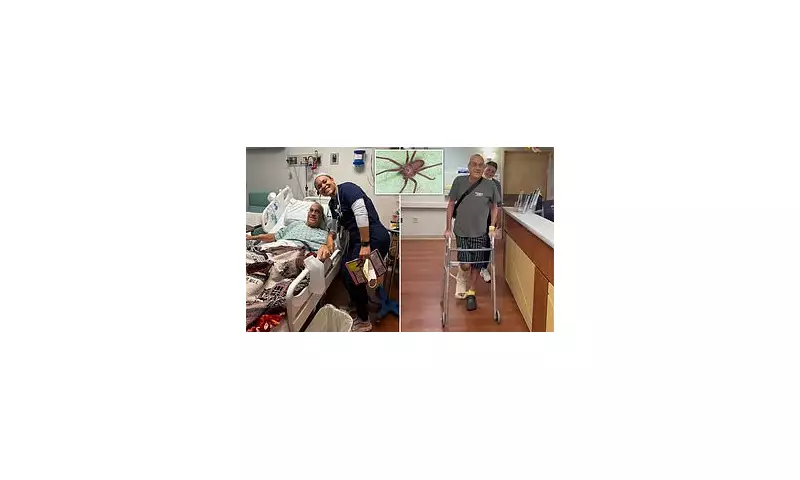
What started as a suspected spider bite on a North Carolina farm led to a life-or-death cancer diagnosis for a 62-year-old carpenter, who was told he had just days to live without immediate treatment.
From a Minor Bite to a Major Crisis
In late May, Bobby Sipka was working on his property in rural Moyock, North Carolina, when he felt a bite on his elbow. He believed it came from a juvenile brown recluse spider, a species common in the central and southern US known for its violin-shaped marking. 'At the time, I didn't think much of it,' Sipka admitted, noting his reluctance to visit doctors.
Over the following months, a series of unexplained symptoms emerged. After aggravating an old Achilles injury, he noticed persistent bruising, wounds that wouldn't heal, and crushing fatigue. Antibiotics proved useless, and his health continued to decline. 'The spider bite wasn't getting better like it should,' Sipka recalled. 'Then things that should have healed just didn't.'

A Shocking Diagnosis and Immediate Fight
After initial treatment in Elizabeth City, North Carolina, worsening symptoms led specialists in Virginia to run urgent tests. Within hours of arriving at Sentara's cancer centre in Virginia Beach, blood tests revealed the truth: Bobby Sipka had acute myeloid leukaemia (AML), an aggressive blood cancer.
The news was devastatingly stark. Doctors informed him that without immediate intervention, he had between three and seven days to live. 'They told me if I hadn't come in when I did, I had maybe three to seven days,' Sipka said. His first thoughts turned to his family, especially his grandchildren. 'I didn't want them to grow up without a grandfather,' he stated. 'I wasn't done yet.'
The diagnosis finally explained the weight loss and extreme fatigue his family had observed. He was hospitalised immediately, beginning a gruelling 50-day stay for aggressive chemotherapy. The treatment left him so weak he was sometimes unable to walk or lift his head. 'There were moments I just wanted to give up,' he confessed.
The Road to Remission and a Plea for Help
Sipka credits the extraordinary care from nursing staff for helping him persevere. One nurse knelt by his bed, held his hand, and reassured him. During a wound dressing, another sang 'Amazing Grace' with his niece. 'They took care of me medically, but they took care of me emotionally too,' Sipka said. 'That wasn't part of the job.'
After nearly seven weeks, he was discharged. In a moving send-off, nurses—including some not on shift—gathered to watch him ring the hospital's remission bell. Now in remission, Sipka continues monthly chemo injections and daily pills. On 7 January, he travelled to Duke University for a bone marrow transplant consultation, facing a shortened life expectancy without a donor.
His experience has led him and his family to issue an urgent plea for blood and platelet donors. 'There were times they didn't have my blood type on hand,' he revealed, describing how supplies had to be rushed from other counties. He emphasises that donated blood has a limited shelf life and delays can be fatal.
Reflecting on the strange path that saved him, Sipka clarifies the spider bite did not cause his cancer. Instead, it was the catalyst that forced him to seek medical help. 'It just got me to the doctor,' he said simply. 'That saved my life.'