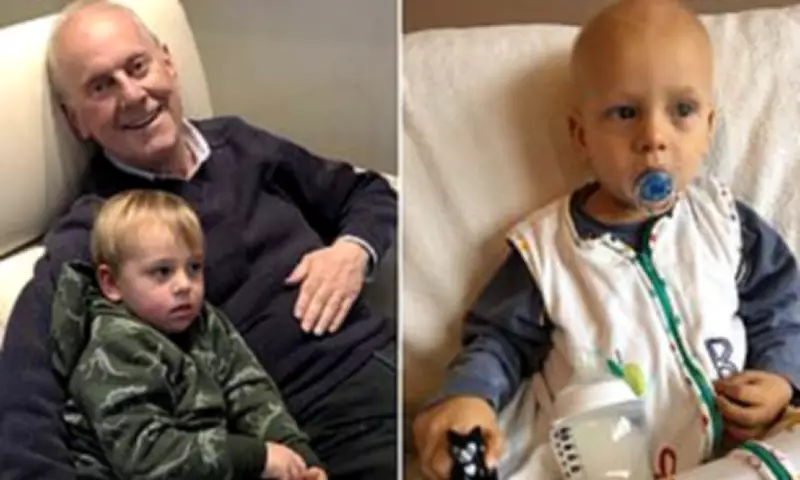
Television personality and podcast host Gyles Brandreth has spoken candidly about the profound shock of his grandson's childhood cancer diagnosis, admitting he previously thought of the disease as primarily affecting "unlucky middle-aged people." The 77-year-old broadcaster described the moment his family's world was turned upside down when Kitt, then just 15 months old, was diagnosed with a rare form of cancer in April 2017.
A Discovery During Routine Care
The alarming journey began when Kitt's parents, writer Saethryd Brandreth and her husband Mark, an Army veteran, discovered a small, pea-shaped lump near their toddler's stomach while changing his nappy. Initially, a GP suggested the lump was likely a benign cyst or hernia, providing temporary reassurance to the concerned family.
However, subsequent medical tests delivered devastating news: Kitt had been diagnosed with rhabdomyosarcoma, a rare soft tissue sarcoma that affects fewer than 60 children annually across the United Kingdom. "Kitt's diagnosis was a shock to the system," Brandreth revealed. "We think of cancer as something that happens to unlucky middle-aged people. You think of breast cancer or prostate cancer and older people, but you don't think of kids - well, we didn't."

The Treatment Journey at Great Ormond Street
The family immediately turned to Great Ormond Street Hospital (GOSH), where Kitt began an intensive treatment regimen. The young patient underwent chemotherapy that caused him to lose his hair, required multiple blood and platelet transfusions, and battled a serious bacterial infection that affected both his heart and liver.
Brandreth expressed immense gratitude for the care his family received, stating: "The moment we heard Kitt was going to Great Ormond Street we felt reassured because of their world-class reputation. There was the sense that whatever needed to be available would be available." He praised the hospital staff as "matchless at every level, from the consultants right the way through to the nursing staff and everyone else."
Complications and Recovery
During his treatment, Kitt developed veno-occlusive disease, a life-threatening condition often caused by high-dose chemotherapy that obstructs small veins in the liver and can lead to multiple organ failure. Despite this serious complication, the toddler showed remarkable resilience.
Brandreth described the emotional rollercoaster: "It's a case of holding your breath, being patient and trusting in the team. Everyone is there for you. It's very moving because you never feel alone." While Kitt's parents focused on medical care, Brandreth embraced his role as "Grandpa, providing a sense of normality" through playful activities like jigsaw puzzles and funny poems.
A Hopeful Outcome and Ongoing Advocacy
In November 2017, after months of intensive treatment, Kitt received the all-clear and was able to ring the end-of-treatment bell at the hospital - a moment of profound relief for the entire family. Now aged 10 and living abroad with his parents and 19-year-old brother Rory, Kitt has been in remission for eight years and continues with yearly check-ups at GOSH.
Brandreth is now supporting GOSH Charity's appeal to build a world-leading Children's Cancer Centre, speaking ahead of World Cancer Day. The charity emphasizes that more needs to be done to develop kinder cancer treatments for children, noting that many pediatric cancers are still treated with drugs developed in the 1970s despite significant advances like CAR T-cell therapy pioneered at GOSH.
Reflecting on the experience, Brandreth acknowledged: "I think we didn't realise what a long journey it was going to be." His family's story highlights both the challenges of childhood cancer and the critical importance of specialized pediatric care and ongoing research into more effective, less traumatic treatments for young patients.