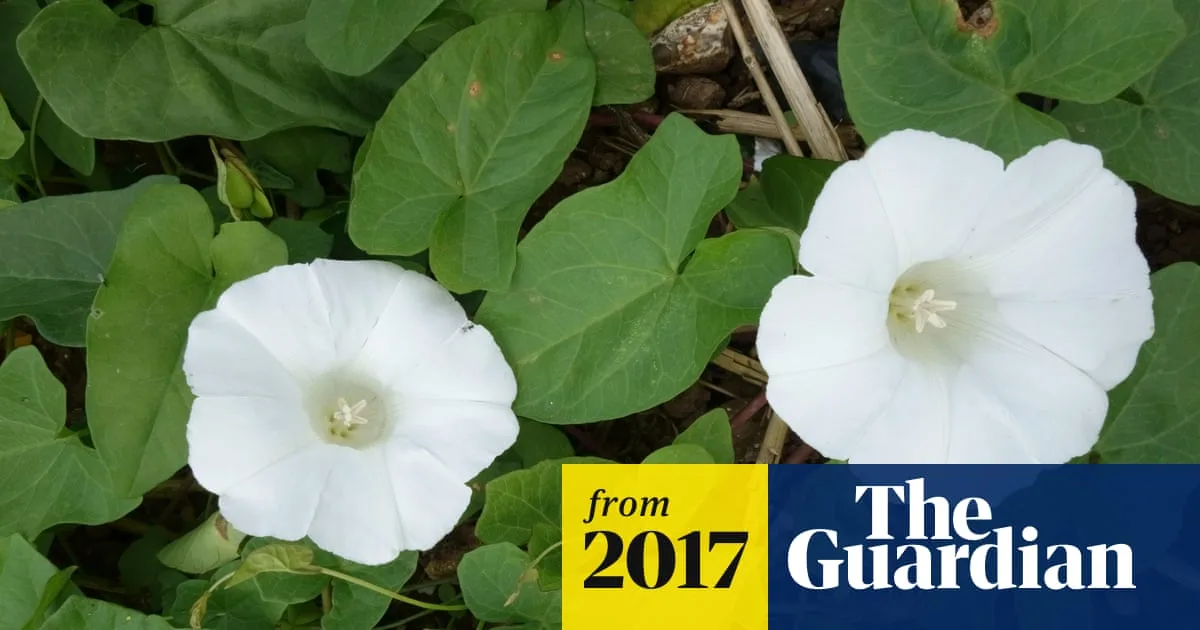
Bindweed, if left unchecked, can weaken even large shrubs and small trees within a single season. The twining plant wraps itself around anything to reach sunlight, producing large white trumpet blooms, but its aggressive growth can smother other plants.
The roots of hedge or greater bindweed (Calystegia sepium) can grow up to three metres long, and seeds can persist in soil for 30 years. Fragile rhizomes near the surface can break off and regrow, making eradication difficult.
Regular forking out of the roots is the most effective method. Gardeners should carefully sieve soil for broken fragments. Persistent pulling of stems can weaken the plant over time. Some use weed-suppressing membrane, but stolons can still spread.
Another method involves allowing bindweed to grow up bamboo canes and then applying glyphosate weedkiller. However, bindweed often outgrows the damage, and yellowing foliage looks unsightly. Digging up the roots is generally more effective.
When bindweed grows up a living plant, avoid pulling the top growth as this strips leaves. Instead, patiently unwrap it or tug from the base to let it die off naturally. Dispose of gathered bindweed by rotting it in a bucket of water and using the liquid on compost, or add it to council green waste, which gets hot enough to destroy it. Avoid home compost bins as bindweed can survive.