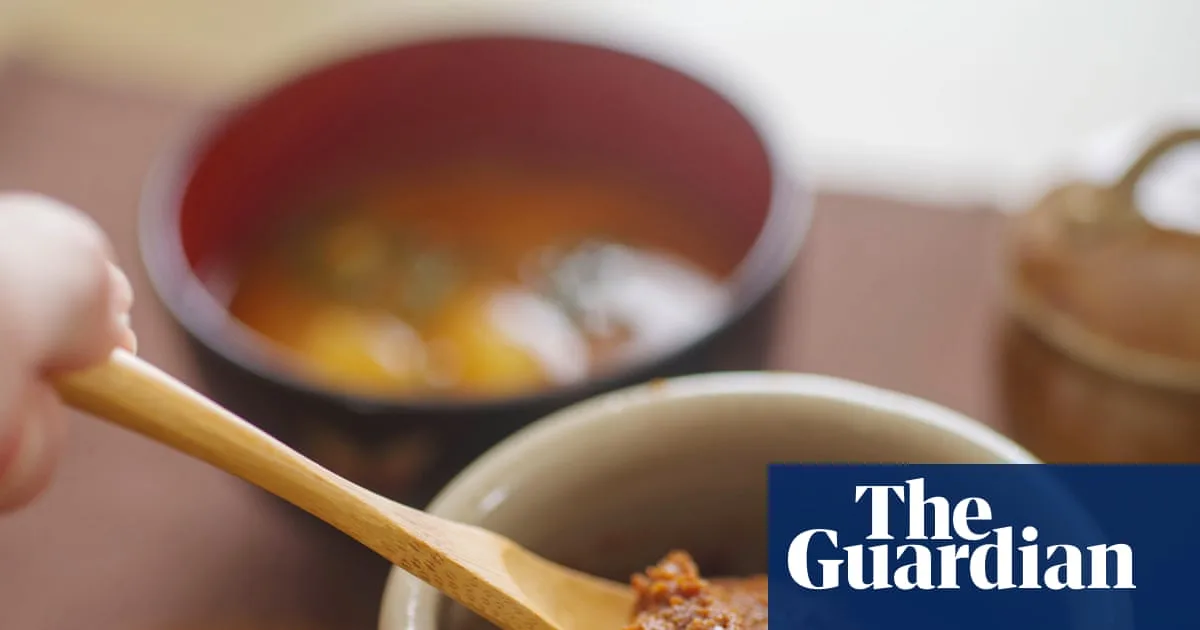
For home cooks staring at a supermarket shelf of miso pastes, the choice can be perplexing. Red or white? Sweet or aged? The answer, according to Tim Anderson, author of the forthcoming JapanEasy Kitchen, often comes down to personal taste. ‘In a lot of situations you can use one or other to your taste without it having a massive effect on the outcome of the dish,’ he says.
Miso is typically made by steaming soya beans, mashing them with salt and koji, then leaving the mixture to ferment. The length of that fermentation is what changes the colour. White miso is aged for three to six months, retaining a beany, pale yellow hue and a fresher flavour. Red miso, aged for six months or longer, turns darker and develops what Anderson describes as ‘more funk’. He compares the difference to a mild versus an aged Gouda: the younger cheese is mellow and salty, while the mature version becomes buttery and caramelised.
As a general rule, use white miso when you want to keep things light and fresh, and red miso for richer, more savoury dishes. Anderson points to his recipe for misotrone, a minestrone seasoned with miso, as an example: white miso enhances the tomato’s acidity, while red gives a deeper, more concentrated flavour. Emiko Davies, author of The Japanese Pantry, recommends red miso dolloped on fried or roasted aubergine, and lighter misos for clam or seafood soups. Millie Tsukagoshi Lagares, author of Umai, uses lighter misos in dressings, marinades for white fish and even sweet treats like miso caramel.
Beyond the basic red and white, there are other varieties worth seeking out. Shinshu, or yellow miso, offers a middle ground with a balance of savouriness and nuttiness, ideal for miso soup and sauces. Sweet white miso, made from rice, is ‘fresh and not very salty or funky’, making it perfect for mild ingredients such as the classic miso-marinated black cod. At the other extreme, hatcho miso is aged in open barrels for at least 18 months, turning very dark brown and developing rich flavours like cocoa, Marmite and molasses.
Anderson’s favourite is nama miso, an unpasteurised variety that has ‘an interesting, lively aroma’ and works wonderfully as a marinade. Davies also suggests blending different misos to create a more complex flavour. ‘Think of it like a blend,’ she says, allowing home cooks to customise their dishes in ways that a single paste cannot.