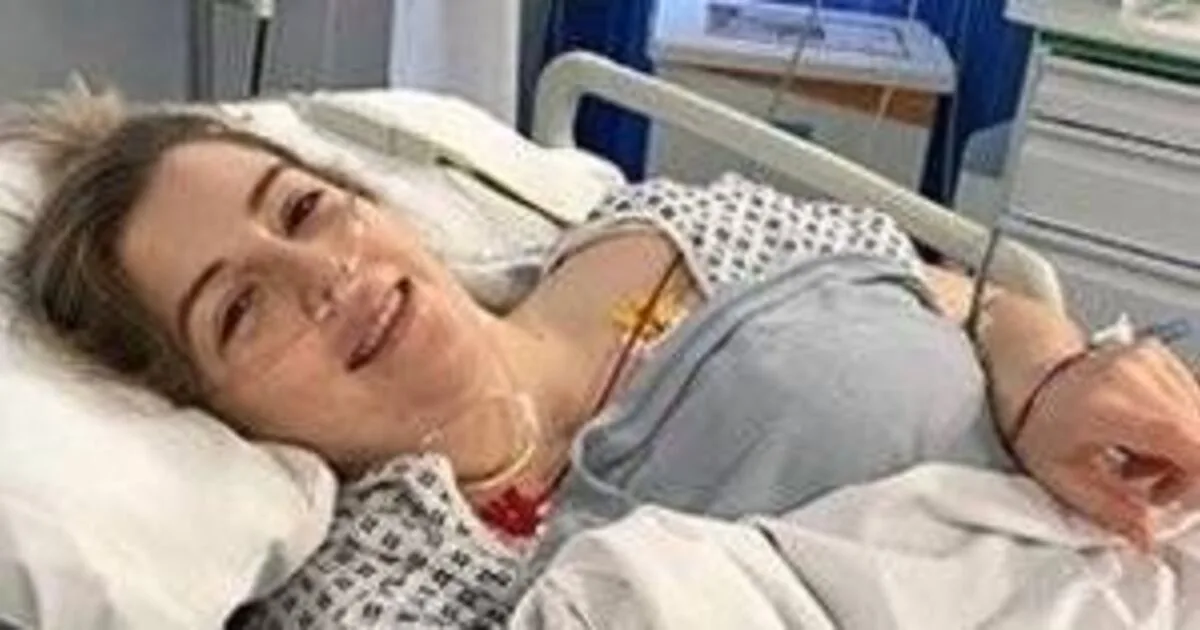
A young paramedic who habitually cracked her joints was left partially paralysed at just 23 years old after a routine neck crack caused a stroke by rupturing a vital artery in her spine.
Natalie Kunicki was lying in bed watching films with a friend after an evening out on March 4, 2021, when she stretched her neck and heard a distinct crack. The London Ambulance Service paramedic thought nothing of it and fell asleep, but upon waking just 15 minutes later, she realised she couldn't move her left leg and fell to the floor when she tried to walk.
During the early hours of March 5, Natalie was transported to hospital by ambulance, where a CT scan showed she had suffered a stroke. The neck crack had torn Natalie's vertebral artery, resulting in a blood clot forming in her brain, which led to the stroke.
Natalie, whose left side was almost completely paralysed by the stroke, said the diagnosis was so devastating that she became 'emotionless' for several days. Yet, thanks to her colleagues allowing her a week to 'snap out of it', Natalie succeeded in moving beyond her 'pity party' and focused all her energy on rehabilitation.
With daily exercises, Natalie recovered enough movement in her leg, arm and hand to be discharged on March 28 to her parents' residence in Harrow, London. She went public at the time to warn people about the risks of cracking joints and to emphasise that strokes can affect people of any age.
Natalie cautioned: 'People need to know that even if you're young something this simple can cause a stroke. I wasn't even trying to crack my neck. I just moved and it happened.' She also urged: 'Every minute more of your brain cells are dying so don't ever discount a stroke just because someone is young.'