
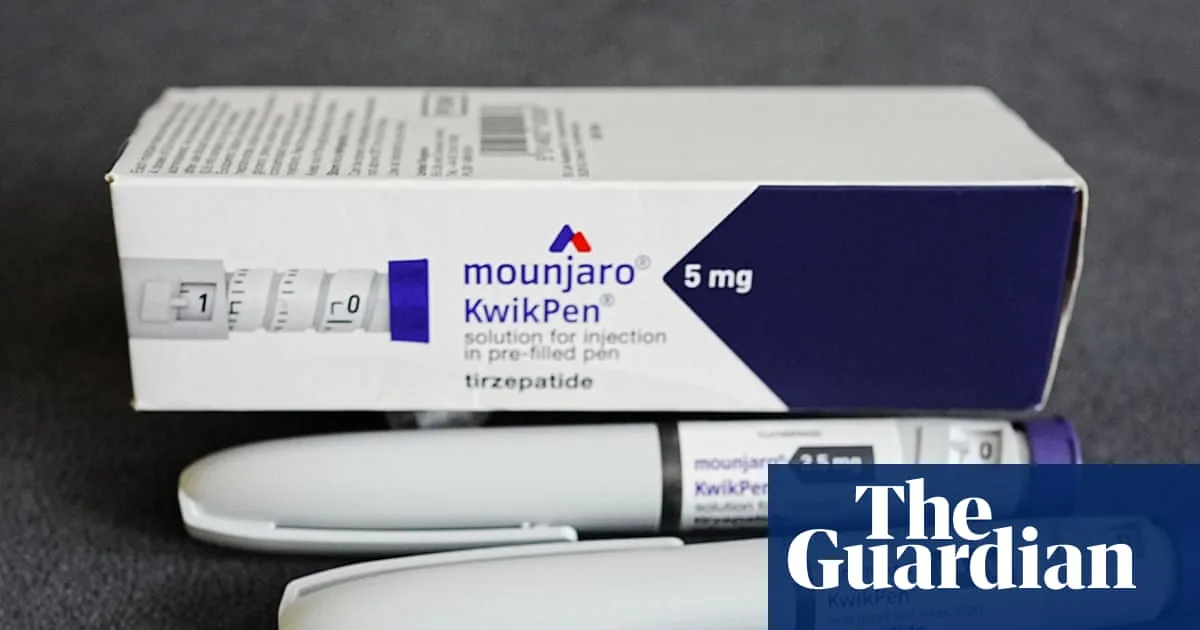
Weight loss drugs could help prevent people from developing addictions to alcohol, tobacco, cannabis and cocaine, according to a US study published in the British Medical Journal. The drugs may also reduce the risk of overdose, emergency hospital visits and death among those already using substances.
Researchers analysed 606,434 US veterans with type 2 diabetes over up to three years. They compared patients taking glucagon-like peptide-1 (GLP-1) receptor agonists, such as Mounjaro and Ozempic, with those on other sodium-glucose cotransporter-2 drugs used for diabetes.
The study found that GLP-1s reduced the risk of developing alcohol-related disorders by 18%, cannabis use by 14%, cocaine use by 20%, nicotine use by 20% and opioid use by 25% in those with no prior substance use. Among those already using substances, the drugs cut the risk of overdose by 39%, emergency department visits by 31% and death by 50%.
Prof Claire Anderson, president of the Royal Pharmaceutical Society, said the study adds to emerging research on whether GLP-1s influence brain pathways linked to reward and addiction. However, she stressed that as an observational study, it does not prove prevention or treatment. Gareth Jones of the National Pharmacy Association called the findings significant but noted that NHS rollout of the drugs for obesity remains “painfully slow”.
A separate meta-analysis of 48 studies by Cambridge University, published in eClinical Medicine, found that most people who stop taking GLP-1s regain 60% of lost weight within a year, eventually regaining 75%. Only 25% of initial weight loss is sustained long term. The study also noted that half of users stop within a year and three-quarters within two years, often due to side effects like nausea or cost.
A survey of over 3,000 GLP-1 users by Simple Online Pharmacy found that two-thirds hide their use from friends and family, fearing judgment. Among those criticised, 79% were accused of taking “the easy way out” and 68% were told to “just eat less and move more”.




