American Tourist's Terrifying Medical Emergency on Remote Pacific Island
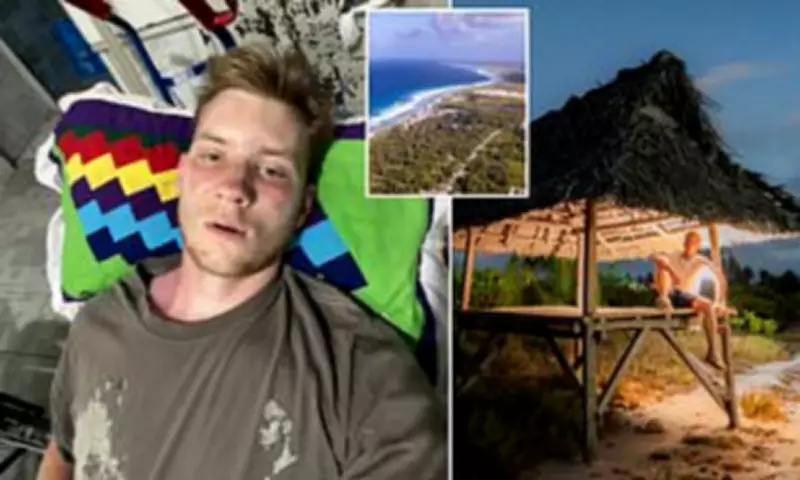
When 22-year-old Soren Almeida embarked on his vacation to the picturesque island of Kiritimati, he anticipated a relaxing getaway filled with pristine beaches and warm waters. Instead, the California native found himself in a desperate fight for survival after contracting a rare and dangerous illness in one of the world's most isolated locations.
The Allure of Isolation
Almeida explained to the Daily Mail that Kiritimati, also known as Christmas Island, appealed to him precisely because of its remote nature. "It stuck out to me as a unique place to visit," he said. The island lies approximately 1,300 miles south of Honolulu, Hawaii, and just 144 miles north of the Equator in the Pacific Ocean.
"There is only one flight per week leaving from Honolulu," Almeida detailed. "Anyone wanting to visit is committed to staying for seven days. Due to how remote it is, not many people visit annually."

In December 2025, Almeida made the journey to Kiritimati, an island he described as "quite large" but "sparsely populated" with just 7,380 inhabitants. "You can walk for miles and not see another person, which creates a vast, almost 'otherworldly' environment," he added.
A Vacation Turns to Terror
The initial days of Almeida's trip proceeded smoothly, but midway through his stay, he began experiencing symptoms resembling food poisoning. "This made it difficult to retain fluids and stay hydrated, which created a dangerous situation," he shared. "The equatorial climate is harsh, and my body simply couldn't keep up with it."
The situation escalated dramatically one morning when Almeida suffered intense muscle cramps and numbness in his limbs. "Within three minutes, I lost control of my legs, hands and face from severe muscle cramping and uncontrollable contractions," he recalled. "I remember it was difficult to breathe in this moment. My hands locked into a fist-like state, and I physically couldn't open them. I thought I was having a seizure."
With only one hospital serving the entire island, Almeida faced the terrifying realization that he was experiencing a medical emergency in an extremely remote location. "I understood the severity of the situation. The thought occurred to me more than once that I could die in that moment," he confessed. "I'll never forget that feeling. All I could do was focus on my breathing, praying and identifying objects around me to keep my brain active."
Diagnosis and Desperate Departure
At the hospital, medical staff diagnosed Almeida with tetany, a condition characterized by involuntary muscle contractions and overly stimulated peripheral nerves typically caused by electrolyte imbalances and low blood calcium levels. "It was likely caused by severe dehydration, electrolyte imbalance, heat and exertion," Almeida explained.
He remained hospitalized for fourteen hours while receiving intravenous fluids to rehydrate his body. Knowing that only one weekly flight departs from Kiritimati, Almeida faced a critical decision: leave immediately or remain stranded for seven additional days. "Despite being barely able to walk or stand up," he departed the island slightly over forty-eight hours after his hospital discharge.
Gradual Recovery and Gained Perspective
More than a month after the incident, Almeida reports he is "much better now" though not fully recovered. "Recovery has been gradual but positive," he noted.
Reflecting on his ordeal, Almeida identified a silver lining: "I had the ability to experience the medical system firsthand, which is a very rare glimpse into the everyday lives that people live in Kiritimati. While this experience was by no means fun, it allowed me a perspective that very few people will ever get to witness, which I'm grateful for."

His advice to fellow travelers emphasizes preparation and self-care, but he doesn't want his story to deter others from adventure. "When traveling, anything can happen, even if you take precautions. With this reality in mind, I do not wish to scare people away from traveling, especially to places like Kiritimati," he concluded. "If anything, this experience is a testimony to how amazing the people I was with are, and I'm so blessed to have been integrated into the culture, society and traditions for the week I was there. I'm thankful for this experience and have no regrets about visiting."