RFK Jr.'s Health Policy Revolution Sparks Trust Crisis in US Agencies
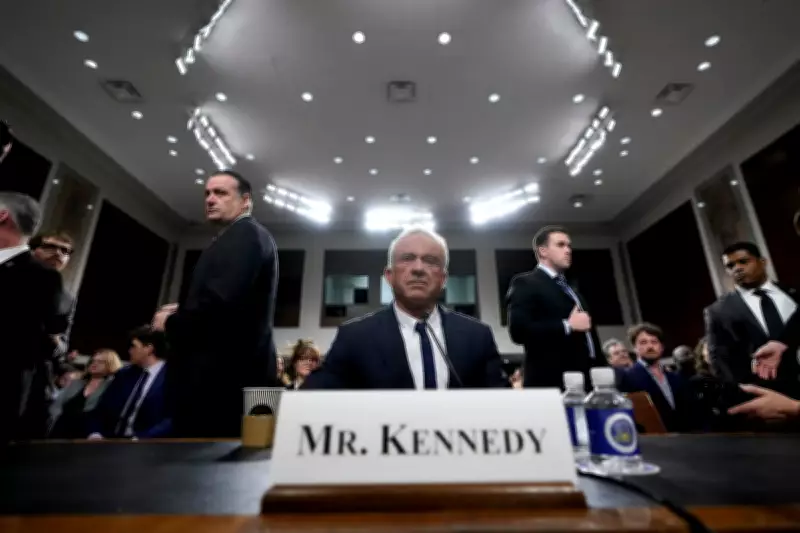
Since assuming leadership of the U.S. Department of Health and Human Services one year ago, Robert F. Kennedy Jr. has consistently defended his radical overhaul of federal health policy by claiming these changes would restore public confidence in America's health institutions. However, as the former anti-vaccine movement leader implements sweeping revisions to immunization guidance while dismissing scientific advisors, he faces mounting opposition from major medical organizations who accuse him of abandoning evidence-based practices.
Confrontation Deepens Public Confusion
The escalating conflict between Kennedy's administration and medical experts is exacerbating public confusion that initially surged during the COVID-19 pandemic. Multiple surveys now indicate that trust in the agencies under Kennedy's jurisdiction is declining rather than improving, even as the nation's health landscape undergoes dramatic transformation. Kennedy maintains that his objective is to enhance transparency, thereby empowering Americans to make informed health decisions independently.
Medical professionals counter that Kennedy is promoting false and unverified information, potentially causing significant and irreversible damage. They warn that if substantial numbers of people forego vaccination due to this misinformation, the result could be dangerous surges in preventable illnesses and fatalities.

"There was a time when people trusted health agencies regardless of political affiliation, and the government reported the best available scientific knowledge," observed Kathleen Hall Jamieson, director of the Annenberg Public Policy Center at the University of Pennsylvania. "Now, you cannot confidently visit federal websites and know that you're receiving reliable information."
Historical Trust Erosion and Current Controversies
Historically, federal scientific and public health agencies enjoyed strong public approval ratings. The U.S. Centers for Disease Control and Prevention consistently scored above many other government agencies in Gallup surveys assessing performance quality. Two decades ago, over 60% of Americans gave the CDC high marks, but this percentage plummeted during the COVID-19 pandemic amid agency missteps and unpopular guidance.
By 2020, only 40% of Americans believed the CDC was performing at least a "good" job, a figure that remained relatively stable in subsequent years. Alix Ellis, a 35-year-old hairstylist and mother from Madison, Georgia, exemplifies this shift. Previously trusting health agencies completely, she lost confidence during the pandemic when certain guidance seemed contradictory, such as rules allowing stylists to work directly on clients' hair while requiring others in the room to maintain distance.
Kennedy's approach to restoring trust has drawn particular criticism given his background. Before entering politics, he was a prominent voice disseminating false immunization information. Dr. Rob Davidson, a Michigan emergency physician who leads the Committee to Protect Health Care, argues that Kennedy is now attempting to solve a trust problem he helped create.
"You fed people false information to generate distrust, then swept into power claiming you'll cure that distrust by promoting the same disinformation," Davidson stated. "It's completely upside-down logic."
Policy Changes and Professional Backlash
Kennedy has utilized his authority to implement multiple policy shifts that diverge from established medical consensus. In May, he announced that COVID-19 vaccines were no longer recommended for healthy children and pregnant women, a decision medical professionals called both concerning and confusing. By November, he directed the CDC to abandon its longstanding position that vaccines do not cause autism, despite providing no new evidence.
Earlier this year, the CDC under Kennedy's leadership reduced the number of vaccines routinely recommended for all children. Medical groups warned this would undermine protections against numerous diseases. Kennedy has also overhauled his department through canceled grants and mass layoffs, including firing his new CDC chief after less than a month due to vaccine policy disagreements.

While some applaud these moves, surveys suggest many Americans are reacting negatively. Mark Rasmussen, a 67-year-old retiree from Danbury, Connecticut, expressed diminished trust, reflecting broader trends. Professional medical organizations, shocked by Kennedy's dismantling of public health norms, have urged Americans to disregard new vaccine recommendations they claim were adopted without public input or compelling evidence.
Institutional Resistance and Growing Confusion
The American Academy of Pediatrics, alongside over 200 public health and advocacy groups, has urged Congress to investigate how and why Kennedy altered the vaccine schedule. The American Medical Association, collaborating with the University of Minnesota's Vaccine Integrity Project, recently announced a new evidence-based process for reviewing respiratory virus vaccine safety, citing the government's cessation of systematic reviews.
Many Democratic-led states have rebuffed Kennedy's policies, forming alliances to counter his vaccine guidance. Dr. Megan Ranney, dean of the Yale School of Public Health, noted increasing confusion about trustworthy information sources, complicating individual decision-making. She worries this confusion contributes to resurgences of diseases like whooping cough and measles, previously largely eliminated in the U.S.
Surveys indicate growing public hesitation regarding the measles-mumps-rubella vaccine. Although most people still support childhood vaccination, Annenberg research shows the proportion declined significantly from 90% in November 2024 to 82% in August 2025.
Survey Data Reveals Trust Decline
Recent findings from healthcare research nonprofit KFF show that only 47% of Americans trust the CDC "a great deal" or "a fair amount" to provide reliable vaccine information, representing approximately a 10-percentage-point drop since the beginning of Trump's second term. Trust among Democrats fell 9 percentage points since September to 55%, while Republican and independent trust remained unchanged since September but declined somewhat since Trump's term began.
Even among Kennedy's supporters, fewer than half report trusting agencies like the CDC and FDA "a lot" or "some" regarding childhood vaccine recommendations. Gallup surveys also show Americans believing the CDC is doing a "good job" dropped from 40% in 2024 to 31% last year.
These declines coincide with reduced trust across government institutions generally, not just agencies under Kennedy's oversight. Additional concerns about Kennedy's trustworthiness emerged when documents obtained by The Associated Press and The Guardian contradicted his statements about a 2019 trip to Samoa preceding a measles outbreak, prompting senators to accuse him of lying about the visit's purpose.
HHS officials assert they are promoting independent family decision-making while working to reduce preventable diseases, claiming reduced routine vaccine recommendations aim to ensure parents vaccinate children against the riskiest illnesses. Despite repeated requests, HHS did not make Kennedy available for interview. However, while pledging to restore trust, Kennedy has simultaneously urged people to reach their own conclusions, recently stating on The Katie Miller Podcast that "a good mother doesn't blindly trust the experts."