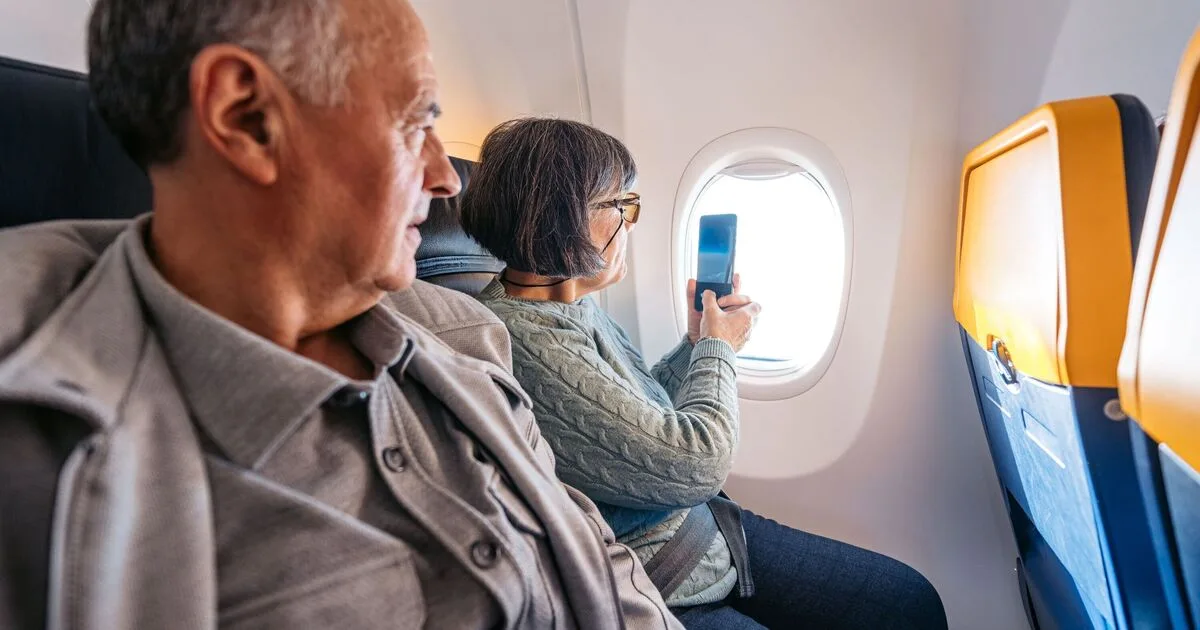
Study Urges Airlines to Separate Elderly Passengers to Speed Up Emergency Evacuations
Elderly Should Be Split on Flights to Speed Evacuations: Study

Elderly Passengers Should Be Separated on Flights to Accelerate Emergency Evacuations, Study Finds

Groundbreaking new research indicates that airlines should consider splitting up elderly passengers during flights to dramatically improve emergency evacuation times. Aviation safety experts have issued a stark warning that the increasing number of older travellers presents substantial new challenges for airline safety protocols and emergency preparedness.

The Critical 90-Second Evacuation Standard

Under stringent UK and international aviation regulations, all commercial aircraft must be designed and certified to enable a complete emergency evacuation within just 90 seconds. This crucial safety benchmark represents the maximum allowable time for all passengers and crew to exit the aircraft during critical emergencies.

However, sophisticated computer modelling conducted by an international research team has revealed a concerning reality. Even during the most optimistic simulation scenarios, the presence of elderly passengers with limited mobility and dexterity creates significant delays that could prevent airlines from meeting this vital safety requirement.

Wide Pickt banner — collaborative shopping lists app for Telegram, phone mockup with grocery list

Distribution Strategy Could Mean Separating Family Members

The study authors propose a potentially controversial solution: older passengers with reduced physical capabilities should be evenly distributed throughout aircraft cabins rather than seated together. This strategic approach could mean that grandparents might need to be separated from their families during holiday travel and family getaways.

"Higher elderly ratios and poor seating arrangements led to longer evacuation times and uneven exit usage," the research team documented in their comprehensive paper published in the respected journal AIP Advances. "These findings emphasize the urgent need for age-sensitive modelling and innovative seating strategies to substantially improve evacuation safety standards."

Detailed Simulation Reveals Dramatic Time Differences

For their extensive study, researchers from the University of Sydney and University of Calgary collaborated to simulate 27 distinct evacuation scenarios. They focused specifically on a dual-engine fire emergency aboard an Airbus A320, one of the world's most common narrow-body aircraft typically accommodating between 140 and 170 passengers.

The team meticulously compared three different cabin layouts with varying ratios and distributions of passengers aged over 60. Their visualisation models accounted for realistic constraints, including scenarios where overwing exits would be rendered unusable due to engine fires.

In the most efficient scenario, where fewer elderly passengers were strategically positioned near emergency exits, the evacuation still required 141 seconds. By contrast, the least efficient arrangement, featuring a high proportion of elderly passengers randomly distributed throughout the cabin, resulted in a dangerously prolonged evacuation time of 218.5 seconds.

Addressing Low-Probability but High-Impact Emergencies

"While a dual-engine fire scenario is statistically rare, it falls under the broader category of dual-engine failures and critical emergencies in aviation," explained lead researcher Chenyang Zhang. "Historical incidents have demonstrated that dual-engine failures and emergencies, such as the famous 'Miracle on the Hudson' involving Captain Sullenberger, can occur with severe consequences."

The research team deliberately focused on these low-probability but high-impact events to ensure aviation maintains the absolute highest safety standards possible. They employed advanced evacuation modelling software to realistically simulate passenger behaviour during emergency situations.

Cognitive and Physical Factors Affecting Evacuation

Detailed analysis confirmed that both the proportion and specific location of elderly passengers exerted the most substantial influence on overall evacuation times. Previous scientific studies have established that cognitive decline in elderly populations can significantly affect situational awareness and delay critical decision-making during emergencies.

Pickt after-article banner — collaborative shopping lists app with family illustration

Furthermore, reduced physical dexterity and mobility issues can be dramatically exacerbated during high-stress evacuation scenarios. The researchers suggest that incorporating this understanding into practical safety measures—such as providing additional, tailored safety briefings specifically designed for elderly passengers—could help accelerate the deboarding process during genuine emergencies.

Future Research Directions and Practical Applications

The research team noted that other passenger groups, including children, infants, and pregnant women, also introduce unique physical capabilities and behaviours during evacuation processes. These additional factors represent important areas for future investigation and modelling refinement.

"We sincerely hope these findings help airlines proactively mitigate evacuation risks," stated Dr. Zhang. "By fundamentally understanding how passenger distribution affects evacuation dynamics, airlines could potentially implement more strategic seating arrangements to optimize safety without compromising operational efficiency or passenger convenience."

The study represents a significant step forward in aviation safety research, highlighting the need for age-sensitive approaches to emergency planning as global passenger demographics continue to shift toward older age groups.