NHS Trust Review: 55 Baby Deaths May Have Been Prevented with Better Care
A shocking independent review has concluded that at least 55 babies who died at University Hospitals Sussex NHS Foundation Trust could potentially have survived if they had received higher standards of maternity care. The findings have ignited urgent calls for a comprehensive judge-led public inquiry to address systemic failures and ensure accountability.
Internal Review Uncovers Disturbing Patterns
The trust's own internal examination, conducted between 2019 and 2023, scrutinised maternity deaths and determined that a different outcome was possible in 55 tragic cases. Freedom of Information data, obtained by the campaign group Truth for Our Babies, reveals the trust carried out 227 internal hospital reviews into maternity deaths during this period. Alarmingly, at least 55 of these cases were graded C or D, indicating that alternative care "may" or was "likely" to have changed the outcome.
Families Demand Action and Transparency
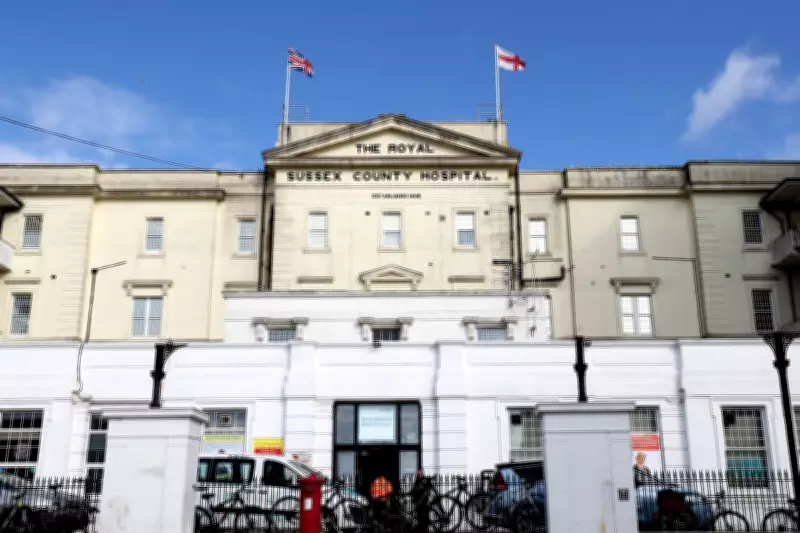
Among the affected families is Robert Miller, whose daughter Abigail Fowler Miller died just two days after her birth at the Royal Sussex County Hospital in Brighton in January 2022. An inquest later found Abigail would probably have survived had her mother, Katie Fowler, received medical treatment sooner. Ms Fowler also suffered a cardiac arrest during the traumatic ordeal.

Mr Miller is now advocating for senior midwife and investigator Donna Ockenden to lead the independent inquiry into maternity services in Sussex. He emphasised that families need someone they trust to avoid re-traumatisation. "It's difficult for us to accept someone who's never done this before and is learning on the job – that's the bottom line," he stated.
Concerns Over National Maternity Review
Mr Miller also expressed deep concerns that the current national maternity review, commissioned by the government and led by Baroness Amos, does not go far enough. He argued that only a judge-led public inquiry can properly hold people to account and compel evidence. "We're not seeing improvements quickly enough," he lamented, noting that a recent Care Quality Commission report rated maternity care at the Royal Sussex County Hospital as requiring improvement, which is only one step up from inadequate four years ago.
Trust Apologises and Outlines Improvements
Dr Andy Heeps, chief executive of University Hospitals Sussex NHS Foundation Trust, issued a heartfelt apology, acknowledging failures in care. "No words can truly express the heartbreak of losing a child. To every family who has experienced this unimaginable loss, I want to say directly: we did not always get things right," he said.
Dr Heeps detailed several measures the trust has implemented to enhance safety:
- Recruitment of 40 additional midwives across four maternity units, achieving full staffing levels.
- Increased theatre capacity for planned Caesarean births.
- Introduction of a dedicated telephone triage service staffed by highly experienced midwives.
The trust reported that its perinatal mortality rate has fallen to 2.19 per 1,000 births as of last October, down from around three per 1,000 previously, and remains below the national average over the past three years.
Government Response and Ongoing Investigations
A Department of Health and Social Care spokeswoman affirmed the government's commitment to providing answers for bereaved families. "Every family who has lost a baby deserves answers, and we are determined to ensure they get them," she said. The department is actively working with families in Sussex to appoint a chair and agree terms of reference for the vital review, ensuring bereaved families remain at the heart of Baroness Amos' national investigation.
The case of Robert Miller and Katie Fowler highlights the urgent need for systemic change. Ms Fowler's pregnancy was straightforward, but delays in medical intervention led to catastrophic consequences. This tragedy underscores the critical importance of timely and effective maternity care across the NHS.