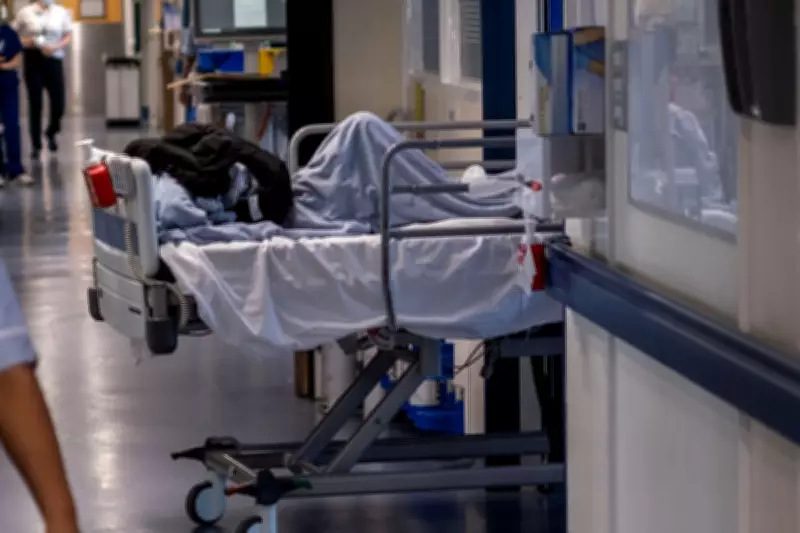
NHS Corridor Care Crisis Exposed in Damning Report
A shocking review by Healthwatch England has laid bare the severe state of corridor care within the National Health Service, revealing that patients are being left in the dark on broken beds for up to 24 hours without privacy. The report, which examined emergency department care during December, highlights a system under immense strain, exacerbated by a five-day strike involving 19,000 junior doctors.
Extended Waits and Dire Conditions
In December alone, there were over 2.3 million visits to Accident and Emergency departments, with approximately 400,000 individuals requiring hospital admission. The strike action placed hospitals under unprecedented pressure, leading to critical delays. One in four patients, totalling 137,763 people, waited more than four hours between admission and being allocated a bed. Alarmingly, one in ten patients, or 50,775 individuals, endured waits exceeding 12 hours. This figure represents nearly 50,000 more patients than the NHS target, which aims for no more than 22 percent of people waiting over four hours.
Patient Testimonies of Distress
The report includes harrowing accounts from patients who suffered in non-clinical areas such as corridors, chairs, trolleys, and even the floor. A patient from Essex with a chronic lung condition described a 24-hour wait in A&E, only to be placed on a broken bed in a pitch-black corridor. Another individual, confined to a wheelchair due to osteoporosis, reported having no buzzer for assistance and discharged themselves at 5am after what they called a traumatising experience.

In a particularly tragic case, an elderly patient from Havering witnessed a person next to them die after waiting 40 hours on a trolley in a corridor. The patient expressed feeling stripped of dignity and described the situation as very scary. Many others echoed this sentiment, citing a lack of privacy that forced them to use catheter bags or bedpans in full view of others, leading to profound humiliation.
Systemic Failures and Health Risks
Even patients formally admitted to hospital were not spared from corridor care. A chemotherapy patient from the Wirral claimed they were left for three days in a nurse's equipment cupboard, sharing a commode with elderly corridor patients who were often infected. This placement, they argued, put their life at risk while battling sepsis. Additionally, a younger patient was left in a cubicle for 30 hours without regular observations or necessary medication.
Diabetic patients reported going more than 15 hours without food or drink, with one individual from Enfield waiting 12 hours for a bed due to a broken hip and receiving no sustenance between 4.30pm and 8am. These accounts underscore the severe health risks posed by prolonged waits and inadequate care.
Political Response and Ongoing Challenges
The crisis has prompted political attention, with Streeting issuing an apology after a patient spent 29 hours on a trolley in the Royal Liverpool Hospital corridor. However, the report indicates that such incidents are symptomatic of broader systemic issues within the NHS. The combination of high patient volumes, staff shortages, and industrial action has created a perfect storm, leaving vulnerable individuals in perilous conditions.
As the NHS grapples with these challenges, the Healthwatch England report serves as a stark reminder of the urgent need for reform and investment in healthcare infrastructure to restore dignity and safety for all patients.