A young mother from the UK has described the terrifying experience of being left 'trapped inside her own body' after developing a rare and rapidly progressing illness that initially confused medical professionals.
A Sudden and Mysterious Decline
Rebecca Louise Love, a 29-year-old makeup artist and mother of two, first noticed unusual sensations in her feet. For about a week, she experienced persistent pins and needles, which was soon followed by a disturbing and increasing weakness throughout her body. Simple tasks became monumental challenges; she found herself unable to rise from the sofa, struggled to get out of the bath, and was plagued by excruciating pain in her back and pelvis. Walking soon turned into an ordeal.
Concerned, Rebecca visited her local emergency department. After several hours and a few tests, she was sent home without a clear diagnosis. The following day, her GP prescribed painkillers and advised her to call back if the pain continued after four weeks. However, her condition deteriorated catastrophically overnight. "The [next] day, when I woke up in the morning, I could not move at all, and every time I tried to, it was pain as I've never felt before," Rebecca recalled. An ambulance was called, and she was immediately admitted to hospital.

Rapid Paralysis and Intensive Care
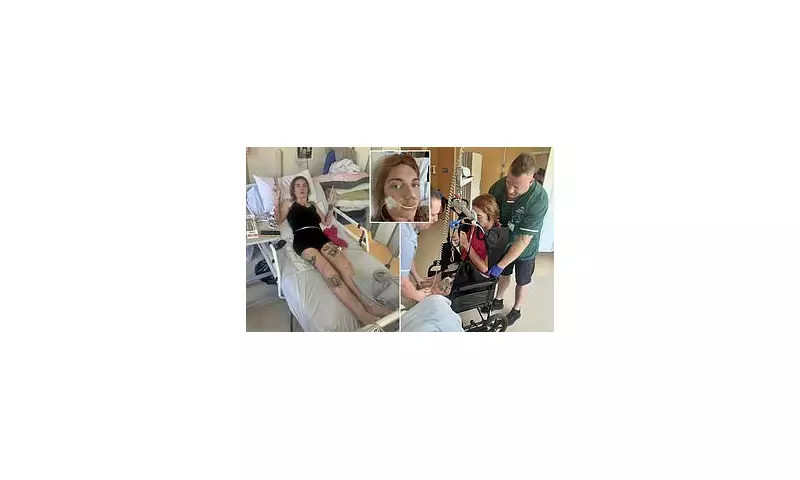
Once in hospital, Rebecca's situation worsened alarmingly fast. She lost all ability to sit up or move her arms and legs. The paralysis was so severe that when her young children came to visit and hugged her, she was utterly powerless to hug them back. The pain was overwhelming, even obscuring her memory of procedures like a lumbar puncture.
The paralysis then spread to her face, leaving her barely able to speak. Her vision blurred, and she began to struggle with two of the body's most essential functions: breathing and swallowing. This critical decline necessitated a move to the Intensive Care Unit (ICU). "Because I was unable to swallow, I had a feeding tube fitted and was taken off fluids," she explained. As her breathing deteriorated, she was put on oxygen, with doctors considering a medically induced coma if things worsened further.
Diagnosis, Treatment, and a Long Road Back
Rebecca was finally diagnosed with Guillain–Barré syndrome (GBS), a serious autoimmune condition where the body's immune system mistakenly attacks the peripheral nerves. This attack can cause weakness, numbness, and, in severe cases like Rebecca's, paralysis affecting movement, sensation, and vital functions. The exact cause of GBS is unknown, and while there is no cure, treatments can manage symptoms and aid recovery.
Rebecca began immunoglobulin therapy, a standard treatment to help modulate the immune response. Recovery was painstakingly slow, with each small victory feeling like a monumental achievement. "I still could not close my eyes or blink or smile. I also couldn't move my mouth or my legs and arms," she said, describing symptoms akin to a stroke. Regaining the use of her hands first, she noted they felt like "dinosaur arms."
With the dedicated help of physiotherapists, she gradually learned to accept her situation and rebuild her strength from scratch. She had to relearn how to stand and walk again. In total, Rebecca spent eight weeks in hospital before she was finally able to return home.
Reflecting on her ongoing journey, Rebecca shared, "I've tried to push myself to get my independence back. I am not my 'normal' self as I still struggle with some daily tasks, have pain often and still can't feel my feet properly as there's constant pins and needles." She continues to attend medical appointments and acknowledges the road to full recovery may be long. However, her ordeal has imparted a crucial lesson: "It's taught me so much about myself and life, and I know now to 100 percent listen to my body."