A Mother's Unending Grief and Quest for Answers
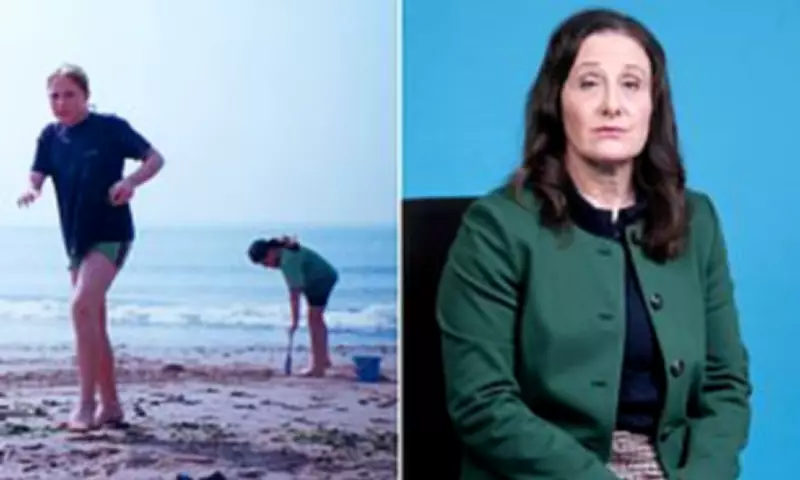
Twenty-six years have elapsed since Julie Maughan's daughter Heather passed away, yet the anguish remains as raw as ever. 'It's post-traumatic stress, where you flash back vividly. It's visceral and hard to articulate,' explains the 58-year-old mother. Her recollections of that period, which she describes as 'a bomb exploding in our family', are a mixture of hazy confusion and horrifying clarity.
She remembers with painful precision the moment nurses gently lifted eight-year-old Heather after the life support machine was switched off, placing her across her parents' laps to pass away. 'Afterwards, they took her away, and we were in pure shock. We went on holiday as a family of four and returned as a family of three. It was utterly surreal,' Julie recounts.
The Tragic Holiday That Changed Everything
How could a perfectly healthy young girl travel with her family for a seaside holiday in Devon and never return home? Heather Preen's name should be widely recognized; her death—and her father Mark's subsequent suicide—should constitute a national scandal. While some bereaved mothers avoid reminders of their child's suffering, Julie has consistently felt compelled to confront the details 'to understand'.

Heather contracted the pathogen E. coli O157 while playing on Dawlish beach with her ten-year-old sister Suzanne. Although commonly linked to food poisoning, this bacterium can also thrive in contaminated water. Julie had chosen the resort carefully, noting its Blue Flag status indicating cleanliness and safety for swimming. The family from Birmingham observed 'yucky' water containing toilet paper flowing from a pipe—later identified as a combined sewage outlet. Heather attempted to leap over a puddle formed by this discharge but fell into it.
A Rapid and Devastating Decline
In the following days, Heather's condition deteriorated rapidly, beginning with explosive diarrhoea and progressing to rectal bleeding. Julie followed all recommended steps: consulting a pharmacist initially, then visiting a local GP. She sent Mark and Suzanne to continue holiday activities while remaining with Heather at their chalet, promising to play games. 'I didn't realize Heather was dying even then. Her body was shutting down,' Julie recalls tearfully.
E. coli O157, while not always fatal, can in rare instances cause haemolytic uraemic syndrome, a severe kidney failure. Despite being rushed to hospital by ambulance after a second GP visit, Heather had no chance of survival. 'I want people to understand what this pathogen does. It liquefies organs. I'll never forget seeing her brain scan—where there should have been squiggles, there was only pure white,' Julie states.
Channel 4 Drama Exposes Water Pollution Crisis
Now, Heather Preen's story—alongside others—is receiving national attention through Dirty Business, a three-part Channel 4 factual drama anticipated to generate outrage over water pollution and regulatory failures akin to the Post Office scandal. Julie initially resisted involvement but reconsidered, fearing Heather would be forgotten.
Following Heather's death, Julie confronted environmental health officials, urging them to close the beach after food sources were eliminated. South West Water swiftly dismissed sewage as a potential cause, maintaining this stance despite 14 prior complaints about sewage at Dawlish beach. The company suggested Heather might have encountered dog faeces, which Julie firmly disputes. Although no direct link was proven, the inquest revealed five other E. coli cases from the same outbreak, including three hospitalized children.
Legal Battles and Family Trauma
The coroner ruled Heather's death as misadventure rather than natural causes, which Julie viewed as 'a win for Heather'. However, providing evidence was traumatic. In the drama, Mark faces aggressive questioning from South West Water's lawyers, who challenge his account of the puddle and toilet paper fragments, implying fault. 'He was devastated. They really laid into him. It felt very adversarial—them versus us. We merely sought the truth about Heather's death as a public health issue,' Julie explains.

She emphasizes that financial compensation was never the goal. 'I've always said I didn't want their money. This was about preventing another family's tragedy and acknowledging the danger.'
A Family Shattered by Loss
The Preen family never recovered from Heather's death. While Julie immersed herself in scientific research on water pollution and public awareness campaigns, Mark descended into depression and heavy drinking, burdened by guilt. They remained together for Suzanne's sake but eventually separated. In 2016, at age 55, Mark took his own life—a scene depicted graphically in the drama. 'This is what that bomb under us did. It came out of nowhere but continued endlessly,' Julie reflects.
Despite the devastation, Julie and Suzanne have persevered. Julie completed her degree, remarried, and Suzanne, now 37, has become 'a rock-solid person'. Heather's presence endures in their home through collected seashells from that final holiday and annual baubles for 'Heather's Christmas tree'. 'I still feel her energy. I desperately miss it,' Julie shares.
Systemic Failures and Ongoing Concerns
Dirty Business also highlights the efforts of 'sewage sleuths' Peter Hammond and Ash Smith, who used hidden cameras, Freedom of Information requests, and AI models to expose extensive sewage dumping nationwide. The drama scrutinizes the water industry's privatization in 1989 and subsequent regulatory easing under David Cameron's government, noting reduced investment and substantial profit extraction by water companies.
Troubling questions arise about cozy relationships between government regulators and water company executives, with whistleblower information playing a key role. A shocking scene reveals inspectors being told to no longer examine certain pollution incidents, effectively allowing self-regulation. Current issues persist: Thames Water dumped raw sewage for 300,000 hours in 2024 and faced a record £122.7 million fine, yet continues such practices amid £17.6 billion debt.
Julie argues passionately against profit-driven water management. 'Water is a life source. Water companies should never be run for profit. I'd like to tell Keir Starmer to stop this now.'
A Legacy of Awareness and Advocacy
South West Water responded to the drama's publicity by stating bathing waters undergo stringent testing and that Dawlish Warren samples were clear of E. coli during investigations, while extending condolences to the family.
For Julie, participating in the drama brought unexpected peace regarding Mark. Watching actor Tom McKay portray him fostered understanding of his guilt. She can now view photos of Heather and Mark playing together, recalling happiness rather than pain. 'This drama educates those who think water pollution is only a scientific concern. I want the Prime Minister to understand it affects everyone,' she asserts.
When asked what Heather would think of her ongoing campaign, Julie believes she'd say, 'Come on, Mum. Let's just get this done.' Dirty Business airs on Channel 4 at 9pm on Monday, streaming thereafter.