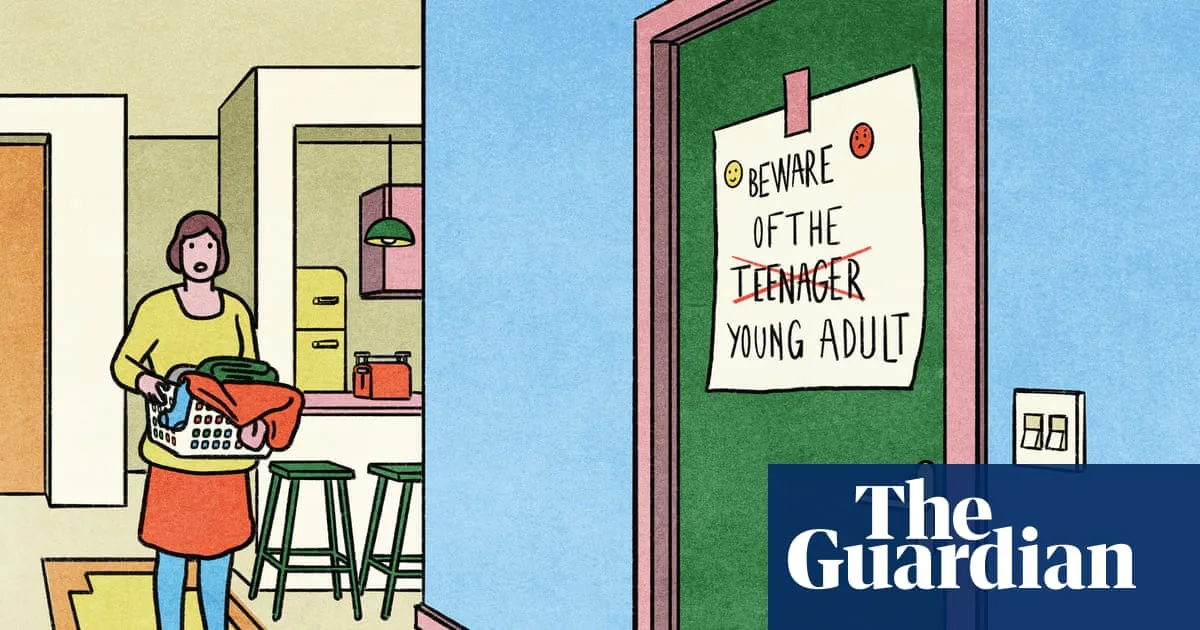
Adolescence is no longer confined to the teenage years, with groundbreaking research revealing it can stretch well into a person's thirties. This extended phase of development presents unique challenges for parents navigating relationships with their grown-up offspring, a topic often shrouded in silence despite its profound impact on family life.
The Science Behind Extended Adolescence
Recent neuroscience findings from Cambridge University, published in Nature Communications, indicate that the brain's adolescent phase persists until around the age of 32. This challenges long-held assumptions that maturation concludes at 18 or even 25, highlighting a period of vulnerability and opportunity for young adults. The implications for parenting are significant, as traditional guidebooks for young children offer little guidance for this new terrain.
A Personal Crisis and Its Resolution
One psychotherapist recounts a painful crisis when her daughter turned 18, describing a relationship breakdown that felt unbearable. Despite her professional training in child and adult development, she found herself flummoxed, grappling with shame and confusion. Her daughter, now a mother herself, reflected on that era as a time of fury and loneliness, marked by intense family conflicts aimed at shattering the illusion of a happy household.
Through time and therapy, they rebuilt a close relationship, transforming the breakdown into a breakthrough. This process reset boundaries, fostered honest communication, and taught productive conflict resolution, though it was chaotic and raw. The experience underscores that parenting does not cease at 18 but evolves in shape, requiring new principles for engagement.
The Shift to Emerging Adulthood
Psychologist Jeffrey Arnett coined the term emerging adulthood to describe the years between 18 and 25, a phase of exploration and uncertainty. This is not evidence of moral decline but a developmental shift reflecting a radically different world, influenced by technology, social change, and economic realities. Statistics paint a stark picture: approximately one-third of young adults aged 18 to 34 live with their parents, and nearly 60% of parents provide financial support to adult children.

Case Study: Sarah and Tom
Consider Sarah, a client in her mid-50s, who felt utterly depleted when her 26-year-old son Tom moved back home after university. What began as a temporary arrangement hardened into a strained dynamic, with Tom working part-time, contributing nothing to household costs, and resisting change. Sarah, driven by anxiety from her own childhood, had overcompensated by protecting Tom from struggle, leaving him without confidence in his capabilities.
The breakthrough occurred when Sarah recognised that her fear, not Tom's needs, dictated her behaviour. By setting small boundaries, such as stopping his laundry and requesting financial contributions, she shifted from anxious manager to respectful witness. Gradually, Tom adapted, picking up more shifts and discussing moving out, leading to a lighter atmosphere at home.
Guiding Principles for Parenting Adult Children
Research confirms that parents' quality of life often declines when adult children return home, yet this is rarely discussed openly. The key to navigating this extended closeness lies in clarity rather than control. Explicit conversations about money, chores, privacy, and expectations are essential, as unspoken assumptions often fuel conflict.
Young adults themselves identify factors that support a successful return home: clear expectations discussed openly, meaningful household contributions, treatment as adults rather than teenagers, and an exit plan with timelines. This includes respecting their privacy regarding finances, social life, and relationships.
The Balance of Letting Go
Parenting adult children requires a delicate balance: not abandoning or over-parenting, but sharing more and staying connected without dependency. The Circle of Security model, though designed for early childhood, applies here too—parents should be a safe haven while supporting independence. This transition can be bewildering, as it involves stepping back to allow children to make their own choices and mistakes.
Challenges and Opportunities
Difficulties may arise from unprocessed trauma passed between generations, leading to reactive behaviours or estrangement. In cases where parents are immature or narcissistic, adult children must set limits without guilt, recognising parental limitations. Diverging worldviews on politics, religion, or lifestyle also pose challenges, requiring humility and curiosity rather than argument.
Tensions often peak during transitions, such as leaving or returning home, new partnerships, or job loss, exposing family fault lines but offering growth opportunities. Conflict can cut deep, touching parental identity, but repair through empathy and apology strengthens resilience.
The Rewards of Mature Relationships
Despite its complexity, this stage brings profound rewards, including richer conversations and deeper humour. Parents can enjoy their grown-up children as individuals, appreciating their quirks and wisdom. As one mother noted, it's like watching your heart walk confidently outside your body—a bittersweet beauty that transforms dependency into mutual respect.
Parenting does not end; it matures, demanding courage to learn, forgive, and show up consistently. By staying open to listening, growing, and loving, families can adapt as living systems, fostering relationships that evolve with time.