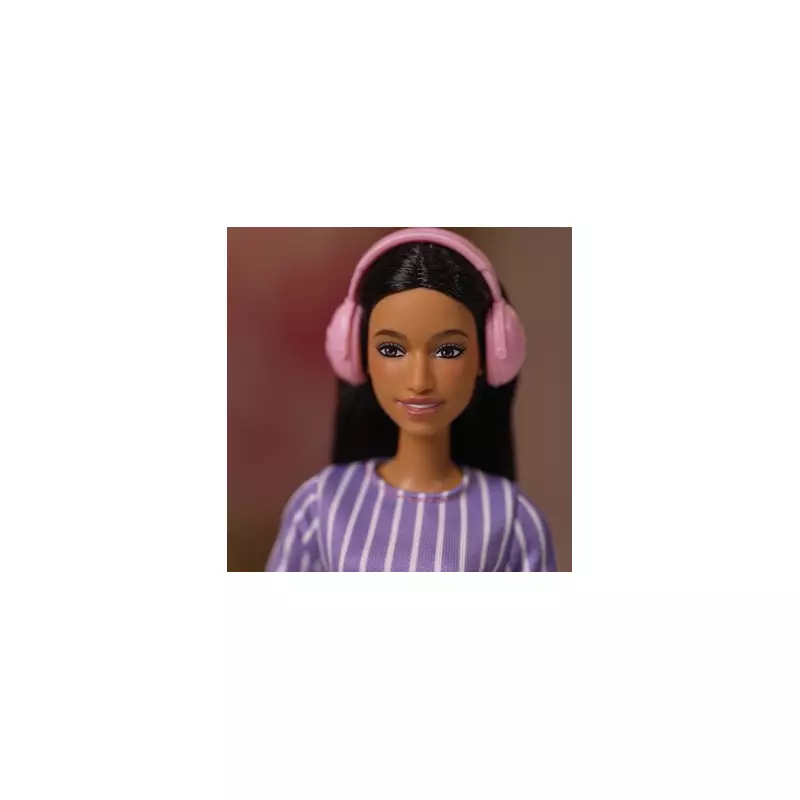
In a landmark move for inclusive play, toy giant Mattel has unveiled the world's first autistic Barbie doll. The launch, announced on 12 January 2026, has been hailed by charities and campaigners as a significant step towards more authentic and joyful representation for neurodivergent children.
Design Features Created with Autistic Community
The doll's design incorporates specific features intended to reflect common autistic experiences. These include loose-fitting clothing, designed to minimise fabric-to-skin contact, and an eye gaze directed slightly to the side. This subtle detail represents the way some autistic people may avoid direct eye contact, which can feel overwhelming.
Each doll comes with two key accessories: a pink fidget spinner to help reduce stress and improve focus, and a pair of noise-cancelling headphones. The headphones are included to help block out background sounds, thereby limiting potential sensory overload in noisy environments.

A Collaborative Milestone for Representation
Mattel developed the doll in close consultation with the Autistic Self Advocacy Network (ASAN), ensuring the autistic community had direct input. The company stated the doll "invites more children to see themselves represented in Barbie."
ASAN described the collaboration as a "milestone" and said it was "thrilled" to assist. The network emphasised the importance of young autistic people seeing "authentic, joyful representations of themselves," adding that this doll fulfils that need perfectly.
Further thoughtful design elements include moveable elbows and wrists, allowing for gestures some autistic people use to process sensory information or express excitement. The doll also holds a pink tablet, symbolising how digital tools can aid everyday communication.
Reaction from Advocates and a Note of Caution
Autistic writer Ellie Middleton celebrated the doll as a "powerful symbol" for young girls, helping them feel accepted. She highlighted that with young girls often being undiagnosed or misdiagnosed, this Barbie helps bring conversations about female neurodivergence to the forefront.
The National Autistic Society (NAS) welcomed the development but offered an important reminder. Given that autism is a spectrum, the charity cautioned that autistic people can be very different from one another, with unique strengths and challenges.
Peter Watt, NAS Managing Director of National Programmes, praised the authentic consultation process. He stated that seeing more depictions of autism is key to public understanding and acceptance, and that better awareness could transform the lives of the estimated 700,000 autistic adults and children in the UK.
This autistic Barbie joins Mattel's growing line of inclusive dolls, which already includes figures representing Down's syndrome, and dolls that are blind or have diabetes. The initiative forms part of the brand's wider mission to better reflect the diverse children who play with its products.