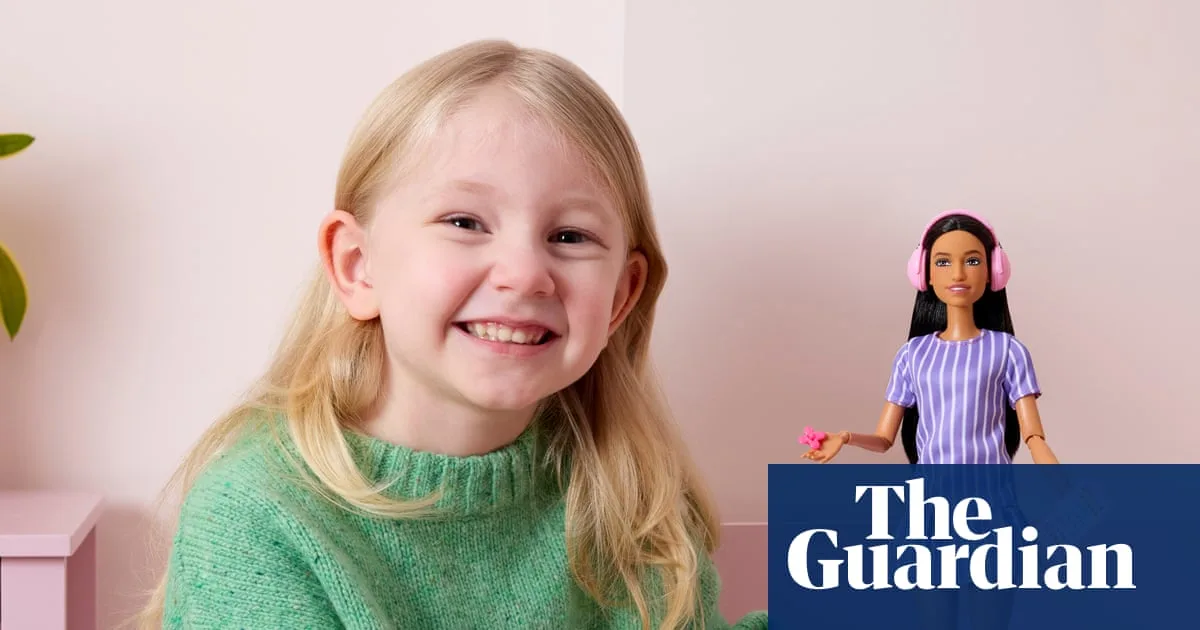
Mattel has launched its first autistic Barbie doll, created in collaboration with the US charity Autistic Self Advocacy Network. The doll is designed to represent some of the ways autistic children may experience and interact with the world, featuring a fidget spinner and noise-cancelling headphones.
The doll's eyes gaze slightly to one side to reflect how some autistic people avoid direct eye contact, and it has fully bendable elbows and wrists to enable repetitive movements such as stimming. It also wears a loose-fitting purple A-line dress to minimise fabric-to-skin contact, and flat-soled purple shoes for stability.
Announcing the doll, Jamie Cygielman, global head of dolls at Mattel, said it was the latest expansion of the company's commitment to representation and inclusion. 'Barbie has always strived to reflect the world kids see and the possibilities they imagine, and we're proud to introduce our first autistic Barbie as part of that ongoing work,' she said.
Jolanta Lasota, chief executive of Ambitious about Autism, welcomed the move, saying: 'Representation is powerful and Barbie is an iconic toy, so we hope many autistic children feel pride at seeing some of their experiences reflected in this new doll.' Ellie Middleton, author and founder of a neurodivergent community, added that she hoped the doll would challenge misconceptions around autism.
The autistic Barbie is the latest in a line of inclusive dolls from Mattel, following a Barbie with type 1 diabetes, as well as dolls with Down syndrome, prosthetic limbs, vitiligo and hearing aids. The company also sells Ken dolls with a prosthetic leg and hearing aids.