Cornwall's Van Man Fights Fibreglass Pollution from Abandoned Yachts
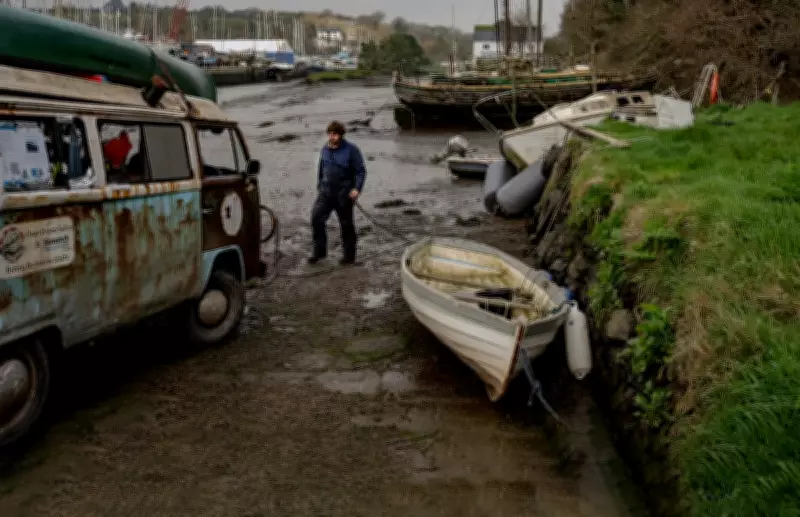
Steve Green, a boat engineer from Cornwall, was pulled over by police just before Christmas while driving his 1972 VW campervan, Cecil, towing a dilapidated yacht to Truro. He hadn't broken any laws, but admits Cecil—which runs on donated chip oil from local pubs and features a crane and winch—"wasn't quite what VW intended." Green and his trusty van are on a mission to rid the hidden creeks of Cornwall's Helford and Fal rivers of 166 abandoned fibreglass yachts, which leak plastic and toxins into marine waters.
The Environmental Crisis of Decaying Boats
Marine biologists have likened the thousands of fibreglass shards found embedded in sea creatures near such wrecks to asbestos, known for its noxious effects on humans. The problem extends far beyond Cornwall, as the legacy of the mass-produced fibreglass pleasure boat boom from the 1960s and 1970s unfolds across the UK and globally. Yachts from that era are now reaching the end of their useful lives, with no clear disposal plan.
Green was towing a 22ft Hurley yacht to Truro recycling centre, but the term "recycling" is euphemistic—these yachts end up in landfill. Disposal costs £1,200 per tonne, with larger yachts up to £3,000, leading many owners to abandon them to avoid fees. Green uses a detachable crane system on Cecil to move bags of plastic after weighing them, with the van upholstered in recycled denim.

The Costly and Laborious Cleanup Effort
It takes Green days to clear a discarded yacht of rubbish, silt, and sand, bail it out, and float it to a location where it can be lifted onto Cecil's trailer or pulled upstream by Annie, a 100-year-old wooden schooner he has lived on for two decades. He emphasises avoiding heavy machinery like barges with diggers, which would speed up the process but cause significant environmental damage.
Clean Ocean Sailing, the organisation he runs with his wife, relies on small charitable grants, crowdfunding, and volunteers who paddle kayaks to wrecks. Last year, Green ran up £8,000 on credit cards when grants didn't cover all the decaying boats he took to the dump. "It's a balance between not being so broke that my kids can't live a normal life, and wanting to preserve the environment for their future," he says.
Challenges in Tracing Owners and Legal Loopholes
Each rescue mission starts with Green placing a notice on the abandoned yacht, giving the owner 30 days to claim it. Unlike road vehicles or boats on rivers, coastal boats don't require a licence, making owner tracing often impossible. "So many people have a dream of getting a boat, but with no thought of where to keep it or how much it will cost," Green notes.
Jehol, a 1970s Westerly Centaur, exemplifies this issue—it has changed hands four times for £1, but became too costly and troublesome for owners to dispose of. Left unused, it filled with water and tipped over after a keel broke, creating a hole in the hull.
Health Risks and Scientific Findings
When abandoned, boats leak harmful oil and resin-based paint, but marine biologist Corina Ciocan from Brighton University highlights the fibreglass danger. Her research shows it breaks into microplastic shards that "spear the flesh of mussels and oysters like javelins," entering seagrass and algae eaten by fish. Ciocan's team found over 11,000 fibreglass shards per kilogram of oyster in Chichester harbour, stunning researchers.
Ciocan argues abandoned boats should be categorised as hazardous waste, not just rubbish, and that boat builders should have a duty of care for end-of-life disposal. She is working to demonstrate fibreglass behaves like asbestos once ingested by organisms.
Proposed Solutions and International Models
Green advocates for the UK to adopt the French model, where boat manufacturers pay an eco-contribution per sale, combined with an annual tax on licensed boat owners, funding 35 free scrapping centres. Since 2019, France's Association pour la Plaisance Eco-Responsable has removed over 16,000 boats, aiming to recycle as much as possible. Green is logging boat components to identify salvageable parts.

In Falmouth, the harbourmaster tows discarded yachts to Truro for landfill, using powers under harbour revision orders. If costs can't be recovered from owners, removal is paid from harbour revenues. Miles Carden, Falmouth harbour's chief executive, says, "We can't afford the fees, but we have no choice." He emphasises acting quickly before boats sink, making recovery more expensive, and calls for a circular economy to recycle boats effectively.
The wreck towed by the harbourmaster likely came from upstream creeks, where Green and his maxed-out credit card remain the only current solution. As plastic and marine debris pile up on his dockside, the prohibitive disposal costs highlight the urgent need for systemic change to address this growing environmental threat.