If my teenage son hadn't pointed it out on a dreary morning this week, I might have missed it entirely, lost in the post-holiday slump of January. But he was absolutely right: there's a newfound richness to the acoustic landscape here on our urban housing estate in Stoke-on-Trent, Staffordshire. "The birds just sound louder," he observed, his gaze sweeping across the rooftops, "more full of life."
A Sonic Party Trick in the Terraces
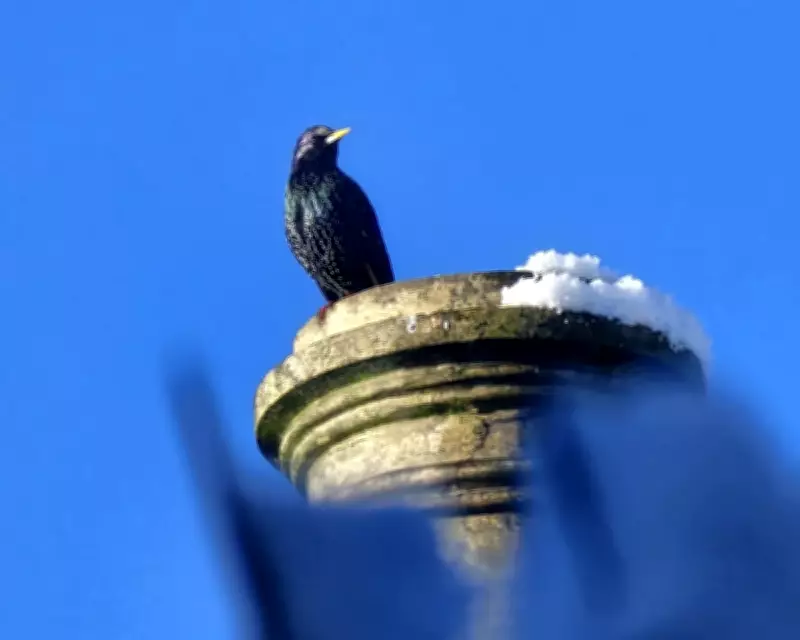
"Go on then, what are they?" he grinned, giving me the green light to showcase my peculiar talent. I shut my eyes and focused intently. Sparrow. Robin. Wood pigeon. Wren. Blue tits – a squabbling winter congregation of them – and then, unmistakably, the high-pitched "see-see-see" of long-tailed tits. "Which one makes this sound?" he inquired, whistling a long, descending note that mimicked something tumbling from the heavens. "They're my absolute favourite." "Starling!" I exclaimed without hesitation. As if on command, one echoed that exact call from somewhere overhead, validating his spot-on imitation.
The Gift of Auditory Awareness
I owe a lasting debt of gratitude to Simon Barnes's insightful book, Bird Watching With Your Eyes Closed, for equipping this city dweller with the ability to recognise the calls of nearly all our common avian residents. This skill proves particularly invaluable in our labyrinth of terraced houses, where trees and front gardens are scarce, and the birds that inhabit this space are often elusive and challenging to spot visually. However, by tuning in acoustically, I've learned just how many diverse species we coexist with in our shared urban environment.

Noting the Silences and Anticipating the Returns
Listening attentively during this season also highlights the notable absences. Thrushes typically commence their singing in a specific sequence – mistle thrush, song thrush, then blackbird – but thus far, I've only detected the mistle thrush. A resident male somewhere nearby is now usually up and delivering his repetitive phrases during my early morning visits to the bathroom. Also missing are our customary flocks of chattering goldfinches, many of which migrate to overwinter in France and Spain. The rollicking, bumping calls of chaffinches have yet to make an appearance, and I've only heard the great tits on one or two occasions. The first piercing screech of the swifts remains months away on the horizon.
The Promise of Spring's Awakening
Nevertheless, the year is undeniably turning. Nature is gradually rousing from its winter slumber, and I'm thankful for the reminder to listen closely – for the immediate joy it provides and for all the future delights held in memory. Thanks to Simon's guidance, another splendid year of attentive listening, and perhaps impressing my son, lies ahead.