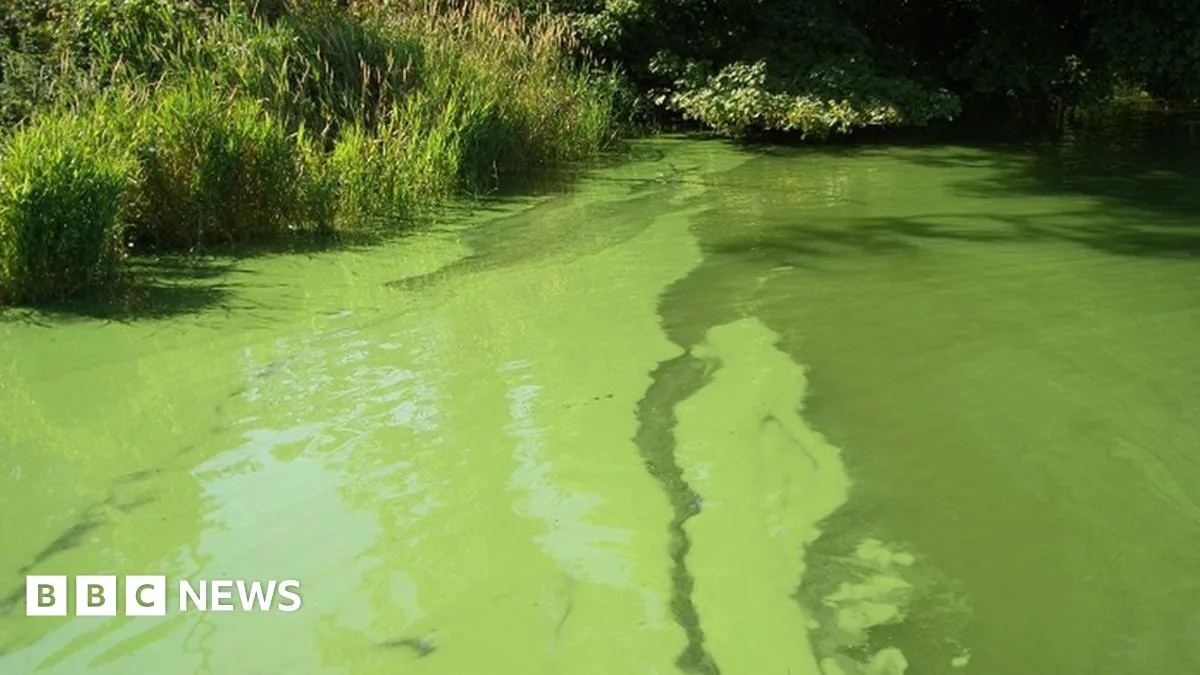
Dog owners have been warned to take extra precautions while walking their pets amid a rise in reports of potentially toxic blue-green algae across the UK. The British Veterinary Association (BVA) said it had seen an increase in reports including in Southampton, Edinburgh, Cornwall and Lincolnshire.
Contact with the algae can be fatal for animals if left untreated and can cause rashes and illness to humans. The BVA urged owners to keep dogs on a lead around affected lakes and rivers. It follows a number of reports of dogs becoming ill or even dying after swimming in water suspected to be contaminated with blue-green algae.
In July, a King Charles Cavalier died after swimming in a lake at Delamere Forest, Cheshire, which was later closed because of the presence of blue-green algae. Meanwhile, the RSPCA says a swan recovered from a lake containing algae in Southampton Common has died. The bird was believed to be the mother of a pair of cygnets that were also rescued last week. One of the cygnets died and the other is undergoing rehabilitation.
Blue-green algae or cyanobacteria can produce toxins harmful to both humans and animals. These toxins can be dangerous for animals if ingested, even in small quantities, the BVA said. Dogs can swallow algae by drinking water from an affected lake, river or pond or when licking their fur after going for a swim. Symptoms can appear within a few minutes or hours and commonly include vomiting, diarrhoea, seizures, and breathing difficulties. If left untreated, the toxins can cause liver damage and be fatal.
In humans, contact with skin or swallowing contaminated water can cause rashes, vomiting, stomach pains, fever and headaches. In rare cases, the algae can cause liver and brain damage. The Environment Agency advises keeping pets and children away from affected water and avoiding contact with skin. People who come into contact with water containing blue-green algae should shower with fresh water immediately and seek medical attention if they become ill.
BVA Junior Vice President Daniella Dos Santos said there was currently no known antidote for the toxins and prompt veterinary treatment was essential. "If you suspect your dog has been exposed to blue-green algae, rush it to your local vet without delay," she added. Daniel Start, author of Wild Swimming, advises people to check for blue-green algae before entering rivers and lakes, particularly on the downwind side of lakes where it tends to accumulate.