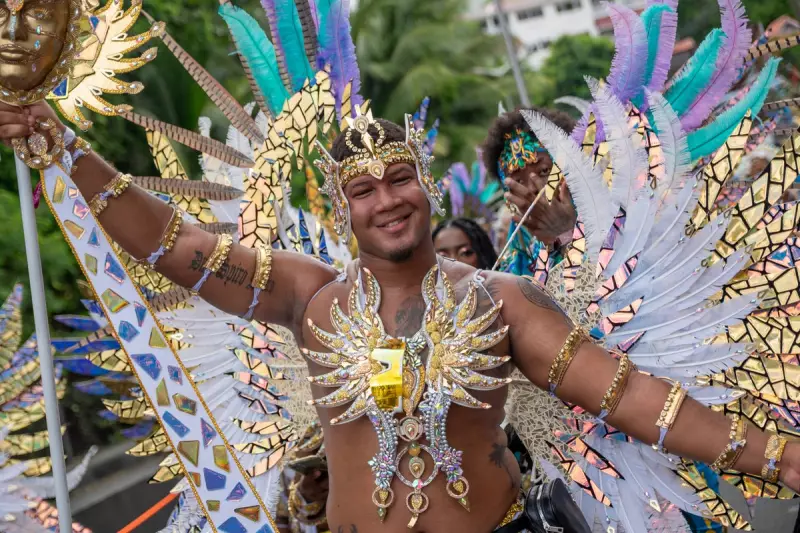
For travellers seeking an authentic Caribbean experience beyond the sun lounger, Saint Lucia's Carnival offers a pulsating, rain-kissed alternative to the standard resort holiday. Strategically held in July during the island's wet season, the festivities transform the destination with high-energy soca music, elaborate costumes, and street parades that showcase a deep cultural heritage.
More Than a Parade: The Soul of Soca and Celebration
The carnival's main event is the spectacular parade through Castries, but the true spirit ignites in the lead-up. The celebrations commence in July, featuring key events like the vibrant J'Ouvert paint party and the fiercely competitive National Groovy and Power Soca Monarch competition. This contest is a masterclass in the genre, where fan favourites can stumble and performers arrive in police cars, adding a uniquely Lucian flair.
Soca music, the "soul of calypso," is the heartbeat of the carnival. Originating in Trinidad and Tobago in the 1970s, it splits into 'groovy' (slower) and 'power' (faster) styles. The related Dennery Segment, a sweeter sub-genre born in the 2010s, provides the soundtrack for genuine local parties, distinct from typical tourist entertainment.

In 2025, the carnival's 78th official year, a record 24,500 visitors flocked to Saint Lucia. Over 10,000 people, including 7,000 revellers in organised Mas bands, walked the parade route. Currently, ten competing bands vie for honours across two days, with the top prize being the coveted "Band of the Year" award.
Costumes and Culture: The Heartbeat of the Mas Camp
Behind the spectacle lies immense creativity. In warehouses known as Mas Camps, hundreds of choreographers, designers, and drivers work to build stunning costumes from scratch. For Adrian Augier, creative director of consecutive champion band Tribe of Twel, this artistry is central. "Carnival is to dress up, to transform, personify, identify and fantasise," he explains.
Tribe of Twel's 2025 winning performance narrated the story of Jesus and the Angel of Bethlehem, using symbolic outfits to depict key milestones in a Lucian life—from baptism and communion to marriage and national festivals. However, Augier voices concern that the carnival's cultural depth is often overshadowed by commercial imagery. He advocates for a broader representation, questioning, "How viable is it to keep selling boobs and bums?"
He notes that traditional bands are dwindling, with only ten now participating compared to twenty in the past, as "people are more attracted to the skimpy costumes." Augier urges the Saint Lucia Tourist Board to ensure the event "must not only be known for one end of the spectrum."
Embracing the Off-Season Authenticity
The decision to move the carnival from February or March to July in 1999 created a distinct event in the low season. Visitors daring to travel during the 'liquid sunshine'—the local euphemism for rainfall—are rewarded with a more authentic and energetic atmosphere. While resorts like Sandals Regency La Toc offer a comfortable base and post-concert indulgence, the true magic lies outside the gates.
Adrian Augier emphasises that carnival is "to be experienced," not merely observed as a spectacle. This call to immersion is what separates a carnival holiday from a standard all-inclusive break. Preparations for the 2026 event are already underway, promising another exciting spectacle for those ready to dive into Lucian culture.
The 2026 Lucian Carnival will take place from 1-22 July. A seven-night all-inclusive stay at Sandals Regency La Toc, including flights from London Gatwick, starts from £1,975 per adult when booked by 3 February 2026.