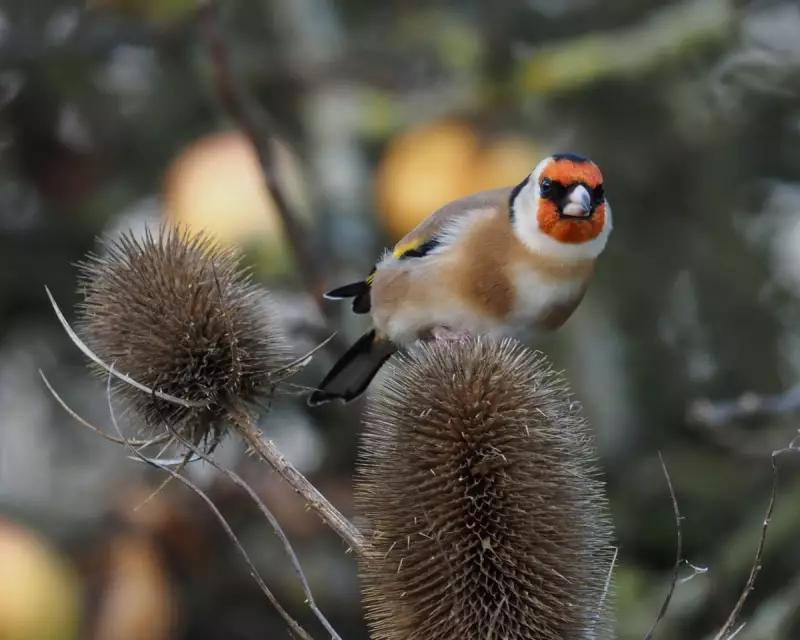
In a quiet corner of a Derbyshire garden, a simple act of winter gardening has unlocked a spectacle of nature, echoing a fascination that has captivated humans for over a millennium. While clearing old vegetation in Hogshaw, the deliberate preservation of a cluster of seeding teasels created an instant magnet for a flock of vibrant goldfinches.
A Garden Hide and Historical Wings
Not wanting to deprive the birds of a vital winter food source, the gardener planted the stalks together and set up a mobile hide to observe. The result was immediate and enchanting. The air filled with the twittering of sulphur-yellow wings as the featherlight birds balanced on swaying stems, their pointed pink beaks jabbing relentlessly to extract the precious seeds. This intimate garden scene is a modern reflection of a profound historical relationship between people and Carduelis carduelis.
From Classical Cure to Christian Symbol
The goldfinch’s hold on the human imagination is deep and complex. Throughout the Middle Ages and the Renaissance, the bird was a recurring hidden gem in religious art. Scholars have identified more than 300 artists across 486 works, including masters like Leonardo da Vinci, Raphael, and Michelangelo, who secretly painted goldfinches into their Madonna and Child images.

This tradition drew from ancient Greek folklore about a bird known as the kharadrios, believed to cure sickness merely by looking at the afflicted. Early Christians adapted these myths, attributing the goldfinch’s distinctive red face to a benevolent act: an attempt to pluck thorns from Christ’s crown during the Crucifixion. These painted birds were not just symbols; they were believed to possess genuine medicinal power, often commissioned as protective talismans during Europe’s devastating plague outbreaks.
The Modern Multi-Million Pound Charm
It is easy to dismiss such ancient beliefs as quaint superstition. Yet, our contemporary actions reveal a continued, powerful allure. Today, the UK’s wild-bird-food industry is valued at a staggering £380 million annually. Countries like India grow thousands of tonnes of nyjer seed specifically for export to European markets, largely to satisfy the desire to attract goldfinches to our own gardens.
We may no longer believe a goldfinch’s gaze can cure disease, but we willingly invest a small fortune to bring its vibrant colours and lively chatter close to our homes. The impulse that led an artist in Leonardo’s school to include the bird in the ‘Madonna Litta’, and that which prompts a gardener in Derbyshire to plant teasels, is fundamentally the same. The goldfinch’s gift for charming us from our perches remains utterly undiminished by the centuries.
The observations from Hogshaw, Derbyshire, feature in ‘Under the Changing Skies: The Best of the Guardian’s Country Diary, 2018-2024’, published by Guardian Faber.