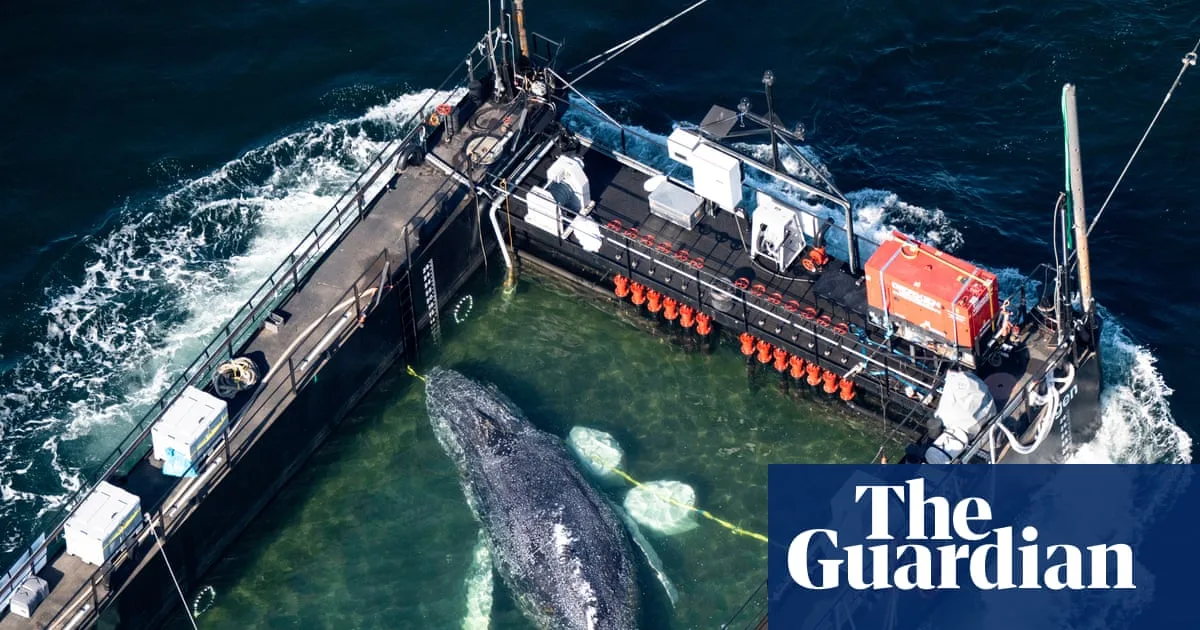
Marine experts have condemned the €1.5m privately funded rescue of a humpback whale stranded off Germany's Baltic coast, after it emerged that a tracker fitted to the animal is not working. The young male whale, nicknamed Timmy, was released into waters off Denmark three days ago, but its whereabouts and health remain unknown.
The rescue initiative was partly funded by Karin Walter-Mommert, a prominent racehorse owner. She confirmed on Tuesday that the tracker had failed, despite earlier claims it would transmit vital signs. This was disputed by experts and environmental groups, including Greenpeace.
The whale was first spotted stranded on a sandbank near Lübeck on 23 March, and became stuck several times thereafter. Its health deteriorated, and failed attempts to coax it to deeper waters were livestreamed globally. The state environment minister approved the rescue despite warnings from scientists that it might be too stressful for the animal.
Whale researcher Fabian Ritter called the tracker failure an 'all-round catastrophe', saying the entire operation would be in vain if the whale's fate cannot be determined. The German Oceanographic Museum in Stralsund stated the whale is 'highly likely' dead and called for tracker data to be released for assessment.
Danish authorities said they would not intervene if the whale encounters further difficulties. Danish marine biologist Peter Madsen criticised the lack of data transparency, calling it 'very strange and unprofessional'. The environment ministry said it is still awaiting data from the private initiative.
Confusion also surrounds the release itself. Vet Kirsten Tönnies, who was on board a rescue ship, said she was barred from witnessing the final release and disagreed with the whale being released backwards without a medical all-clear. The ship's operators were unavailable for comment, and its tracking signal appears to have been switched off. Walter-Mommert and co-financier Walter Gunz distanced themselves from the manner of the release.