Rescuers Abandon Hope for Stranded Humpback Whale in Baltic Sea
Rescuers in Germany have delivered a heartbreaking update regarding a humpback whale that has been repeatedly stranded along the Baltic Sea coast. They have now abandoned all hope for the animal's survival, expecting it to perish in the shallow inlet where it currently lies.
A Desperate Struggle for Survival
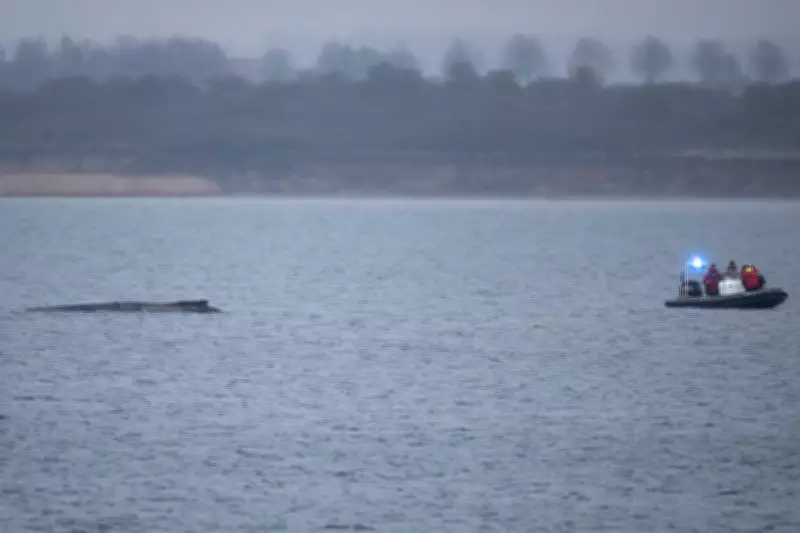
The whale, which has captivated residents and local media outlets, became stuck again on Tuesday after swimming into an inlet on the small island of Poel, near the port of Wismar. This latest stranding follows a previous rescue effort just last week, when the whale was freed from even shallower waters at Timmendorfer Strand, a resort town approximately 50 kilometres away, with the assistance of an excavator. Unfortunately, the animal soon encountered difficulties once more, highlighting the precarious nature of its situation.
In recent days, authorities had implemented a strategy focused on providing the exhausted mammal with peace and quiet. The hope was that this would allow it to gather enough strength to swim away independently, with occasional boat interventions to encourage movement. However, this approach has now been deemed futile.

Scientific Assessment Points to Inevitable Outcome
Burkard Baschek, the scientific director of the Ocean Museum Germany and coordinator of the rescue effort, provided a grim assessment on Wednesday. He reported that the whale was breathing at highly irregular intervals, a sign of severe distress. Drone photographs revealed minimal activity in the sediment beneath the 12-15 metre animal, which barely reacted when approached by rescuers.
While the whale showed slightly more activity after rescuers departed, Baschek stated at a televised news conference: "but it is not activity that gives us grounds for hope. We firmly believe that the animal will die there." He explained that although the whale had managed to free itself on two previous occasions, it is now significantly weaker. Additionally, falling water levels in the inlet have further reduced its chances of escape.
"The prospects that it will free itself are very small," he said. "The approach of maximum rest and respect for nature demands at some point that we let it go."
A Captivating Coastal Odyssey
The drama of the whale's plight has deeply captivated the German public, with media outlets providing detailed updates on its progress. During its coastal odyssey, the whale acquired the affectionate nickname "Timmy", reflecting the emotional connection felt by many observers.
The whale was first spotted swimming in the region on March 3. It remains unclear why the animal ventured into the Baltic Sea, an environment far from its natural habitat and ill-suited to its needs. Some experts speculate that it may have lost its way while pursuing a shoal of herring or during migration.
From the outset, the animal faced immense challenges. Finding its way out into the North Sea would have required a journey of several hundred kilometres, followed by an even longer trek to the Atlantic Ocean. These formidable obstacles, combined with its current weakened state, have sealed its tragic fate.