The red sun rising over the radar station on Alnwick Moor picks out the tall shape of a hare at the end of the meadow. It lopes forward a little way, forever appearing to be on the brink of a forward roll, and then pauses, sits up, and shakes the dew from its front paws.
A nearby pheasant lets rip a choked cock-crow. Both of these animals are game in England, as is the red-legged partridge, toiling tortoise-like through the weeds at the meadow bottom. The pheasant and partridge were almost certainly released by gamekeepers, possibly last summer, and ended up in this farmland. Hares, however, have been wild in Britain since the Romans were last here.
We are a little way north of Roman country. Hadrian's Wall is 40-odd miles south. The roads up here are good and straight, but that has more to do with the British army than the Roman legions.

The wind is crisp, despite the sun. Huge flocks of fieldfares, burly Vikings with their plunder done, are making their way north-east across the fields, back to their breeding grounds in Norway, Finland, and eastern Europe. This serves as a reminder that winter, in some ways, is still with us.
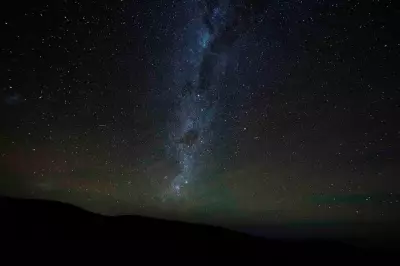
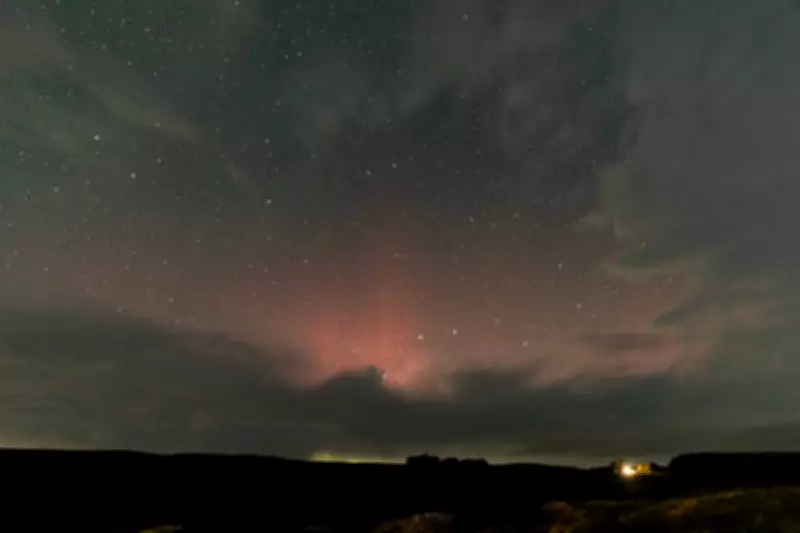
The evenings here get cold long before they get dark. It is bitter by the time the stars begin to show. Northumberland night skies are wide and clear, as we are on the edge of the Northumberland International Dark Sky Park. It has been a while since the writer has seen so many stars.
It takes some time to get used to how busy the sky has become. There are currently about 15,000 satellites in orbit around our planet. The skies at night no longer dance a long, slow waltz. At any given time, a handful of bright dots move to a faster tempo, cutting in on the familiar constellations. Through binoculars, Jupiter looks as though it is being buzzed by drones. Then there is Starlink, Elon Musk's satellite convoy, trucking south across the heavens like a freight train. It would be unsettling even if one did not know who put it there.