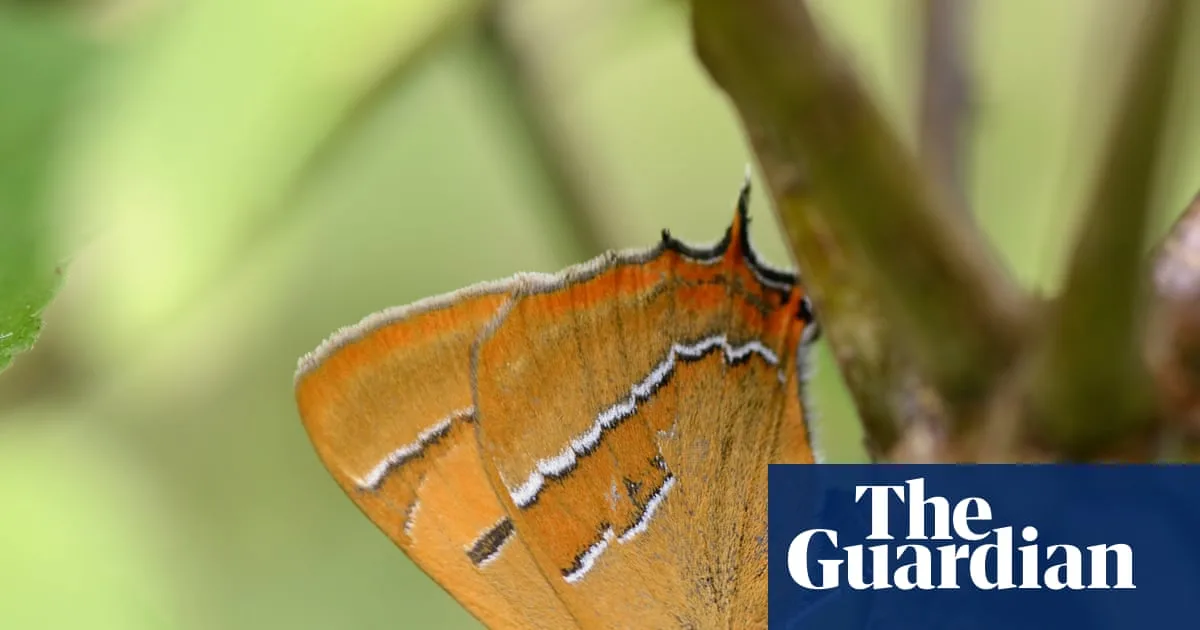
Rare Brown Hairstreak Butterfly Makes Remarkable Comeback in Wales
Rare Butterfly Bounces Back in Wales After Hedge Management Changes

In a heartening ecological turnaround, the rare brown hairstreak butterfly is showing strong signs of recovery in south-west Wales following significant changes to land management practices. This resurgence comes after more than a decade of worrying decline that saw populations in areas like the Tywi valley in Carmarthenshire almost vanish entirely.

A Decade of Decline Reversed

The brown hairstreak, one of Britain's most elusive butterflies, faced severe threats from intensive agricultural practices, particularly the mechanical flailing of hedgerows and scrubland. This annual autumn activity unknowingly destroyed thousands of the butterfly's eggs, which are laid exclusively on blackthorn during summer months. The species became so difficult to spot that conservationists had to monitor populations by counting minuscule cream-coloured eggs on bare blackthorn branches each winter.

Record Egg Counts Signal Recovery

This winter brought encouraging news as volunteers from Butterfly Conservation recorded unprecedented numbers of brown hairstreak eggs in the Llandeilo area. Along the busy A40 west of Llandeilo, counters discovered 276 eggs on the north verge and 117 on the south verge – representing a remarkable 50% increase from the previous year and setting new records for the region.

Three additional nearby hedgerow sections also showed significant increases following sympathetic management approaches. These included the strategic planting of new blackthorn bushes to expand suitable habitat for the species.

Changing Land Management Practices

The recovery follows concerted efforts by conservation organisations working collaboratively with landowners and government agencies. When Butterfly Conservation identified a small remnant population west of Llandeilo in 2021, they initiated annual egg counts and began working with partners including the National Trust and South Wales Trunk Road Agent.

The key intervention has been persuading landowners to adopt gentler hedge-cutting rotations, with sections left uncut for up to three years rather than being mechanically flailed annually. This simple change allows more eggs to survive through winter, enabling caterpillars to emerge with spring foliage and develop into adult butterflies by July.

The contrast in outcomes is stark – nearby fields where traditional annual flailing continued saw egg counts plummet from an average of 60 each winter to just four this year.

Broader Ecological Implications

Dan Hoare, Director of Nature Recovery for Butterfly Conservation, emphasised the wider significance of these findings: "Across the UK, hedgerows are an essential part of our ecological infrastructure, providing homes and highways to millions of insects, mammals and birds. Since the 1950s we have lost about 40% of what we had, and less than half of what remains is thought to be in good condition."

He added: "We don't want to stop anyone managing their hedgerows, but we would love more landowners to try cutting back on their cutting back. If hedgerows are only trimmed once every two years, or even every three years, it could make an enormous difference to the survival of the brown hairstreak and help many other species as well."

Policy Support and Future Prospects

The conservation efforts have received a significant boost from Welsh government policy. Richard Smith, who has overseen the volunteer conservation efforts for Butterfly Conservation, noted: "Fortunately, the Welsh government's brand new sustainable farming scheme requires avoidance of annual flailing. We plan to work with them and local hedge-layers to maintain this trend and save the species in the valley."

This policy alignment between conservation objectives and agricultural practice represents a promising model for species recovery. The brown hairstreak's resurgence demonstrates how relatively simple changes to land management can yield significant ecological benefits, offering hope for other threatened species across the British countryside.

As conservationists celebrate this success in Carmarthenshire, they hope the story will inspire similar initiatives elsewhere, proving that with careful management and collaboration between stakeholders, even species on the brink of local extinction can make remarkable comebacks.