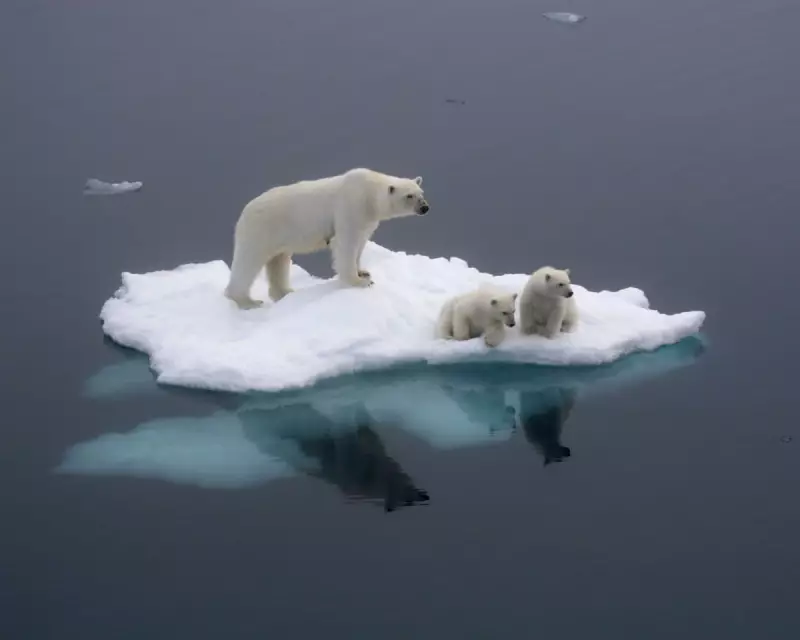
In the relentless narrative of environmental decline, a new scientific study has offered a complex and potentially unsettling piece of news: polar bears appear to be changing their DNA in response to the human-made climate crisis warming their Arctic home.
This finding, the first to show a statistically significant link between rising temperatures and genetic changes in a wild mammal, presents a paradoxical sliver of hope amidst the accelerating ecological emergency. For decades, the image of the polar bear stranded on shrinking sea ice has served as the planet's most potent visual shorthand for climate change.
A Stark Symbol Under Pressure
The Arctic is warming at a rate far higher than the global average, making the polar bear's habitat a frontline of the climate crisis. The new research suggests these iconic animals are undergoing genetic adaptation as their icy world transforms. Environment reporter Helena Horton describes it as "a small piece of hopeful news that animals are adapting," but is quick to add a crucial caveat: "This shouldn't be happening. DNA only changes so rapidly under extreme environmental stress."

The study's focus on polar bears is particularly significant. Their habitat loss is visibly dramatic – the ice melts, leaving bears isolated and struggling. Photographs of bears on barren land or inhabiting abandoned human structures, like the Soviet-era research station on Kolyuchin Island, powerfully illustrate the rapid transformation of their environment.
The Broader Picture of a Changing Natural World
This genetic shift is part of a wider, alarming pattern of forced adaptation across the animal kingdom. Species are being pushed to move locations, alter their behaviour, and even change their physiology due to human activity.
Helena Horton notes examples such as more octopuses appearing in British waters, tiger moths arriving in Jersey, and birds in Australia developing larger beaks. Bats are evolving bigger wings for more efficient heat exchange. "So we're making animals move around the planet, we're forcing them to change their physiology – and now, as this research shows, we're even pushing them to change their DNA," she explains.
Habitat destruction, often linked to the climate crisis, is also driving increased conflict between wildlife and humans, as seen with elephants in Africa and the critically endangered Tapanuli orangutans in Indonesia, whose population was recently devastated by climate-exacerbated flooding.
Balancing Hope with Honest Reporting
For journalists covering the environment, the challenge lies in reporting such findings without downplaying the overarching crisis. Horton emphasises letting scientists speak for themselves. Regarding the polar bear study, the lead researcher was measured, stating that while it offers some hope, it is "not a magic bullet" and that stopping fossil fuel burning remains imperative.
The fundamental question, Horton states, is whether animals can adapt fast enough to keep pace with humanity's impact. Currently, the outlook is bleak. This genetic adaptation is a symptom of immense pressure, not a solution. It underscores the urgent need for global action on emissions and habitat protection, even as it reveals a remarkable, and troubling, instance of resilience in the face of overwhelming change.