Record-breaking newborn sperm whale found dead on Devon beach
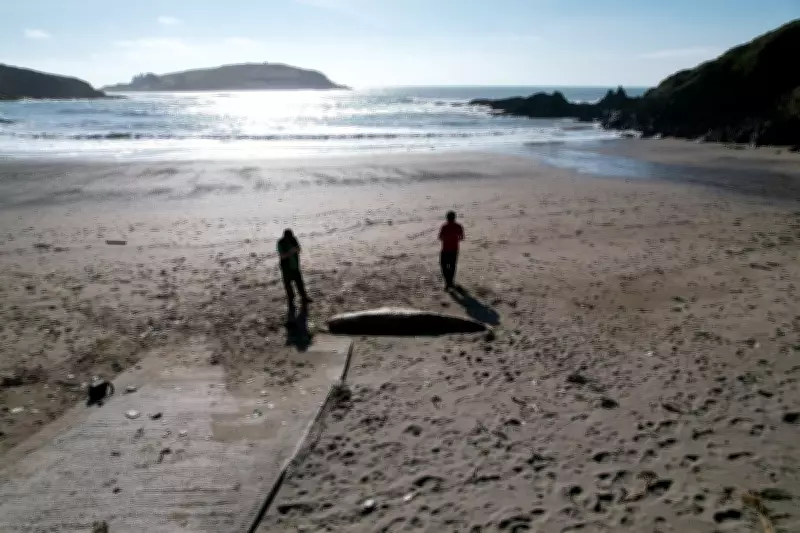
In a highly unusual and tragic marine event, a newborn sperm whale calf has been discovered dead on a scenic beach in Devon, marking the youngest and smallest specimen ever recorded in England and Wales. The 12-foot-long male calf was found at Challaborough Bay, near Torquay, after being reported by concerned beachgoers who spotted the stranded animal.
Experts from the Cetacean Strandings Investigation Programme (CSIP) swiftly attended the scene to examine the remarkable find. Rob Deaville of CSIP described the discovery as "incredibly young," emphasising that this calf represents the youngest and smallest sperm whale documented in England and Wales, whether alive or deceased, since systematic records began nearly 120 years ago.
Unprecedented stranding linked to storm activity
Initial investigations suggest that the recent period of intense storm activity across the UK may have played a significant role in the whale's death and subsequent stranding. A CSIP spokesperson confirmed that this represents a "highly unusual stranding" event, noting that while their partners in Scotland have recorded two similarly small sperm whales in recent years, this marks the first sperm whale stranding recorded in Devon since comprehensive UK records commenced.

Although the whale was in a decomposed state, experts managed to conduct a basic field necropsy. During this examination, they discovered a small quantity of sand and beach material within the stomach chambers, indicating the whale likely actively ingested this material. This finding suggests the animal may have been alive when it stranded, or very close to the time of death.
Scientific significance and historical context
The stranding holds considerable scientific importance, with CSIP collecting a wide range of samples that may inform future research into areas including contaminant exposure and population structure. Historically, nearly all sperm whale strandings in the UK have involved subadult males measuring between 10-14 metres long, reflecting Britain's proximity to the normal distribution of sperm whale bachelor pods.
Female sperm whales and their young typically aggregate in matriarchal pods in warmer waters much further south. With the birth length of sperm whales quoted at around 3.5 metres, this 3.6-metre calf represents an exceptionally young individual. Given the body's condition, experts believe the whale likely died some distance south of British shores, with the carcass drifting northwards before making landfall due to recent storm activity.
A CSIP spokesperson revealed an additional detail: a small decomposed sperm whale was reported in southeast Cornwall earlier this month but could not be accessed for examination. Photographic evidence allowed experts to match the two stranding events, confirming they involved the same individual whale.