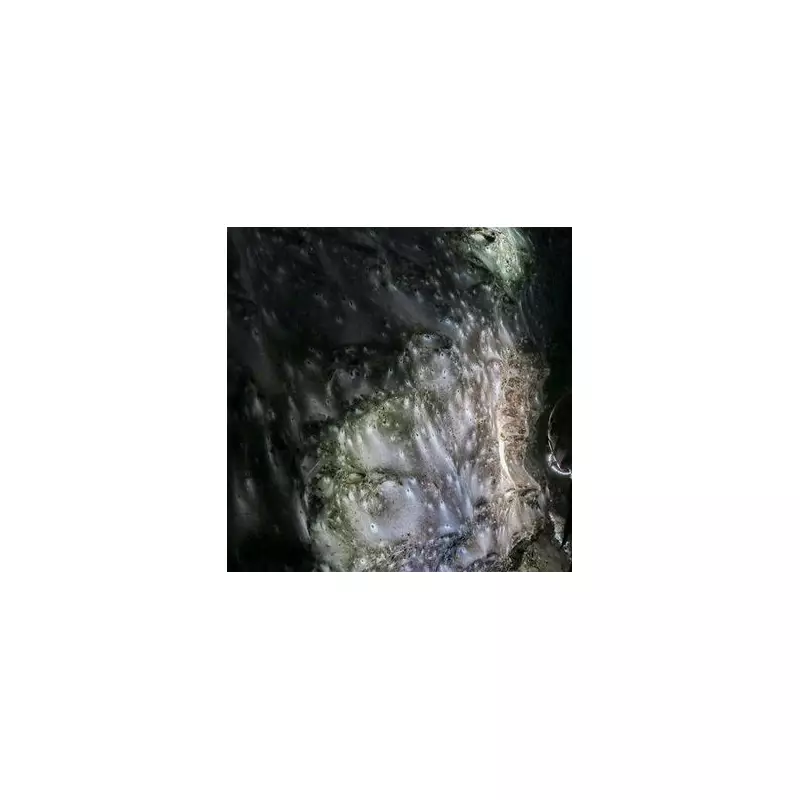
In a discovery that redefines our understanding of arachnid behaviour, researchers have documented what is believed to be the largest spider web in the world. This colossal structure, spanning an incredible 106 square metres, blankets the wall of a cave that straddles the border between Albania and Greece.
A Cross-Border Colossus of Silk
The monumental web was first encountered in 2022 by cavers from the Czech Speleological Society. A subsequent scientific study, detailed in the journal Subterranean Biology, revealed the web's staggering scale and its even more surprising inhabitants. It serves as a shared home to an estimated 111,000 spiders from two distinct species.
According to the research, the community comprises approximately 69,000 domestic spiders (Tegenaria domestica, or barn funnel weavers) and 42,000 Prinerigone vagans (a type of sheet weaver spider). This cohabitation is particularly remarkable as barn funnel weavers are known to prey on smaller spiders, including sheet weavers, making their peaceful coexistence in this setting extraordinary.

The Unique Ecosystem of Sulfur Cave
The web's location is as unique as its size. It resides within the aptly named Sulfur Cave, a system formed by sulphuric acid where hydrogen sulphide reacts with oxygen. The cave entrance is in Greece, but the chambers extend into Albanian territory.
Scientist Serban Sarbu, speaking to CBC's As It Happens, described the initial shock: "To find so many spiders in one spot in a cave, that was the first surprise. So [then], you ask yourself the question, 'Why are they there? What's, in fact, keeping them alive?'"
The answer lies in a self-contained ecosystem. The cave's darkness and constant supply of food—dense swarms of chironomid midges—provide everything the spiders need, eliminating any reason to venture outside. The researchers noted that the colonisation was "most likely driven by abundant food resources." When the midges mature into flies, they become trapped in the vast web, prompting the spiders to emerge from their funnel-shaped retreats to feed.
A Broader Context for UK Wildlife
This groundbreaking find in Southeastern Europe coincides with positive news for arachnid conservation closer to home. In a related development from October 2025, the BBC reported the rediscovery of an endangered wolf spider species, Aulonia albimana, on the Isle of Wight. This marked the first sighting in 40 years.
The spider was found at the National Trust's Newtown nature reserve. Mark Telfer, part of the search team, called it an "unforgettable" moment, adding: "To find a species thought lost for 40 years is thrilling — and testament to how the right habitat management, combined with curiosity and collaboration, can deliver remarkable results."
The Sulfur Cave discovery is not just a record-breaker; it is the first documented instance of a communal web built by multiple spider species. The cave also hosts a diverse array of other creatures, including scorpions, centipedes, bats, and beetles, painting a picture of a rich and complex subterranean world that continues to surprise and inform the scientific community.