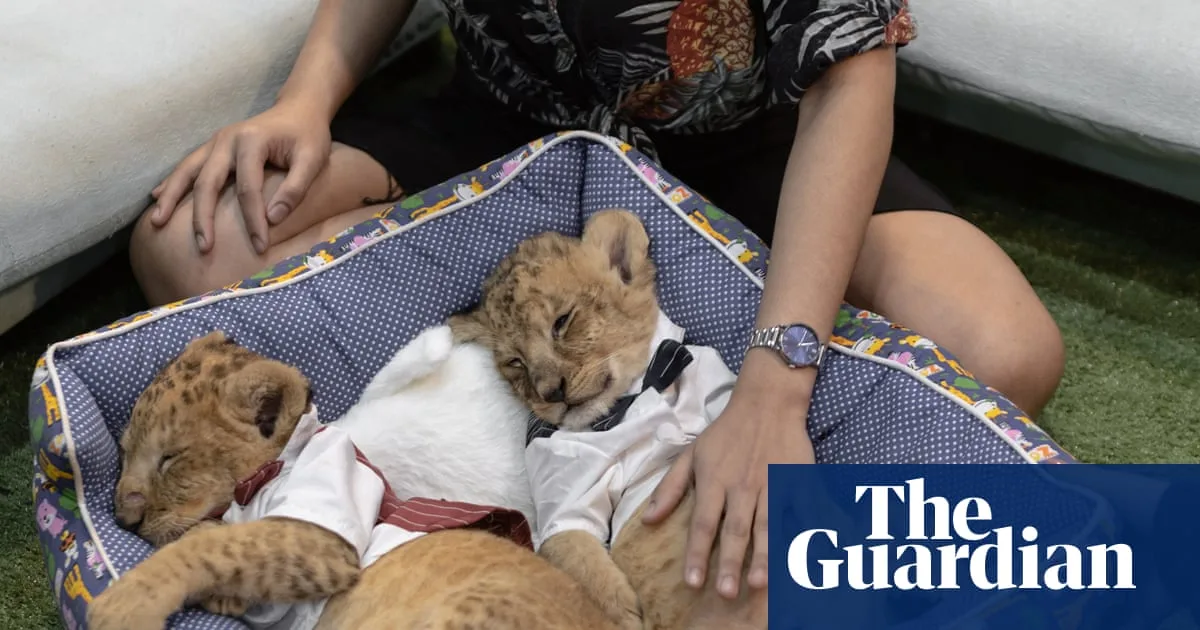
A lion cub has been seized by Thai authorities after its owner posted images of the animal on Instagram, drawing attention to the country's booming captive lion trade. The cub was taken from a Bangkok property following a complaint, officials said, amid growing concerns over the welfare of big cats kept as exotic pets.
The seizure comes as a new report by the Wildlife Friends Foundation Thailand and the Oxford Wildlife Trade Research Group reveals that the number of lions in captivity in Thailand has more than tripled since 2018, from 138 to at least 444. Researchers say the true figure is likely much higher, as many sales and breeding activities go unregistered.
Lion cubs are increasingly popular among Thailand's wealthy elite, with prices starting at $5,000 (£3,700) and white cubs fetching up to $15,000. Breeders and agents promote the animals on social media, renting them out for photoshoots and parties. However, many owners are unprepared for the long-term commitment, and older lions are often sold back to farms or passed on to zoo-like venues.
Patamawadee Chanpithak, a lion breeder in Bangkok, admitted that she was inexperienced when she started, losing five of her first six cubs within days. She has since sold more than 80 lions. “Some people buy a lion and then can’t handle it,” she said. “They ask us to buy it back.”
Veterinarian Taweesak Anansiriwattana, known as Dr Vee, has treated more than 25 privately owned lions in the past five years. He said the climate in Thailand is too humid for lions, leading to common skin infections, and that malnutrition is widespread because owners feed them only chicken instead of a proper diet including organs. Fewer than half of the households he has visited meet the minimum enclosure size of 3 metres by 3 metres.
Despite a 2019 law regulating the ownership of non-native species such as lions, loopholes remain. While owning a lion requires a licence, breeding does not, and cubs do not need to be registered until they are 60 days old. The trade in lion cubs alone is estimated to be worth more than $1m (£740,000) a year.